Agrostemma githago
Agrostemma githago
FamilyGenus: Agrostemmaheimisch in Deutschland
🌿
4
Species
interact
🔗
4
Interactions
documented
About this species
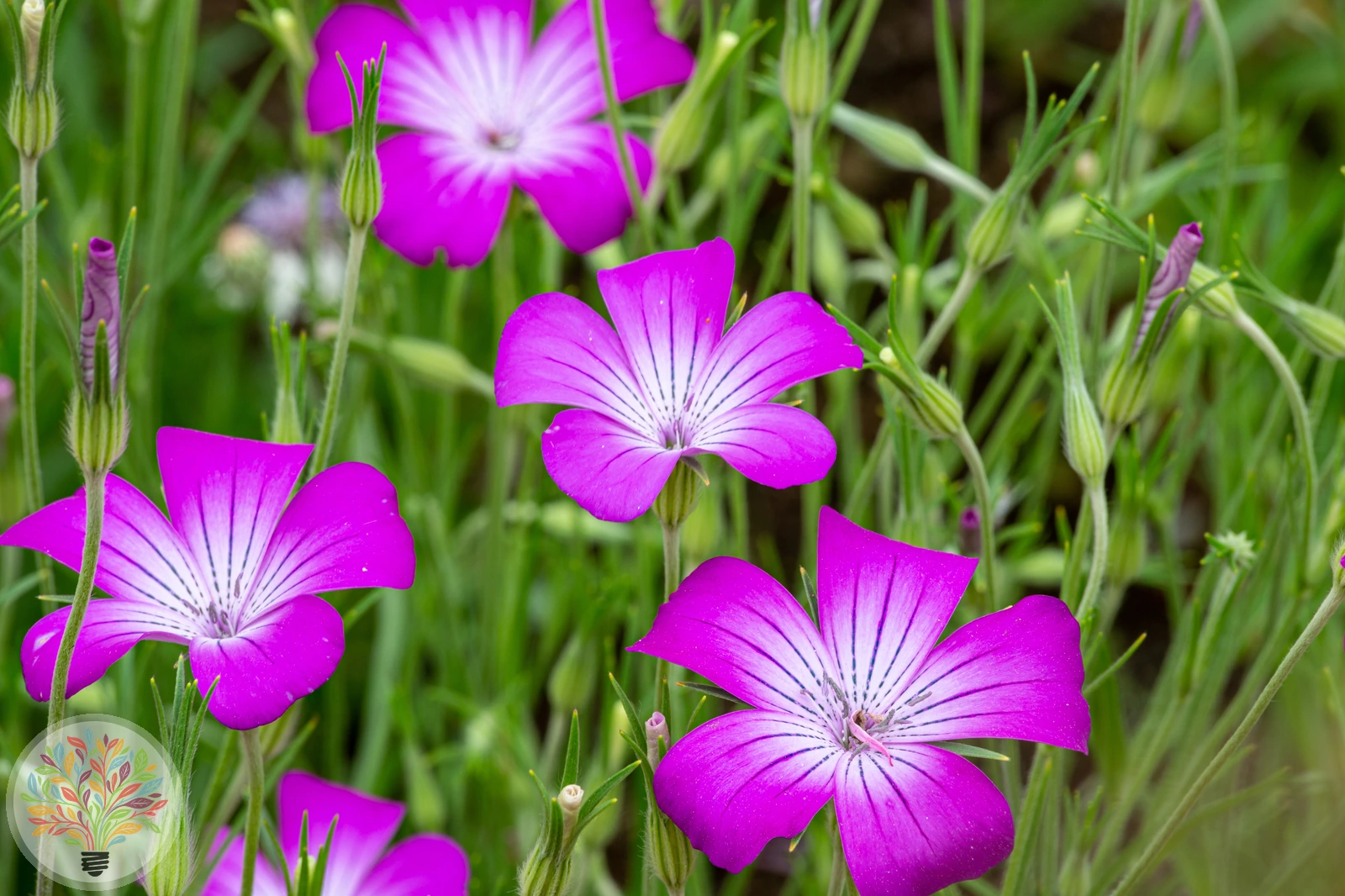
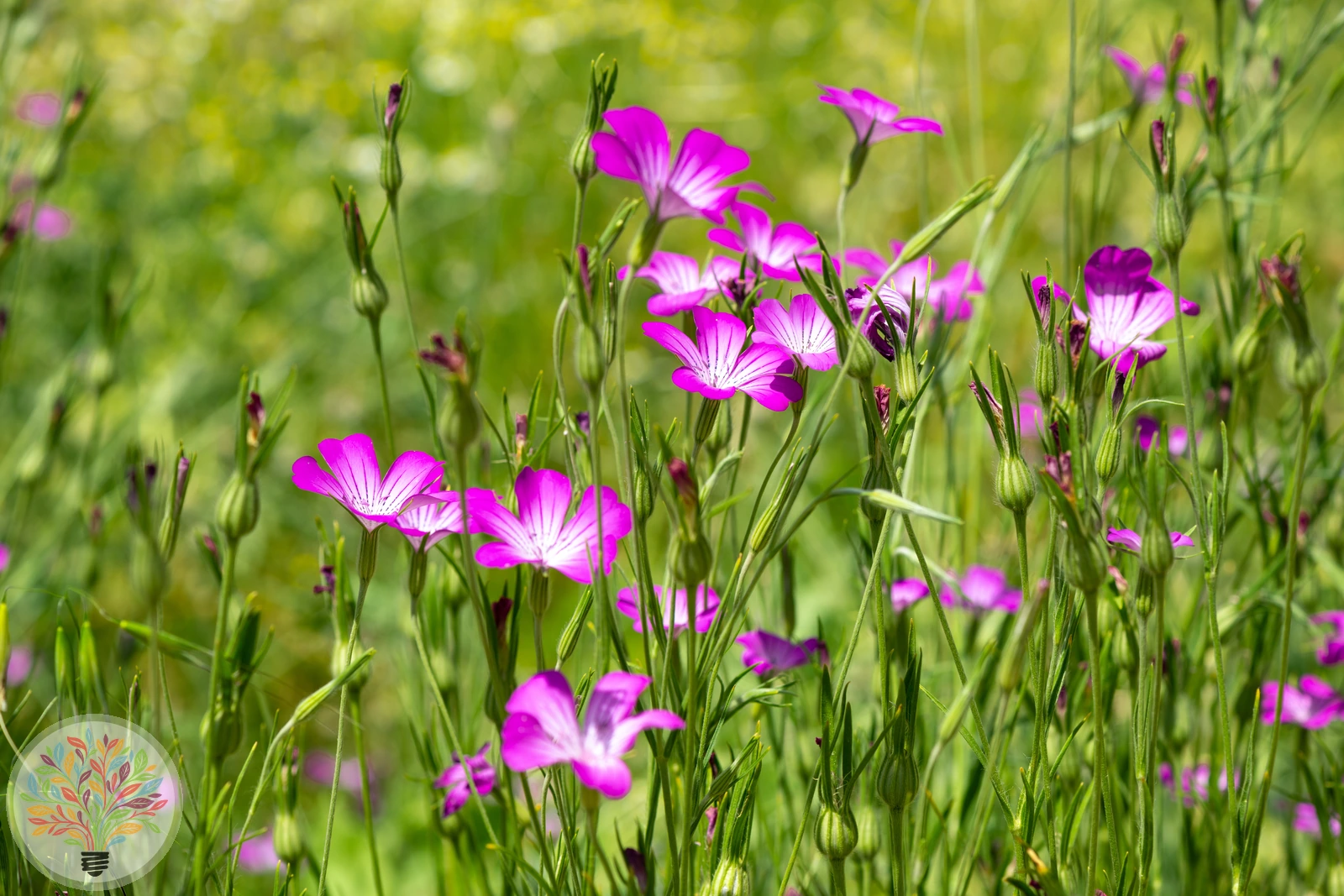
An archaeophyte herbaceous plant of arable land, Agrostemma githago produces blooms from June to September and reaches about 0.75 m in height.
Ecological network
Click to highlight connections · Click again to open species page
Netzwerk wird geladen...
PollinationFlower visit
Ecological significance
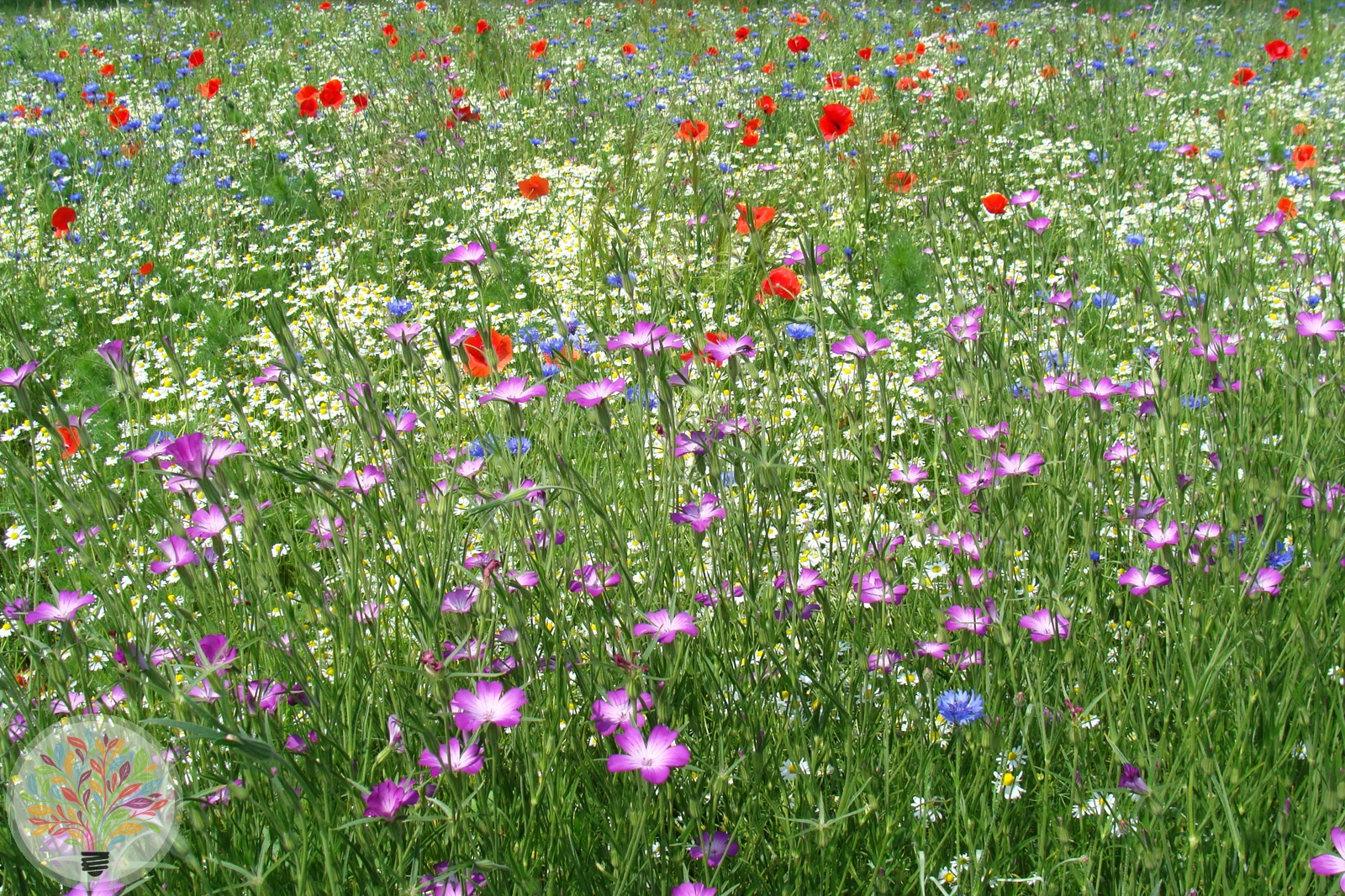
Agrostemma githago is characteristic of arable field margins and ruderal weed communities, often found in cereal crops on moderately fertile, base-rich ground.
Annual cycle
Flowering occurs from June to September.
Standort & Merkmale
Light
Sonne
Moisture
Frisch (Mäßig feucht)
Soil
Mittelzehrer (Normaler Boden)
Bloom time
Jun – Sep
Soil reaction
Mäßig sauer bis neutral
Bioregion
Continental
Growth form
Krautige Pflanze
Woodiness
Nicht verholzt
Leaf type
Breitblättrig
Plant height
0.745 m
Morphological traits: TRY ID3 (CC BY 3.0) & TRY ID81 (CC BY)
Pflege & Anbau
•
Light: full sun
•
Moisture: moderately moist, fresh soil
•
Soil: normal, average fertility garden soil
Scientific profile
A broad-leaved, non-woody herbaceous plant reaching roughly 0.75 m in height, with a terrestrial growth form. In Great Britain it is an archaeophyte, long naturalised after ancient introduction. The species typically occurs in full sun on fresh, moderately moist soils of neutral to slightly acid reaction and moderate nutrient status; it is associated with low-disturbance, open habitats such as cereal field margins.
Bestäuber & Besucher
3 Arten interagieren mit dieser Pflanze
Sources & data origin
•Interaktionsdaten via GloBI (CC-BY 4.0)
•FloraWeb / BfN
•EIVE 1.0 — Dengler et al. (2023), DOI: 10.3897/VCS.98324 (CC BY 4.0)
•GBIF Backbone Taxonomy — GBIF Secretariat (2024), DOI: 10.15468/39omei (CC BY 4.0)
•TRY Categorical Traits (ID3) — Kattge et al. (2012), DOI: 10.17871/TRY.3 (CC BY 3.0)
•TRY Global Spectrum (ID81) — Díaz et al. (2016/2021), DOI: 10.17871/TRY.81 (CC BY)
•Govaerts R et al. (2025) — World Checklist of Vascular Plants (WCVP) v14. Royal Botanic Gardens, Kew. DOI: 10.34885/xs7h-ze42 (CC BY 4.0)
•Foto: © Adobe Stock / AdobeStock_506061128
All data is licensed under CC BY 4.0, CC0, or compatible. Attribution according to license terms. Full source overview →