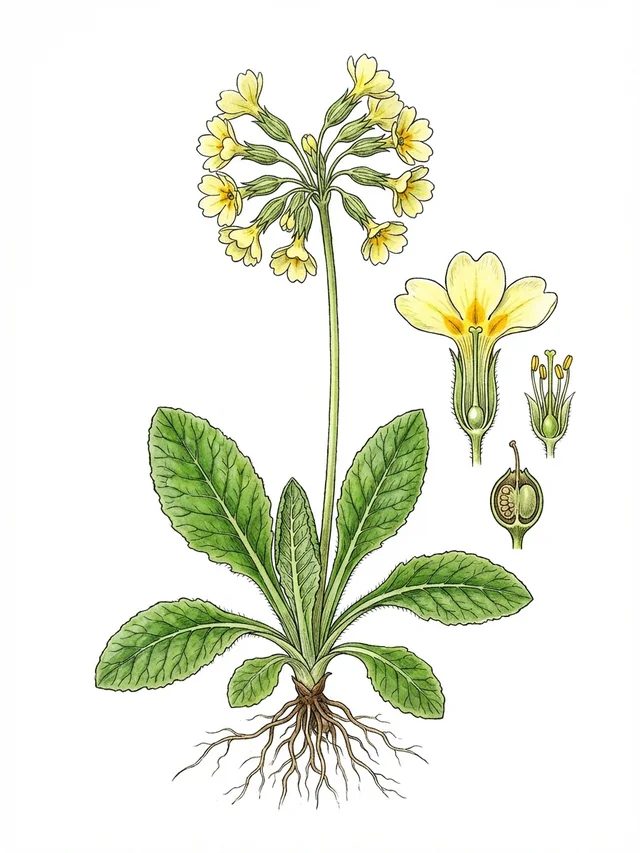
 Bild folgtKI-generierte Illustration
Agrostis canina
Agrostis canina
FamilyGenus: Agrostisheimisch in Deutschland
🌿
1
Species
interact
🔗
1
Interactions
documented
🐛
1
Host relationships
Species
About this species
A native perennial grass of damp, acidic, nutrient-poor soils, flowering from June to August.
Ecological network
Click to highlight connections · Click again to open species page
Netzwerk wird geladen...
Larval host
Ecological significance
As a native component of wet acidic grasslands and heaths, Agrostis canina provides cover and food for a range of invertebrates, though its specific ecological relationships are not detailed here.
Annual cycle
A perennial grass that begins shoot growth in spring, flowers from June to August, sets seed in late summer, and dies back above ground over winter.
Standort & Merkmale
Light
Sonne
Moisture
Feucht
Soil
Schwachzehrer (Magerer Boden)
Bloom time
Jun – Aug
Soil reaction
Sauer (Säurezeiger)
Bioregion
Continental
Growth form
Gras
Woodiness
Nicht verholzt
Leaf type
Breitblättrig
Plant height
0.264 m
Morphological traits: TRY ID3 (CC BY 3.0) & TRY ID81 (CC BY)
Pflege & Anbau
This grass thrives in full sun and permanently damp, acidic, nutrient-poor soil. It is unsuited to fertile garden borders and may be outcompeted by more vigorous plants in enriched conditions. Best left to naturalise in a wild, wet, heathy area.
Scientific profile
Agrostis canina is a perennial grass native in Great Britain. It typically reaches around 26 cm in height and bears broad, non-woody leaves. The species grows in full sun on permanently moist, strongly acidic soils that are extremely low in nutrients. It tolerates only slight disturbance and moderately warm conditions. Flowering takes place between June and August, and the tiny diaspores weigh on average just 0.058 mg.
Sources & data origin
•TRY v6.0 / BiolFlor flowering phenology (Request 47350) — CC BY 4.0TRY request 47350 (Public, Data Released, TRY v6.0; 2026-02-15). Cite TRY: Kattge et al. (2020), doi:10.1111/gcb.14904; original source: Trefflich, A., Klotz, S. & Kühn, I. (2002). Blühphänologie. BIOLFLOR, Schriftenreihe für Vegetationskunde 38:127–131.
•Interaktionsdaten via GloBI (CC-BY 4.0)
•FloraWeb / BfN
•EIVE 1.0 — Dengler et al. (2023), DOI: 10.3897/VCS.98324 (CC BY 4.0)
•GBIF Backbone Taxonomy — GBIF Secretariat (2024), DOI: 10.15468/39omei (CC BY 4.0)
•TRY Categorical Traits (ID3) — Kattge et al. (2012), DOI: 10.17871/TRY.3 (CC BY 3.0)
•TRY Global Spectrum (ID81) — Díaz et al. (2016/2021), DOI: 10.17871/TRY.81 (CC BY)
•Govaerts R et al. (2025) — World Checklist of Vascular Plants (WCVP) v14. Royal Botanic Gardens, Kew. DOI: 10.34885/xs7h-ze42 (CC BY 4.0)
All data is licensed under CC BY 4.0, CC0, or compatible. Attribution according to license terms. Full source overview →