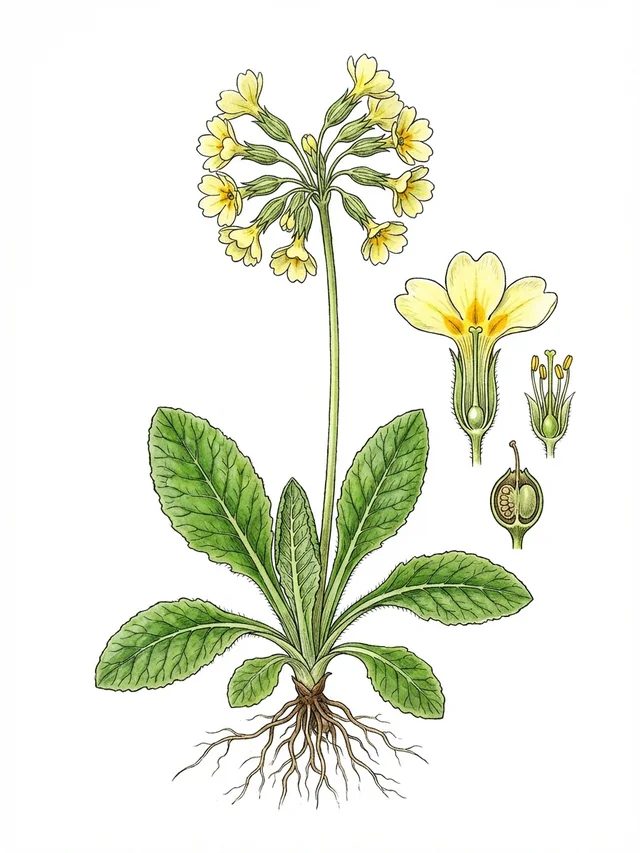
 Bild folgtKI-generierte Illustration
Alopecurus geniculatus
Alopecurus geniculatus
FamilyGenus: Alopecurusheimisch in Deutschland
🌿
2
Species
interact
🔗
2
Interactions
documented
About this species
A native British grass found in damp, sunny locations, flowering from May to October.
Ecological network
Click to highlight connections · Click again to open species page
Netzwerk wird geladen...
Flower visit
Ecological significance
This species is a natural component of British wetland flora and does not cause known ecological problems.
Annual cycle
Flowering extends from May to October; the main period of growth spans spring to autumn, with above-ground parts dying back in cooler months.
Safety note
No specific safety information is recorded for this grass.
Standort & Merkmale
Light
Sonne
Moisture
Feucht
Soil
—
Bloom time
Mai – Okt
Bioregion
Continental
Growth form
Gras
Woodiness
Nicht verholzt
Leaf type
Breitblättrig
Plant height
0.268 m
Morphological traits: TRY ID3 (CC BY 3.0) & TRY ID81 (CC BY)
Pflege & Anbau
To cultivate Alopecurus geniculatus, provide a sunny position and soil that remains consistently moist to wet, preferably lime-rich. It adapts to mildly saline conditions. Moderate soil fertility is ideal, though the grass tolerates a range. Once established, it requires minimal disturbance. It can be grown from seed and suits naturalistic plantings by ponds or in damp wildflower meadows.
Scientific profile
Alopecurus geniculatus is a native grass in Great Britain, typically occupying moist, sunny sites such as marshes, pond margins and wet meadows. It grows on calcareous to neutral soils and shows a slight tolerance to salinity. The plant reaches about 27 cm in height, bearing broad, non-woody leaves with a tufted, terrestrial growth form. Flowering occurs over a long season from May until October. The grass favours conditions of low disturbance, moderate nutrient availability and moderately warm temperatures.
Sources & data origin
•Interaktionsdaten via GloBI (CC-BY 4.0)
•FloraWeb / BfN
•EIVE 1.0 — Dengler et al. (2023), DOI: 10.3897/VCS.98324 (CC BY 4.0)
•GBIF Backbone Taxonomy — GBIF Secretariat (2024), DOI: 10.15468/39omei (CC BY 4.0)
•TRY Categorical Traits (ID3) — Kattge et al. (2012), DOI: 10.17871/TRY.3 (CC BY 3.0)
•TRY Global Spectrum (ID81) — Díaz et al. (2016/2021), DOI: 10.17871/TRY.81 (CC BY)
•Govaerts R et al. (2025) — World Checklist of Vascular Plants (WCVP) v14. Royal Botanic Gardens, Kew. DOI: 10.34885/xs7h-ze42 (CC BY 4.0)
All data is licensed under CC BY 4.0, CC0, or compatible. Attribution according to license terms. Full source overview →