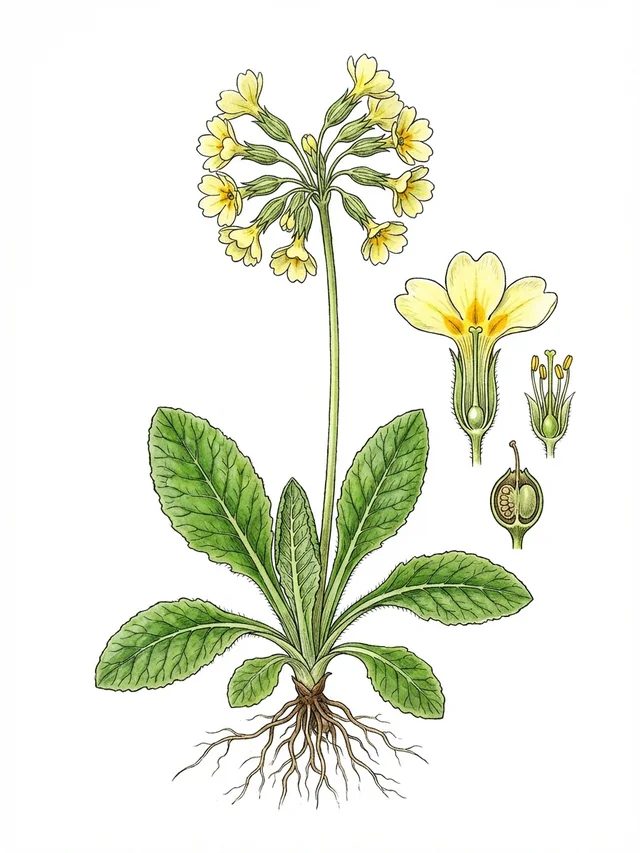
 Bild folgtKI-generierte Illustration
antirrhinum majus
Antirrhinum majus
FamilyGenus: Antirrhinumheimisch in Deutschland
🌿
19
Species
interact
🔗
30
Interactions
documented
🐛
5
Host relationships
Species
About this species
A summer-flowering herbaceous plant, antirrhinum majus is an established introduced species in Great Britain. It grows to about half a metre tall and flowers from June to September, preferring full sun and fresh, moderately moist, alkaline soil.
Ecological network
Click to highlight connections · Click again to open species page
Netzwerk wird geladen...
PollinationLarval hostFlower visit
Ecological significance
No ecological impacts are noted for Great Britain. It occasionally appears outside cultivation but is not considered invasive here.
Annual cycle
Antirrhinum majus flowers from June to September. As a herbaceous, non-woody plant, its above-ground growth appears in spring and dies back in autumn after seed capsules have matured.
Safety note
No toxicity or safety concerns are known for this plant.
Standort & Merkmale
Light
Sonne
Moisture
Frisch (Mäßig feucht)
Soil
Mittelzehrer (Normaler Boden)
Bloom time
Jun – Sep
Soil reaction
Basisch / Kalkhold
Bioregion
Continental
Growth form
Krautige Pflanze
Woodiness
Nicht verholzt
Leaf type
Breitblättrig
Plant height
0.474 m
Morphological traits: TRY ID3 (CC BY 3.0) & TRY ID81 (CC BY)
Pflege & Anbau
•
Light: Full sun
•
Moisture: Moderately moist, well-drained soil; avoid waterlogging
•
Soil: Normal garden soil, alkaline (calcareous)
•
Nutrients: Medium feeder; no heavy fertilisation needed
Scientific profile
A non-woody, broad-leaved herbaceous plant in the family Plantaginaceae, antirrhinum majus typically reaches about 0.5 metres in height and bears small seeds (diaspore mass approximately 0.13 mg) and a leaf area of about 303 mm². It is an established introduced species in Great Britain, recorded here since the medieval period. It favours sunny, fresh, moderately moist sites with alkaline, medium-fertility soils. Flowering occurs from June to September.
Bestäuber & Besucher
10 Arten interagieren mit dieser Pflanze
Host relationships
5 species use this plant as a host
Other flower visitors
4 other species visit the flowers
Sources & data origin
•TraitCH — CC BY 4.0TraitCH 2.0 contributors; imported as source-preserving NaturKompass taxon evidence.
•TRY v6.0 / BiolFlor flowering phenology (Request 47350) — CC BY 4.0TRY request 47350 (Public, Data Released, TRY v6.0; 2026-02-15). Cite TRY: Kattge et al. (2020), doi:10.1111/gcb.14904; original source: Trefflich, A., Klotz, S. & Kühn, I. (2002). Blühphänologie. BIOLFLOR, Schriftenreihe für Vegetationskunde 38:127–131.
•Cook et al. (2025) UK Butterfly & Moth Traits (DOI: 10.5285/dbc7cc17-cbbd-49dd-bab4-8e8855768d66)
•Interaktionsdaten via GloBI (CC-BY 4.0)
•pollinator_interactions
•FloraWeb / BfN
•EIVE 1.0 — Dengler et al. (2023), DOI: 10.3897/VCS.98324 (CC BY 4.0)
•GBIF Backbone Taxonomy — GBIF Secretariat (2024), DOI: 10.15468/39omei (CC BY 4.0)
•TRY Categorical Traits (ID3) — Kattge et al. (2012), DOI: 10.17871/TRY.3 (CC BY 3.0)
•TRY Global Spectrum (ID81) — Díaz et al. (2016/2021), DOI: 10.17871/TRY.81 (CC BY)
•Checklist Alien Plants Belgium — Verloove F (2023), Botanic Garden Meise (CC BY 4.0)
•Govaerts R et al. (2025) — World Checklist of Vascular Plants (WCVP) v14. Royal Botanic Gardens, Kew. DOI: 10.34885/xs7h-ze42 (CC BY 4.0)
All data is licensed under CC BY 4.0, CC0, or compatible. Attribution according to license terms. Full source overview →