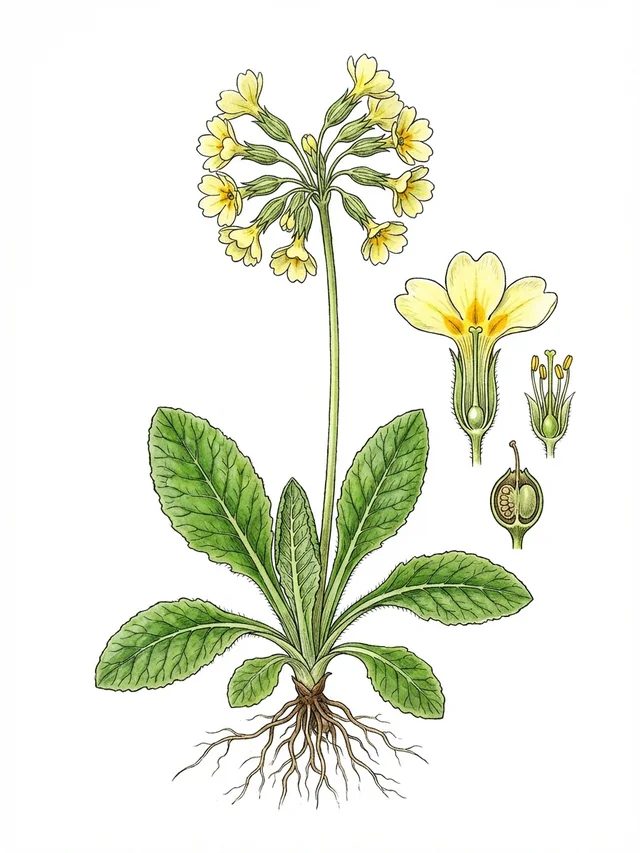
 Bild folgtKI-generierte Illustration
Arctotheca calendula
Arctotheca calendula
FamilyGenus: Arctotheca🌍 Neophyte
🌍
Alien species (Neophyte)
This plant is not native to Central Europe. It was introduced after 1492 and has established itself in the wild. Documented interactions with native fauna are listed below — however, they do not replace the ecological value of native plants.
🌿
2
Species
interact
🔗
2
Interactions
documented
About this species
Arctotheca calendula is an introduced and established plant in Great Britain, belonging to the Asteraceae family. It is a broad-leaved, non-woody herbaceous species that flowers from June to July, providing nectar and pollen for visiting insects.
Ecological network
Click to highlight connections · Click again to open species page
Netzwerk wird geladen...
Flower visit
Ecological significance
This species is introduced and established in Great Britain. Its ecological impact has not been assessed in the local context, and it is not recorded as invasive. In Belgium it is considered a casual alien, introduced via grain and wool.
Annual cycle
Flowering occurs from June to July.
Standort & Merkmale
Light
—
Moisture
—
Soil
—
Bloom time
Jun – Jul
Nectar value
2
Pollen value
2
Growth form
Krautige Pflanze
Woodiness
Nicht verholzt
Leaf type
Breitblättrig
Morphological traits: TRY ID3 (CC BY 3.0) & TRY ID81 (CC BY)
Scientific profile
A member of the daisy family (Asteraceae), Arctotheca calendula is a terrestrial, herbaceous plant with broad leaves and non-woody stems. Its seeds are tiny, with a recorded diaspore mass of 0.9 milligrams. The plant blooms from June into July, and its flowers offer moderate resources of nectar and pollen. It is not native to Britain but has become established in the wild, having been introduced through pathways possibly including grain and wool (as noted in Belgian records).
Other flower visitors
2 other species visit the flowers
Rediviva intermixtaRediviva nitida
Sources & data origin
•TraitCH — CC BY 4.0TraitCH 2.0 contributors; imported as source-preserving NaturKompass taxon evidence.
•TRY v6.0 / Dataset 516 Czech flora flowering months (via public Request 47350) — CC BY 4.0Data delivery and licence basis: TRY request 47350 (Public, Data Released, TRY v6.0; 2026-02-15) under current TRY public-trait IP Guidelines. Cite TRY: Kattge et al. (2020), doi:10.1111/gcb.14904. Attribute original reference: Kaplan, Z. et al. (eds.) (2019). Klíč ke květeně České republiky, 2nd ed., Academia, Praha.
•pollinator_interactions
•EuPPollNet — Kuppler et al. (2025), DOI: 10.1111/geb.70000 (CC BY 4.0)
•Database of Pollinator Interactions (DoPI) — Pocock et al. (2022), DOI: 10.1002/ecy.3801 (CC BY)
•GBIF Backbone Taxonomy — GBIF Secretariat (2024), DOI: 10.15468/39omei (CC BY 4.0)
•TRY Categorical Traits (ID3) — Kattge et al. (2012), DOI: 10.17871/TRY.3 (CC BY 3.0)
•TRY Global Spectrum (ID81) — Díaz et al. (2016/2021), DOI: 10.17871/TRY.81 (CC BY)
•Checklist Alien Plants Belgium — Verloove F (2023), Botanic Garden Meise (CC BY 4.0)
•Govaerts R et al. (2025) — World Checklist of Vascular Plants (WCVP) v14. Royal Botanic Gardens, Kew. DOI: 10.34885/xs7h-ze42 (CC BY 4.0)
All data is licensed under CC BY 4.0, CC0, or compatible. Attribution according to license terms. Full source overview →