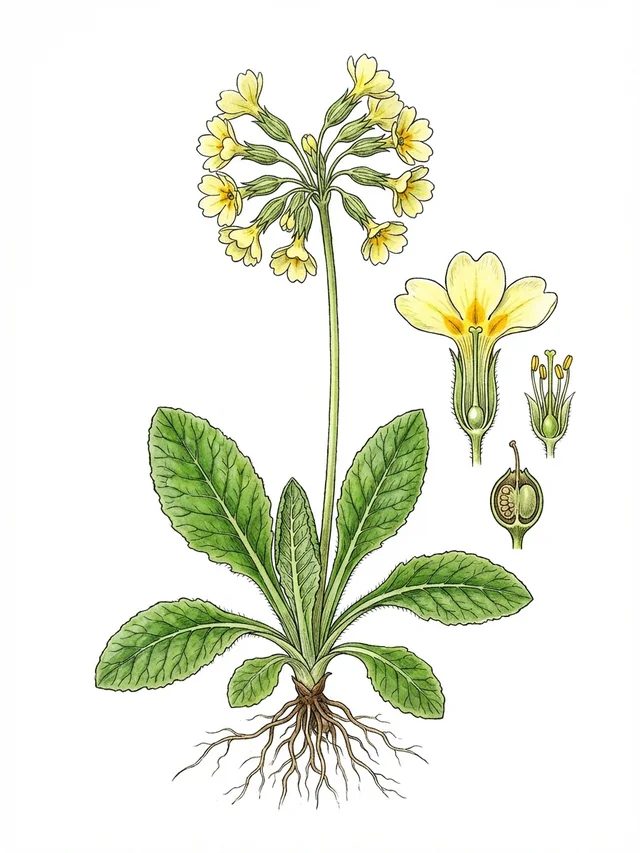
 Bild folgtKI-generierte Illustration
Cakile maritima
Cakile maritima
FamilyGenus: Cakileheimisch in Deutschland
🌿
48
Species
interact
🔗
267
Interactions
documented
🐛
1
Host relationships
Species
About this species
Cakile maritima is a native, non-woody, broad-leaved herbaceous plant of nutrient-rich, often disturbed coastal ground. It reaches around 0.2 m in height, blooms from July to October, and thrives in full sun, fresh to moderately moist, alkaline and moderately saline soils.
Ecological network
Click to highlight connections · Click again to open species page
Netzwerk wird geladen...
PollinationLarval hostFlower visit
Ecological significance
As a native component of coastal and ruderal vegetation, Cakile maritima contributes to the natural plant communities of these habitats. No further ecological impact data are provided.
Annual cycle
Flowering occurs from July to October. No information on other phenological phases is present.
Safety note
No toxicity or hazard data are available in the evidence.
Standort & Merkmale
Light
Sonne
Moisture
Frisch (Mäßig feucht)
Soil
Starkzehrer (Nährstoffreicher/Fetter Boden)
Bloom time
Jul – Okt
Soil reaction
Basisch / Kalkhold
Bioregion
Continental
Growth form
Krautige Pflanze
Woodiness
Nicht verholzt
Leaf type
Breitblättrig
Plant height
0.214 m
Morphological traits: TRY ID3 (CC BY 3.0) & TRY ID81 (CC BY)
Scientific profile
Cakile maritima is a herbaceous, non-woody, broad-leaved terrestrial plant with a typical height of 0.21 m (individual records give 0.214 m) and a leaf area of 764 mm². Its diaspore mass averages 12.19 mg. The species is native in Great Britain (Plant Atlas 2020). It grows in full sun on nutrient-rich, alkaline to calcareous soils, tolerating moderate salinity and fresh to moderately moist conditions. Disturbance tolerance is low (severity 0.56). The primary habitat indicated by Ellenberg values is fertile meadow or intensive grassland, with secondary occurrence on nutrient-rich ruderal sites and rubble. Flowering extends from July to October.
Bestäuber & Besucher
36 Arten interagieren mit dieser Pflanze
Halictus scabiosaeAndrena scitaPieris rapaeLasioglossum nitidulumBombus terrestrisVanessa carduiStilbum cyanurumApis melliferaAnthophora canescensEristalis tenaxAndrena minutulaAndrenaLasioglossumAnthophora balearicaHylaeus punctatusHalictusHylaeus taeniolatusPontia daplidiceColletesPolyommatus celinaAncistrocerus longispinosusAndrena ovatulaSyritta pipiensAmegilla quadrifasciataMegachileMelanogaster aerosaSyritta flaviventrisGonepteryx cleopatraPolistes dominulaHalictus fulvipesAndrena bimaculataAndrena flavipesAndrena haemorrhoaAndrena nigroaeneaDipogon variegatusAnthophora subterranea
Other flower visitors
11 other species visit the flowers
CeylalictusBombylius cinerascensTrichopoda pennipesDeuteragenia variegataOxythyrea funestaOedemera flavipesHelina reversioDasytes nigroaeneusExoprosopa italicaSarcophagaMeligethes aeneus
Sources & data origin
•TRY v6.0 / BiolFlor flowering phenology (Request 47350) — CC BY 4.0TRY request 47350 (Public, Data Released, TRY v6.0; 2026-02-15). Cite TRY: Kattge et al. (2020), doi:10.1111/gcb.14904; original source: Trefflich, A., Klotz, S. & Kühn, I. (2002). Blühphänologie. BIOLFLOR, Schriftenreihe für Vegetationskunde 38:127–131.
•Cook et al. (2025) UK Butterfly & Moth Traits (DOI: 10.5285/dbc7cc17-cbbd-49dd-bab4-8e8855768d66)
•pollinator_interactions
•FloraWeb / BfN
•EIVE 1.0 — Dengler et al. (2023), DOI: 10.3897/VCS.98324 (CC BY 4.0)
•GBIF Backbone Taxonomy — GBIF Secretariat (2024), DOI: 10.15468/39omei (CC BY 4.0)
•TRY Categorical Traits (ID3) — Kattge et al. (2012), DOI: 10.17871/TRY.3 (CC BY 3.0)
•TRY Global Spectrum (ID81) — Díaz et al. (2016/2021), DOI: 10.17871/TRY.81 (CC BY)
•Govaerts R et al. (2025) — World Checklist of Vascular Plants (WCVP) v14. Royal Botanic Gardens, Kew. DOI: 10.34885/xs7h-ze42 (CC BY 4.0)
All data is licensed under CC BY 4.0, CC0, or compatible. Attribution according to license terms. Full source overview →