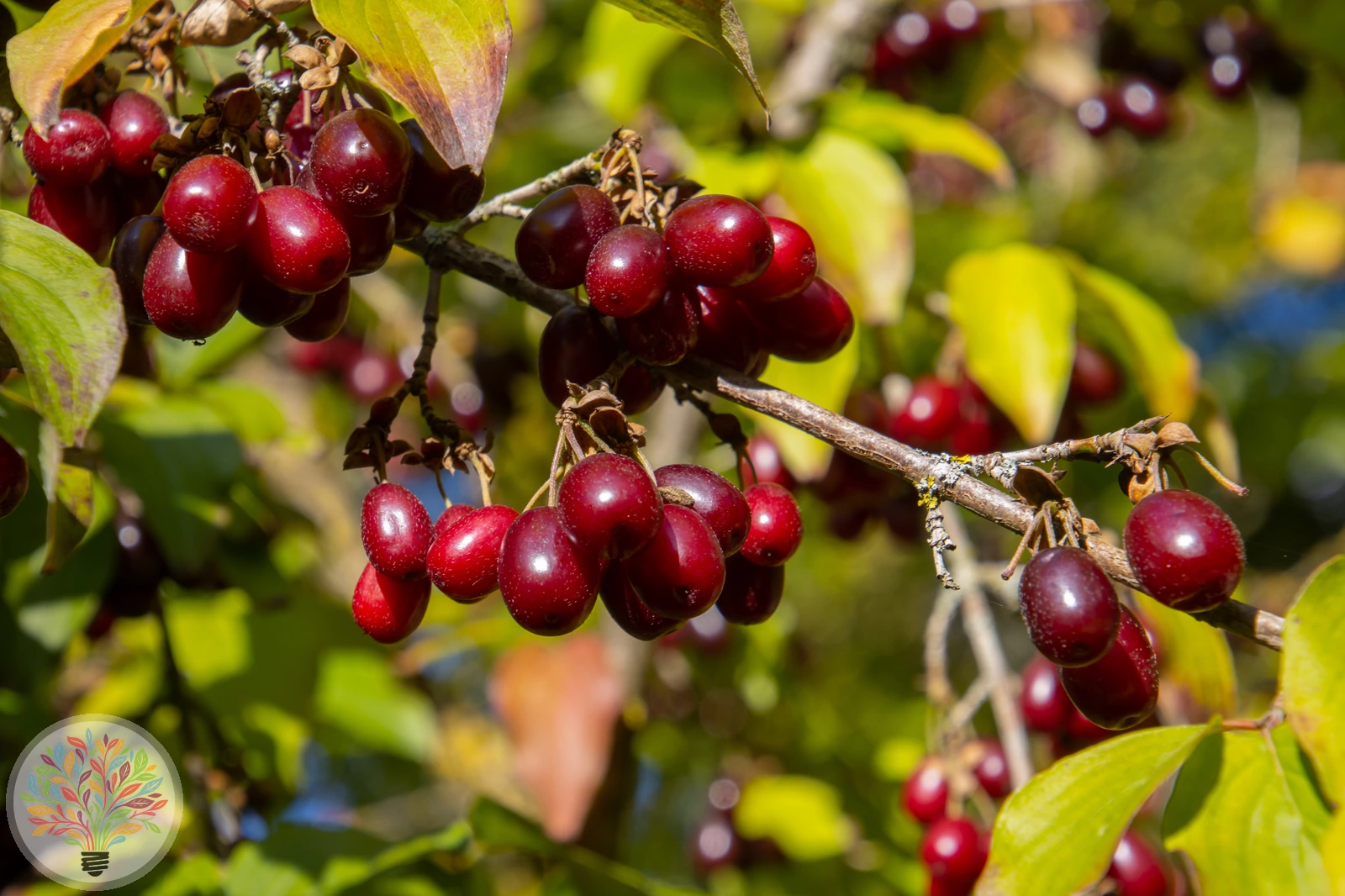
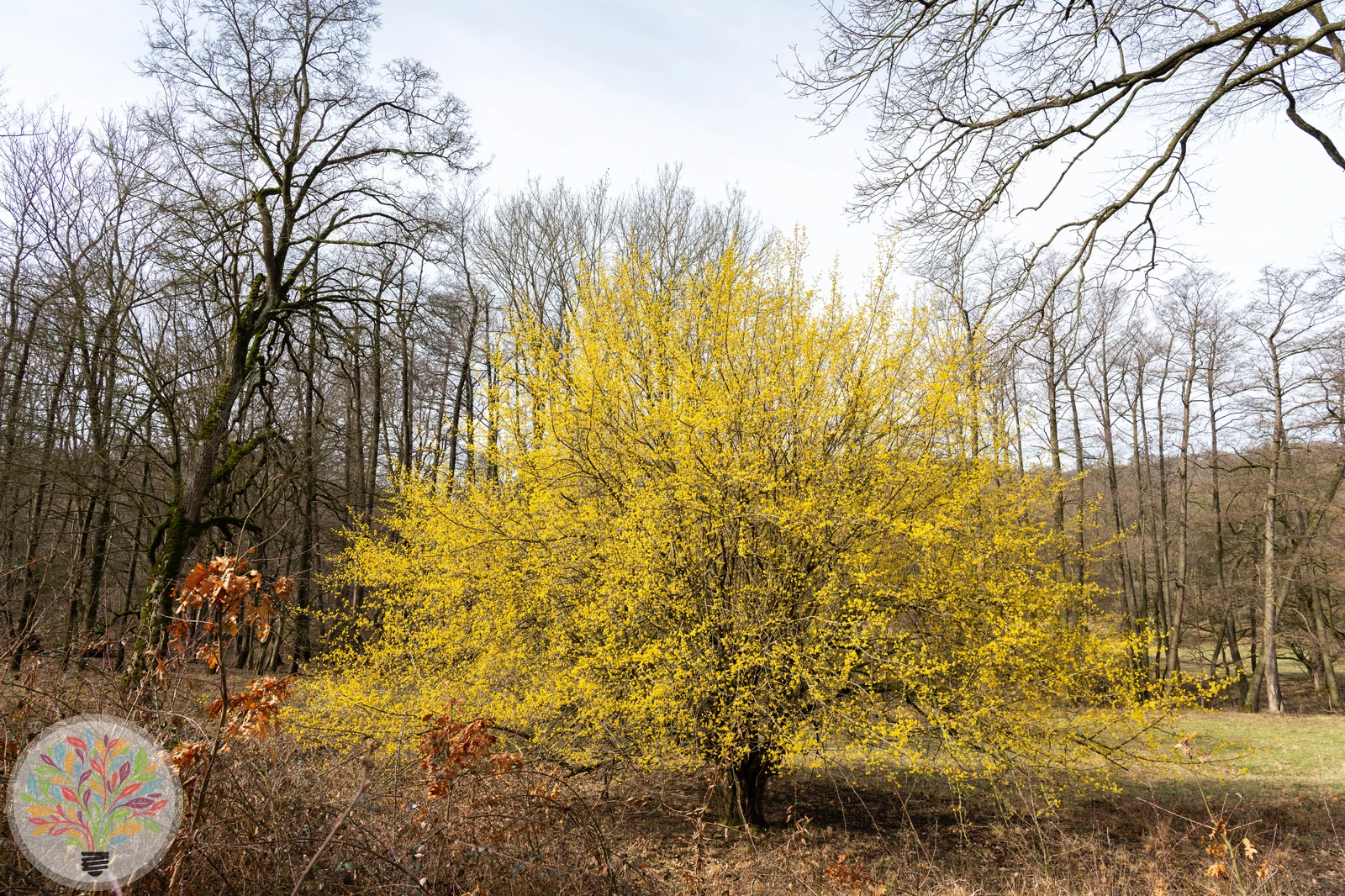
Cornus mas
Cornus mas
FamilyGenus: Cornusheimisch in Deutschland
🌿
41
Species
interact
🔗
42
Interactions
documented
🐛
1
Host relationships
Species
About this species
A deciduous woody shrub, introduced and established in Great Britain, flowering from February to April. It grows best in partial shade on fresh, moderately moist, calcareous to alkaline soils with moderate fertility.
Ecological network
Click to highlight connections · Click again to open species page
Netzwerk wird geladen...
PollinationLarval hostFlower visit
Ecological significance
No detailed ecological impact information is currently available for Great Britain.
Annual cycle
Flowering takes place from February to April on bare branches. Broad leaves appear after flowering and are shed in autumn.
Standort & Merkmale
Light
Halbschatten
Moisture
Frisch (Mäßig feucht)
Soil
Mittelzehrer (Normaler Boden)
Bloom time
Feb – Apr
Soil reaction
Basisch / Kalkhold
Bioregion
Continental
Growth form
Strauch
Woodiness
Verholzt
Leaf type
Breitblättrig
Leaf phenology
Laubabwerfend
Plant height
4.159 m
Morphological traits: TRY ID3 (CC BY 3.0) & TRY ID81 (CC BY)
0
Pflege & Anbau
**Light:** Partial shade.
**Moisture:** Fresh to moderately moist, well-drained soil.
**Soil:** Calcareous or alkaline soils preferred; normal garden soil with moderate fertility is suitable.
**Position:** Sheltered, warm site.
**Maintenance:** Established plants need little care.
Scientific profile
Cornus mas is a deciduous broad-leaved woody shrub that typically reaches about 4.2 m in height. It is introduced and established in Great Britain, where it flowers from February to April. The plant prefers partially shaded sites and fresh, moderately moist, calcareous to basic soils of moderate fertility. It is warmth-loving and occurs mainly in habitats with low disturbance. It forms arbuscular mycorrhizal associations.
Host relationships
1 species use this plant as a host
Coccinella septempunctata
Other flower visitors
38 other species visit the flowers
Phylloscopus collybitaParus majorPyrrhula pyrrhulaPoecile palustrisSylvia borinVulpes vulpesLuscinia megarhynchosGarrulus glandariusChloris chlorisSturnus vulgarisSylvia atricapillaTurdus merulaFringilla coelebsSylvia currucaTurdus viscivorusTurdus philomelosMartes foinaMonticola solitariusMeles melesOriolus oriolusLasiocampa quercusHarmonia axyridisPsittacula krameriPhoenicurus phoenicurusPhoenicurus ochrurosCyanistes caeruleusMartes martesUrsus arctosCanis lupusSaxicola torquatusSylvia undataSylvia cantillansPica picaErithacus rubeculaSylvia communisFicedula hypoleucaTurdus iliacusErinaceus europaeus
Sources & data origin
•TRY v6.0 / BiolFlor flowering phenology (Request 47350) — CC BY 4.0TRY request 47350 (Public, Data Released, TRY v6.0; 2026-02-15). Cite TRY: Kattge et al. (2020), doi:10.1111/gcb.14904; original source: Trefflich, A., Klotz, S. & Kühn, I. (2002). Blühphänologie. BIOLFLOR, Schriftenreihe für Vegetationskunde 38:127–131.
•Interaktionsdaten via GloBI (CC-BY 4.0)
•Baden-Böhm F, App M, Thiele J (2022) — The FloRes Database: A floral resources trait database for pollinator habitat-assessment generated by a multistep workflow. Johann Heinrich von Thünen-Institut, Dryad, DOI: 10.5061/dryad.djh9w0w29 (CC0)
•FloraWeb / BfN
•EIVE 1.0 — Dengler et al. (2023), DOI: 10.3897/VCS.98324 (CC BY 4.0)
•GBIF Backbone Taxonomy — GBIF Secretariat (2024), DOI: 10.15468/39omei (CC BY 4.0)
•TRY Categorical Traits (ID3) — Kattge et al. (2012), DOI: 10.17871/TRY.3 (CC BY 3.0)
•TRY Global Spectrum (ID81) — Díaz et al. (2016/2021), DOI: 10.17871/TRY.81 (CC BY)
•Govaerts R et al. (2025) — World Checklist of Vascular Plants (WCVP) v14. Royal Botanic Gardens, Kew. DOI: 10.34885/xs7h-ze42 (CC BY 4.0)
•Foto: © Adobe Stock / AdobeStock_538564360
All data is licensed under CC BY 4.0, CC0, or compatible. Attribution according to license terms. Full source overview →