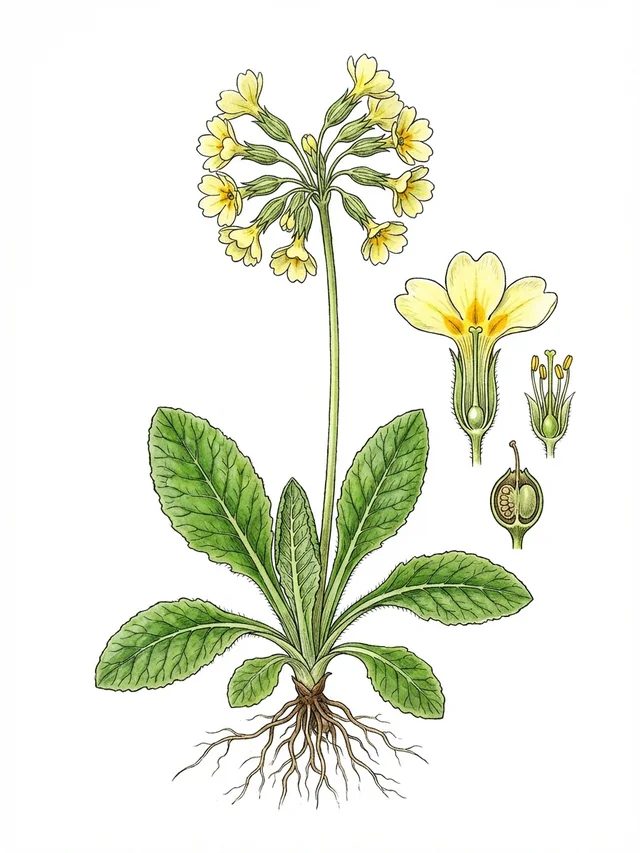
 Bild folgtKI-generierte Illustration
Dysphania botrys
Dysphania botrys
FamilyGenus: Dysphaniaheimisch in Deutschland
🌿
1
Species
interact
🔗
1
Interactions
documented
About this species
Dysphania botrys is an introduced herbaceous plant that has become established in Great Britain, bearing broad leaves and flowering from July to October.
Ecological network
Click to highlight connections · Click again to open species page
Netzwerk wird geladen...
Flower visit
Ecological significance
It is an introduced, established species in Great Britain. No detailed information on its ecological impacts is available in the current dataset.
Annual cycle
The plant is herbaceous and produces flowers from July to October.
Standort & Merkmale
Light
Sonne
Moisture
Frisch (Mäßig feucht)
Soil
Mittelzehrer (Normaler Boden)
Bloom time
Jul – Okt
Soil reaction
Mäßig sauer bis neutral
Bioregion
Continental
Growth form
Krautige Pflanze
Woodiness
Nicht verholzt
Leaf type
Breitblättrig
Plant height
0.499 m
Morphological traits: TRY ID3 (CC BY 3.0) & TRY ID81 (CC BY)
Pflege & Anbau
Grow Dysphania botrys in a sunny position with moderately moist, well-drained soil. A neutral to slightly alkaline soil suits it best. Water regularly to maintain freshness, but avoid waterlogging. The plant is herbaceous and reaches about 0.5 m in height. As a non-mycorrhizal species, it may not require rich organic matter; average garden soil is adequate. No special winter protection is needed if grown as an annual, though its hardiness is not documented here.
Scientific profile
Dysphania botrys is an introduced herbaceous plant with broad leaves, typically reaching 0.5 m in height. It thrives in full sun and moderately moist, ordinary garden soil with a basic reaction. The species is non-mycorrhizal and tolerates low levels of disturbance. Flowering occurs from July to October. It is a neophyte that has become established in the wild in Great Britain.
Sources & data origin
•TraitCH — CC BY 4.0TraitCH 2.0 contributors; imported as source-preserving NaturKompass taxon evidence.
•Interaktionsdaten via GloBI (CC-BY 4.0)
•FloraWeb / BfN
•EIVE 1.0 — Dengler et al. (2023), DOI: 10.3897/VCS.98324 (CC BY 4.0)
•GBIF Backbone Taxonomy — GBIF Secretariat (2024), DOI: 10.15468/39omei (CC BY 4.0)
•TRY Categorical Traits (ID3) — Kattge et al. (2012), DOI: 10.17871/TRY.3 (CC BY 3.0)
•TRY Global Spectrum (ID81) — Díaz et al. (2016/2021), DOI: 10.17871/TRY.81 (CC BY)
•Checklist Alien Plants Belgium — Verloove F (2023), Botanic Garden Meise (CC BY 4.0)
•Govaerts R et al. (2025) — World Checklist of Vascular Plants (WCVP) v14. Royal Botanic Gardens, Kew. DOI: 10.34885/xs7h-ze42 (CC BY 4.0)
All data is licensed under CC BY 4.0, CC0, or compatible. Attribution according to license terms. Full source overview →