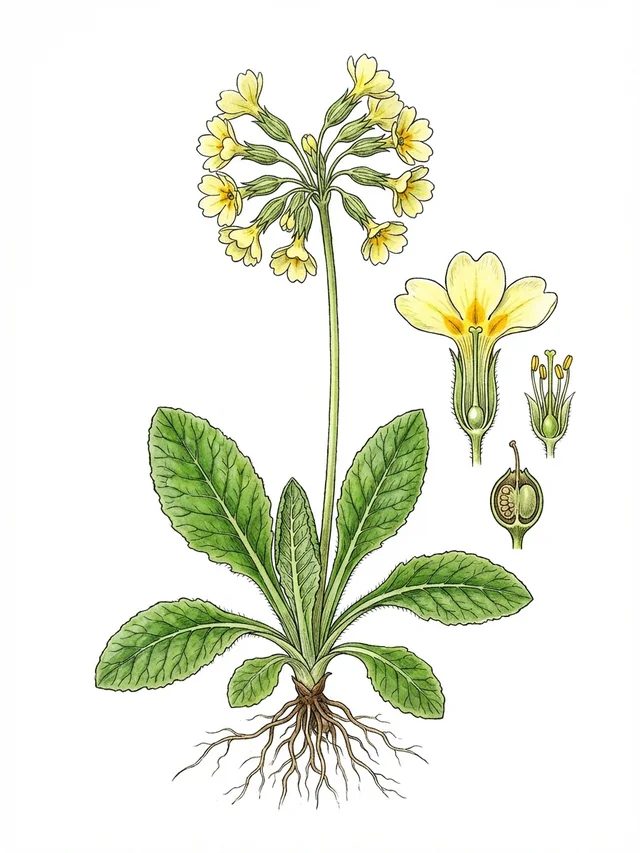
 Bild folgtKI-generierte Illustration
Echinops bannaticus
Echinops bannaticus
FamilyGenus: Kugeldistelnheimisch in Deutschland
🌿
21
Species
interact
🔗
32
Interactions
documented
About this species
Echinops bannaticus is an introduced perennial that has become established in Great Britain. It thrives in full sun on dry, normal soil and produces spherical blue flower heads from July to September. The plant has broad leaves and forms arbuscular mycorrhizal associations.
Ecological network
Click to highlight connections · Click again to open species page
Netzwerk wird geladen...
PollinationFlower visit
Ecological significance
Echinops bannaticus is introduced and established in Great Britain but is not currently listed as invasive. No significant negative ecological impacts have been recorded.
Annual cycle
Flowers from July to September. As a herbaceous perennial, it dies back to ground level over winter and regenerates from its rootstock the following spring.
Safety note
No specific hazards have been recorded for this plant.
Standort & Merkmale
Light
Sonne
Moisture
Trocken
Soil
Mittelzehrer (Normaler Boden)
Bloom time
Jul – Sep
Soil reaction
Basisch / Kalkhold
Bioregion
Continental
Leaf type
Breitblättrig
Morphological traits: TRY ID3 (CC BY 3.0) & TRY ID81 (CC BY)
Pflege & Anbau
•
Light : Full sun.
•
Moisture : Dry, well-drained soil; drought-tolerant once established.
•
Soil : Normal, moderately fertile soil. Avoid heavy or waterlogged ground.
•
Maintenance : Deadhead spent blooms to limit self-seeding, or leave seed heads for architectural winter interest. Cut back old stems in early spring before new growth appears.
Scientific profile
Echinops bannaticus is a perennial herb introduced to Great Britain where it is now established. Its broad, spiny-edged leaves form a basal rosette, and upright branching stems bear globular, steel-blue flower heads from July into September. The species is found in open, sunny habitats and tolerates dry, normal soils. Ecological indicator values suggest a preference for warm, low-disturbance environments. It associates with arbuscular mycorrhizal fungi, which may aid its uptake of nutrients in nutrient-poor conditions.
Bestäuber & Besucher
18 Arten interagieren mit dieser Pflanze
Bombus hypnorumBombus lucorumBombus pascuorumBombus pratorumBombus jonellusBombus lapidariusBombus sylvestrisApis melliferaPisaura mirabilisVanessa virginiensisEuphydryas desfontainiiMelitaea aetherieMelitaea phoebeMelitaea variaBombus bimaculatusBombus impatiensBombus hortorumBombus terrestris
Other flower visitors
3 other species visit the flowers
Agapostemon sericeusAugochlora puraAugochloropsis viridula
Sources & data origin
•TraitCH — CC BY 4.0TraitCH 2.0 contributors; imported as source-preserving NaturKompass taxon evidence.
•Interaktionsdaten via GloBI (CC-BY 4.0)
•Middleton-Welling_2020
•pollinator_interactions
•FloraWeb / BfN
•EIVE 1.0 — Dengler et al. (2023), DOI: 10.3897/VCS.98324 (CC BY 4.0)
•GBIF Backbone Taxonomy — GBIF Secretariat (2024), DOI: 10.15468/39omei (CC BY 4.0)
•TRY Categorical Traits (ID3) — Kattge et al. (2012), DOI: 10.17871/TRY.3 (CC BY 3.0)
•TRY Global Spectrum (ID81) — Díaz et al. (2016/2021), DOI: 10.17871/TRY.81 (CC BY)
•Govaerts R et al. (2025) — World Checklist of Vascular Plants (WCVP) v14. Royal Botanic Gardens, Kew. DOI: 10.34885/xs7h-ze42 (CC BY 4.0)
All data is licensed under CC BY 4.0, CC0, or compatible. Attribution according to license terms. Full source overview →