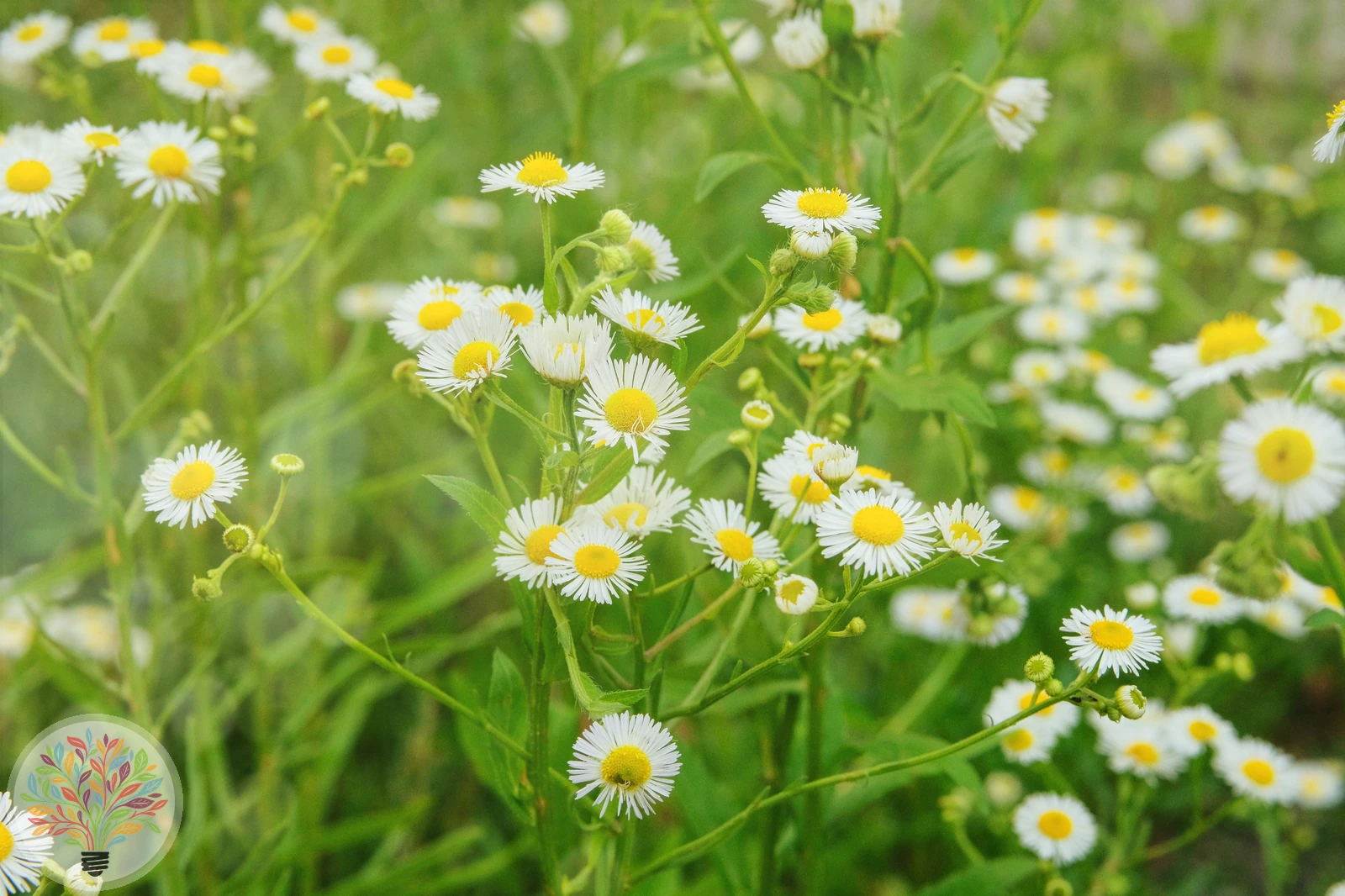
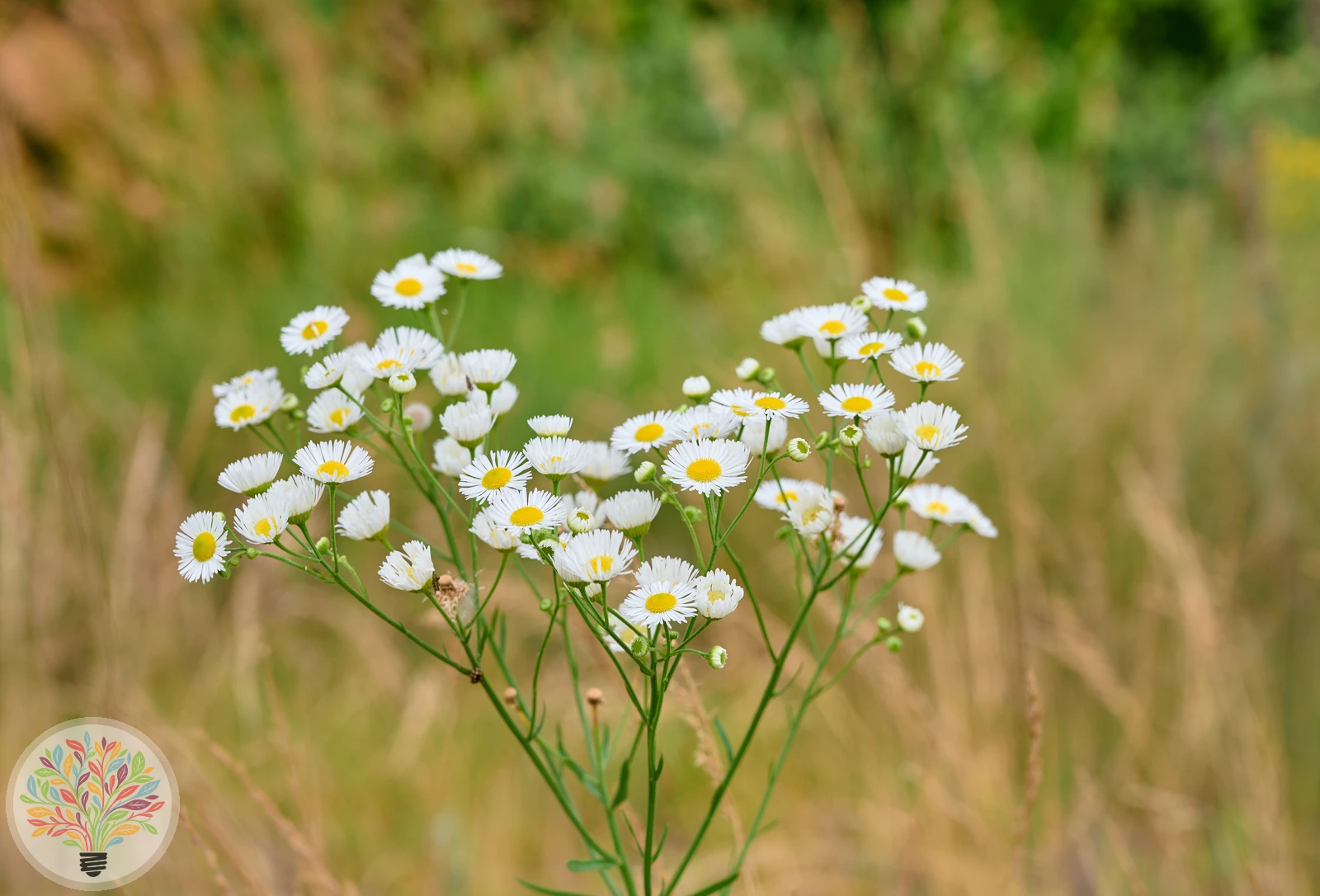
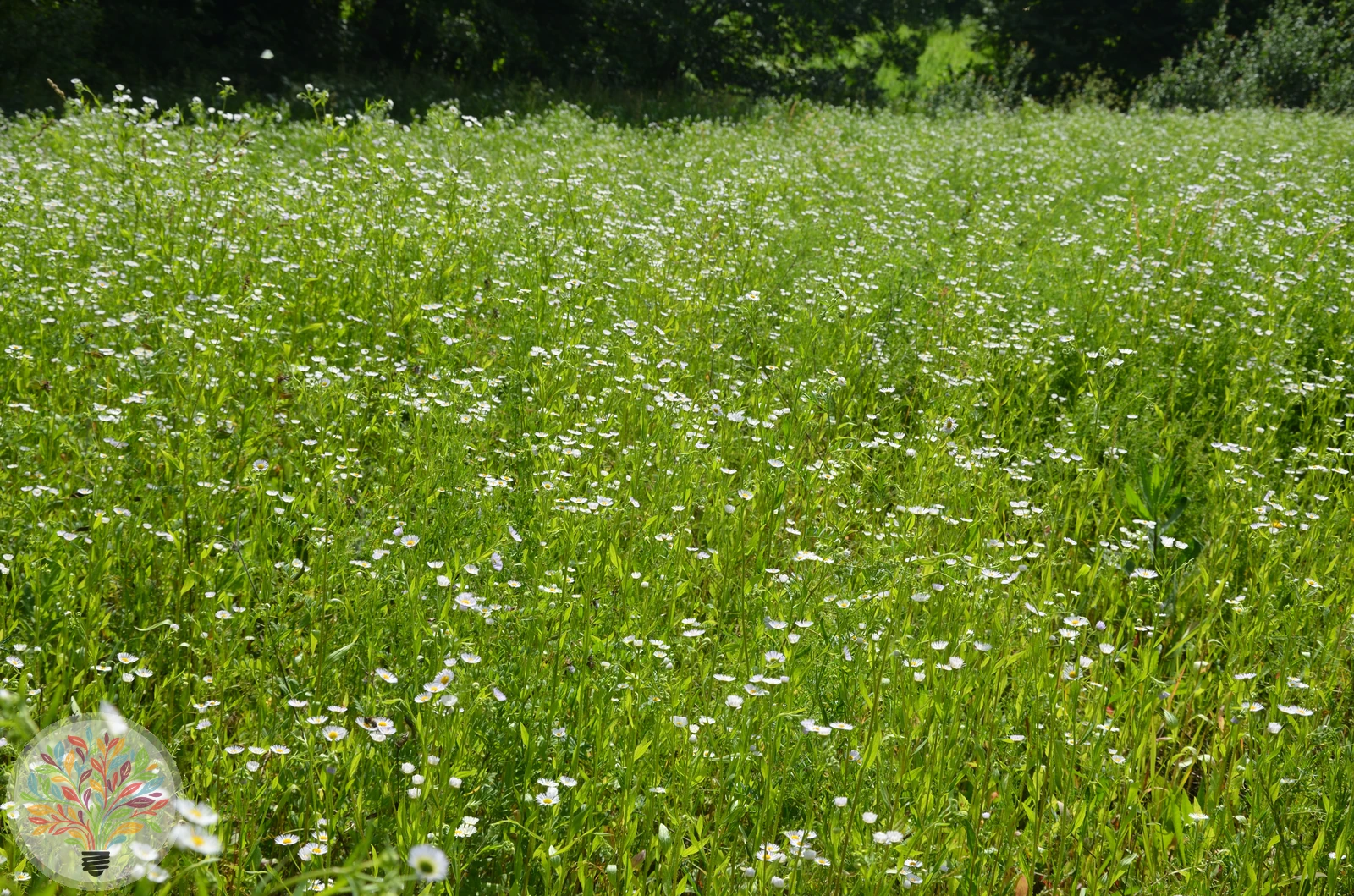
Erigeron annuus
Erigeron annuus
FamilyGenus: Erigeronheimisch in Deutschland🌍 Neophyte
🌍
Alien species (Neophyte)
This plant is not native to Central Europe. It was introduced after 1492 and has established itself in the wild. Documented interactions with native fauna are listed below — however, they do not replace the ecological value of native plants.
🌿
240
Species
interact
🔗
1873
Interactions
documented
🐛
10
Host relationships
Species
About this species
An introduced herbaceous plant established in Great Britain, bearing broad leaves and flowering from June to August. It favours sunny, fresh, nutrient-rich soils and shows a preference for habitats with low disturbance.
Ecological network
Click to highlight connections · Click again to open species page
Netzwerk wird geladen...
PollinationLarval hostFlower visit
Ecological significance
Erigeron annuus is an introduced species that has become established in Great Britain. It is also recorded as naturalised in several other European countries. The plant typically occupies low-disturbance habitats and has no documented invasive status in the region.
Annual cycle
A herbaceous plant that produces broad leaves in spring. Blooms with daisy-like flower heads from June to August. After flowering, it sets minute, wind-dispersed seeds that weigh around 0.0323 mg.
Safety note
No safety concerns are documented for this species.
Standort & Merkmale
Light
Sonne
Moisture
Frisch (Mäßig feucht)
Soil
Starkzehrer (Nährstoffreicher/Fetter Boden)
Bloom time
Jun – Aug
Soil reaction
Mäßig sauer bis neutral
Bioregion
Continental
Growth form
Krautige Pflanze
Woodiness
Nicht verholzt
Leaf type
Breitblättrig
Plant height
0.747 m
Morphological traits: TRY ID3 (CC BY 3.0) & TRY ID81 (CC BY)
Pflege & Anbau
Provide a sunny position in fresh, moderately moist soil that is nutrient-rich. The species has low tolerance of soil disturbance.
Scientific profile
Erigeron annuus is a non-woody, terrestrial, herbaceous species in the Asteraceae family. It produces broad leaves with an average leaf area of about 771 mm², and typically reaches a height of around 0.75 m. The tiny seeds are wind-dispersed, each weighing approximately 0.0323 mg. Flowering occurs from June to August. Ecologically, it has a strong affinity for sunny conditions (Ellenberg light value 7), fresh to moderately moist soils (moisture 6), and a neutral to weakly acid substrate reaction (pH 6). It is categorised as a nutrient-rich soil indicator and prefers moderately warm temperatures (temperature value 6) while tolerating only low levels of disturbance (severity 0.62). In Great Britain the species is introduced and established; it is also recorded in several other European countries.
Bestäuber & Besucher
165 Arten interagieren mit dieser Pflanze
Andrena flavipesNomada fucataVespula vulgarisMellicta athaliaPieris rapaeHeriades truncorumAglais urticaeHalictus rubicundusAglais ioHalictus tumulorumBombus pascuorumBombus sylvestrisBombus lucorumEctemnius divesOxybelus uniglumisAphantopus hyperantusApis melliferaPlebejus argusDasypoda hirtipesBombus lapidariusPolygonia c-albumPolistes dominulaTrichius fasciatusTrichodes apiariusAmata phegeaAnthidium oblongatumAnthophila fabricianaSphecodes albilabrisLycaena virgaureaeHedychrum rutilansPieris napiLycaena phlaeasCelastrina argiolusMegachile centuncularisAncistrocerus gazellaTrichius gallicusEumenes coronatusCerceris rybyensisScolitantides orionThymelicus lineolaHylaeus leptocephalusIsodontia mexicanaManiola jurtinaHalictus confususSatyrium w-albumPolyommatus icarusCoenonympha pamphilusHalictus subauratusVanessa atalantaHylaeus annulatus
Host relationships
10 species use this plant as a host
Ascotis selenariaCalycomyza humeralisCnephasia stephensianaEristalis arbustorumGraphocephala fennahiLiriomyza eupatoriiPandemis heparanaSphaerophoria scriptaSyritta pipiensTrupanea stellata
Other flower visitors
65 other species visit the flowers
Lasius nigerAnthrenus verbasciHarmonia axyridisLasius emarginatusStenurella melanuraAnthonomus rubiSapygina decemguttataCoccinula quatuordecimpustulataStictoleptura rubraDiplazon laetatoriusStenopterus rufusMisumena vatiaOxythyrea funestaMangora acalyphaOedemera podagrariaeAgrypnus murinusThomisus onustusAraneus diadematusOulema melanopusStenurella bifasciataEbrechtella tricuspidataPlutella xylostellaSynema globosumOedemera nobilisNylanderia flavipesCharagmus gressoriusChrysanthia geniculataCetonia aurataPseudovadonia lividaPhasia aurigeraExomala orientalisPopillia japonicaMalachius aeneusFannia scalarisCladius pectinicornisPropylea quatuordecimpunctataAgapostemon splendensAgapostemon virescensAugochlora puraAugochlorella aurataChelostoma philadelphiCoelioxys alternataCoelioxys sayiEpeolus lectoidesHeriades leavittiTriepeolus cressoniiTriepeolus donatusTriepeolus helianthiCoelioxys.afraSphaerophoria.sp
Sources & data origin
•TraitCH — CC BY 4.0TraitCH 2.0 contributors; imported as source-preserving NaturKompass taxon evidence.
•Interaktionsdaten via GloBI (CC-BY 4.0)
•pollinator_interactions
•FloraWeb / BfN
•EIVE 1.0 — Dengler et al. (2023), DOI: 10.3897/VCS.98324 (CC BY 4.0)
•GBIF Backbone Taxonomy — GBIF Secretariat (2024), DOI: 10.15468/39omei (CC BY 4.0)
•TRY Categorical Traits (ID3) — Kattge et al. (2012), DOI: 10.17871/TRY.3 (CC BY 3.0)
•TRY Global Spectrum (ID81) — Díaz et al. (2016/2021), DOI: 10.17871/TRY.81 (CC BY)
•Checklist Alien Plants Belgium — Verloove F (2023), Botanic Garden Meise (CC BY 4.0)
•Govaerts R et al. (2025) — World Checklist of Vascular Plants (WCVP) v14. Royal Botanic Gardens, Kew. DOI: 10.34885/xs7h-ze42 (CC BY 4.0)
•Foto: © Adobe Stock / AdobeStock_855870373
All data is licensed under CC BY 4.0, CC0, or compatible. Attribution according to license terms. Full source overview →