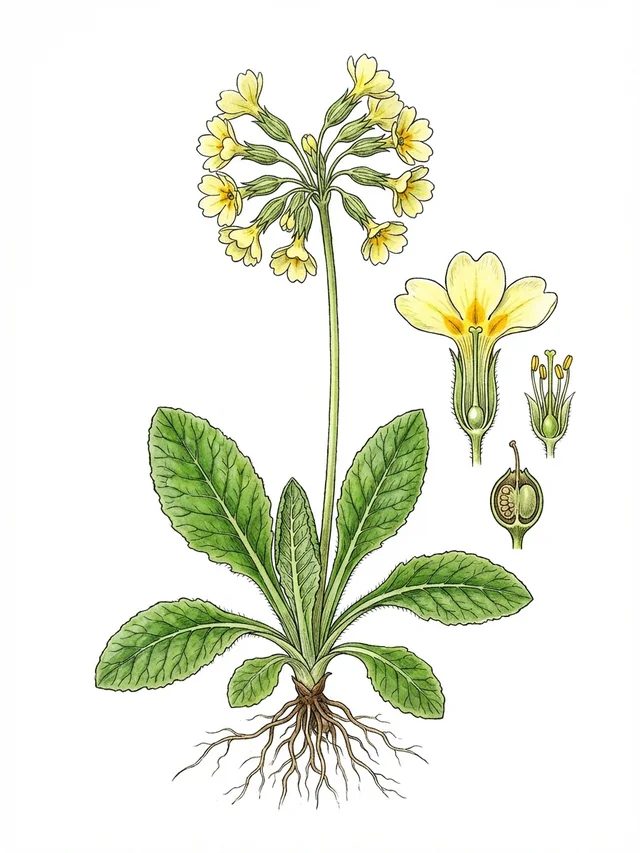
 Bild folgtKI-generierte Illustration
Euthamia graminifolia
Euthamia graminifolia
FamilyGenus: Euthamiaheimisch in Deutschland
🌿
77
Species
interact
🔗
96
Interactions
documented
About this species
A herbaceous perennial in the aster family, introduced and established in Great Britain, producing yellow flowerheads from July to October. It reaches about 0.75 metres tall and grows in full sun on fresh, nutrient-rich, calcareous soils.
Ecological network
Click to highlight connections · Click again to open species page
Netzwerk wird geladen...
PollinationFlower visit
Ecological significance
Ecological impact data for this species in Great Britain are not available.
Annual cycle
Flowering occurs from July to October.
Safety note
No safety information is available from the current evidence for this plant in Great Britain.
Standort & Merkmale
Light
Sonne
Moisture
Frisch (Mäßig feucht)
Soil
Starkzehrer (Nährstoffreicher/Fetter Boden)
Bloom time
Jul – Okt
Soil reaction
Basisch / Kalkhold
Bioregion
Continental
Growth form
Krautige Pflanze
Woodiness
Nicht verholzt
Leaf type
Breitblättrig
Plant height
0.747 m
Morphological traits: TRY ID3 (CC BY 3.0) & TRY ID81 (CC BY)
Pflege & Anbau
•
Light: Full sun.
•
Moisture: Fresh or moderately moist soil.
•
Soil: Nutrient-rich, neutral to alkaline (calcareous).
•
Flowering: July to October.
•
Mature height: Approximately 0.75 metres.
Scientific profile
Euthamia graminifolia is a non-woody, broad-leaved herbaceous plant that is an introduced, established species in Great Britain. Mature plants typically attain a height of around 75 centimetres. It produces its yellow flowerheads from July through October. The species requires a sunny position and grows best on fresh (moderately moist), nutrient-rich soils that are calcareous or basic. Leaves have a moderate area, and the tiny seeds weigh approximately 0.07 milligrams.
Bestäuber & Besucher
52 Arten interagieren mit dieser Pflanze
Helicoverpa armigeraPieris rapaeEctemnius continuusMythimna unipunctaMegachile centuncularisVanessa atalantaNymphalis antiopaTachysphex pompiliformisHalictus confususBoloria seleneApis melliferaVanessa carduiHesperia commaPolistes dominulaAncistrocerus gazellaIsodontia mexicanaHalictus rubicundusSceliphron caementariumAgrotis ipsilonNoctua pronubaBombus soroeensisMegachile rotundataLasioglossum zonulumAndrena braccataAndrena fulvipennisAndrena hirticinctaAndrena nubeculaBombus borealisBombus citrinusBombus griseocollisBombus impatiensBombus insularisBombus pensylvanicusBombus ternariusBombus terricolaBombus vagansColletes mandibularisColletes simulansColletes thysanellaeHalictus ligatusHylaeus confluensLasioglossum imitatumLasioglossum nymphaleLasioglossum tarponenseLasioglossum tegulareMegachile albitarsisMegachile latimanusMegachile mendicaMegachile xylocopoidesNomada placida
Other flower visitors
25 other species visit the flowers
Rhagonycha fulvaCoccinella septempunctataAgapostemon sericeusAgapostemon splendensAgapostemon virescensAnthidiellum perplexumAugochlora puraAugochlorella aurataAugochloropsis viridulaCalliopsis andreniformisCoelioxys dolichosCoelioxys modestusCoelioxys octodentataCoelioxys sayiEpeolus bifasciatusEpeolus carolinusEpeolus scutellarisEucera atriventrisMacropis steironematisMelissodes druriellusMelissodes illatusPseudopanurgus andrenoidesStelis louisaeTriepeolus pectoralisTriepeolus remigatus
Sources & data origin
•TraitCH — CC BY 4.0TraitCH 2.0 contributors; imported as source-preserving NaturKompass taxon evidence.
•TRY v6.0 / BiolFlor flowering phenology (Request 47350) — CC BY 4.0TRY request 47350 (Public, Data Released, TRY v6.0; 2026-02-15). Cite TRY: Kattge et al. (2020), doi:10.1111/gcb.14904; original source: Trefflich, A., Klotz, S. & Kühn, I. (2002). Blühphänologie. BIOLFLOR, Schriftenreihe für Vegetationskunde 38:127–131.
•Interaktionsdaten via GloBI (CC-BY 4.0)
•pollinator_interactions
•EIVE 1.0 — Dengler et al. (2023), DOI: 10.3897/VCS.98324 (CC BY 4.0)
•GBIF Backbone Taxonomy — GBIF Secretariat (2024), DOI: 10.15468/39omei (CC BY 4.0)
•TRY Categorical Traits (ID3) — Kattge et al. (2012), DOI: 10.17871/TRY.3 (CC BY 3.0)
•TRY Global Spectrum (ID81) — Díaz et al. (2016/2021), DOI: 10.17871/TRY.81 (CC BY)
•Checklist Alien Plants Belgium — Verloove F (2023), Botanic Garden Meise (CC BY 4.0)
•Govaerts R et al. (2025) — World Checklist of Vascular Plants (WCVP) v14. Royal Botanic Gardens, Kew. DOI: 10.34885/xs7h-ze42 (CC BY 4.0)
All data is licensed under CC BY 4.0, CC0, or compatible. Attribution according to license terms. Full source overview →