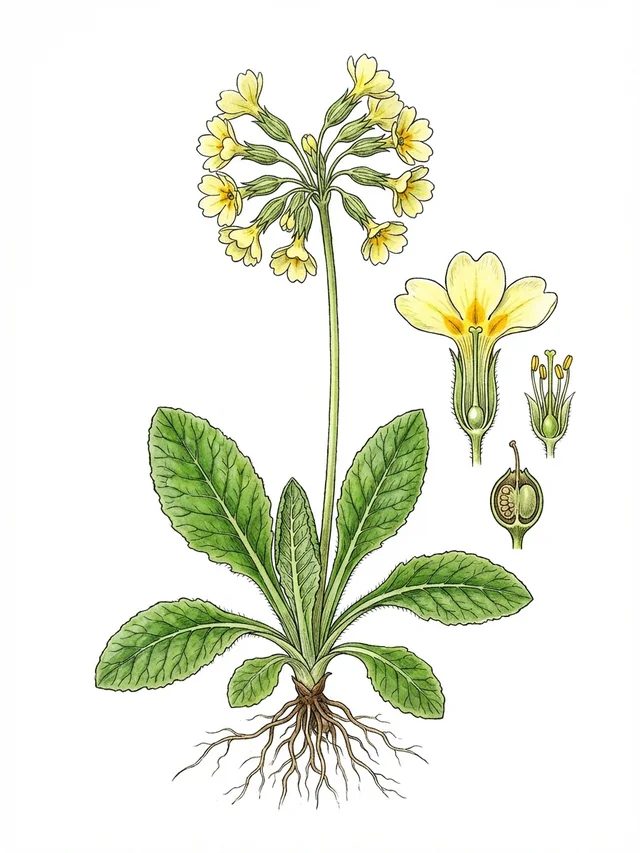
 Bild folgtKI-generierte Illustration
Lolium pratense
Lolium pratense
FamilyGenus: Loliumnicht heimisch in Deutschland
🌿
2
Species
interact
🔗
2
Interactions
documented
🐛
2
Host relationships
Species
About this species
Lolium pratense is a native perennial grass of meadows and damp grasslands in Great Britain. It has broad leaves, a tufted habit, and produces flowers from June to July.
Ecological network
Click to highlight connections · Click again to open species page
Netzwerk wird geladen...
Larval host
Ecological significance
This native grass supports grassland invertebrates and forms part of the structural fabric of meadows and damp pastures. It is not known to be invasive or problematic.
Annual cycle
A perennial grass that grows actively from spring, flowers from June to July, and sets seed by late summer.
Safety note
The plant is considered non-toxic and safe for children.
Standort & Merkmale
Light
—
Moisture
—
Soil
—
Bloom time
Jun – Jul
Growth form
Gras
Woodiness
Nicht verholzt
Leaf type
Breitblättrig
Morphological traits: TRY ID3 (CC BY 3.0) & TRY ID81 (CC BY)
Pflege & Anbau
No specific cultivation guidance is recorded for this wild grass; it is not commonly grown in gardens.
Scientific profile
Lolium pratense is a tufted, non-woody perennial grass (Poaceae) with broad leaves. It forms dense clumps and flowers from June to July. The species is most frequent in mesic to damp grassland, including meadows, pastures and the margins of wetlands. In central Europe it occurs in vegetation types such as mesic meadows (Molinio-Arrhenatheretea) and tall-sedge communities (Phragmito-Magnocaricetea). As a native component of British grasslands, it contributes to permanent swards and their structural diversity.
Sources & data origin
•TraitCH — CC BY 4.0TraitCH 2.0 contributors; imported as source-preserving NaturKompass taxon evidence.
•TRY v6.0 / BiolFlor flowering phenology (Request 47350) — CC BY 4.0TRY request 47350 (Public, Data Released, TRY v6.0; 2026-02-15). Cite TRY: Kattge et al. (2020), doi:10.1111/gcb.14904; original source: Trefflich, A., Klotz, S. & Kühn, I. (2002). Blühphänologie. BIOLFLOR, Schriftenreihe für Vegetationskunde 38:127–131.
•Interaktionsdaten via GloBI (CC-BY 4.0)
•GBIF Backbone Taxonomy — GBIF Secretariat (2024), DOI: 10.15468/39omei (CC BY 4.0)
•TRY Categorical Traits (ID3) — Kattge et al. (2012), DOI: 10.17871/TRY.3 (CC BY 3.0)
•TRY Global Spectrum (ID81) — Díaz et al. (2016/2021), DOI: 10.17871/TRY.81 (CC BY)
•Govaerts R et al. (2025) — World Checklist of Vascular Plants (WCVP) v14. Royal Botanic Gardens, Kew. DOI: 10.34885/xs7h-ze42 (CC BY 4.0)
All data is licensed under CC BY 4.0, CC0, or compatible. Attribution according to license terms. Full source overview →