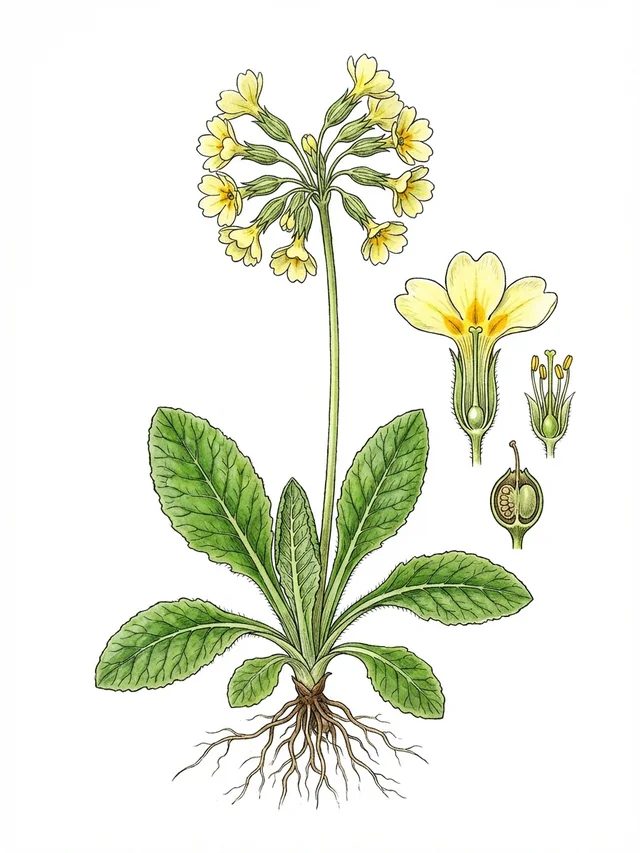
 Bild folgtKI-generierte Illustration
Galinsoga quadriradiata
Galinsoga quadriradiata
FamilyGenus: Galinsogaheimisch in Deutschland
🌿
4
Species
interact
🔗
5
Interactions
documented
About this species
An introduced, established herbaceous plant originating from Mexico and Central America, bearing small daisy-like flowers from May to October and providing moderate forage for pollinators.
Ecological network
Click to highlight connections · Click again to open species page
Netzwerk wird geladen...
PollinationFlower visit
Ecological significance
As an introduced species it can occur as a weed in cultivated ground, though detailed information on its ecological effects in Great Britain is not available.
Annual cycle
A herbaceous plant that produces flowers from May to October.
Standort & Merkmale
Light
Sonne
Moisture
Frisch (Mäßig feucht)
Soil
—
Bloom time
Mai – Okt
Bioregion
Continental
Nectar value
3
Pollen value
3
Growth form
Krautige Pflanze
Woodiness
Nicht verholzt
Leaf type
Breitblättrig
Plant height
0.499 m
Morphological traits: TRY ID3 (CC BY 3.0) & TRY ID81 (CC BY)
Pflege & Anbau
Prefers a sunny position and a moderately moist, nutrient-rich soil.
Scientific profile
Galinsoga quadriradiata is a herbaceous, non-woody plant with broad leaves. Originating from Mexico and Central America, it is introduced and established in Great Britain. It grows in sunny positions on moderately moist, nutrient-rich soils and is recorded from low-disturbance habitats. The plant typically reaches around 0.5 metres in height, with a leaf area of roughly 624 mm². Its tiny seeds (diaspore mass 0.2355 mg) are dispersed by various means. The flowers appear from May to October, offering moderate amounts of nectar and pollen (value 3) to insects. Mycorrhizal associations are of the arbuscular type (AM). The species has not been assessed for a Red List status in Great Britain and is considered a neophyte.
Bestäuber & Besucher
2 Arten interagieren mit dieser Pflanze
Pieris napiLasioglossum (austrevylaeus) maunga
Other flower visitors
2 other species visit the flowers
Augochlora puraSphaerophoria.sp
Sources & data origin
•TraitCH — CC BY 4.0TraitCH 2.0 contributors; imported as source-preserving NaturKompass taxon evidence.
•TRY v6.0 / BiolFlor flowering phenology (Request 47350) — CC BY 4.0TRY request 47350 (Public, Data Released, TRY v6.0; 2026-02-15). Cite TRY: Kattge et al. (2020), doi:10.1111/gcb.14904; original source: Trefflich, A., Klotz, S. & Kühn, I. (2002). Blühphänologie. BIOLFLOR, Schriftenreihe für Vegetationskunde 38:127–131.
•Interaktionsdaten via GloBI (CC-BY 4.0)
•pollinator_interactions
•FloraWeb / BfN
•EIVE 1.0 — Dengler et al. (2023), DOI: 10.3897/VCS.98324 (CC BY 4.0)
•EuPPollNet — Kuppler et al. (2025), DOI: 10.1111/geb.70000 (CC BY 4.0)
•Database of Pollinator Interactions (DoPI) — Pocock et al. (2022), DOI: 10.1002/ecy.3801 (CC BY)
•GBIF Backbone Taxonomy — GBIF Secretariat (2024), DOI: 10.15468/39omei (CC BY 4.0)
•TRY Categorical Traits (ID3) — Kattge et al. (2012), DOI: 10.17871/TRY.3 (CC BY 3.0)
•TRY Global Spectrum (ID81) — Díaz et al. (2016/2021), DOI: 10.17871/TRY.81 (CC BY)
•Checklist Alien Plants Belgium — Verloove F (2023), Botanic Garden Meise (CC BY 4.0)
•Govaerts R et al. (2025) — World Checklist of Vascular Plants (WCVP) v14. Royal Botanic Gardens, Kew. DOI: 10.34885/xs7h-ze42 (CC BY 4.0)
All data is licensed under CC BY 4.0, CC0, or compatible. Attribution according to license terms. Full source overview →