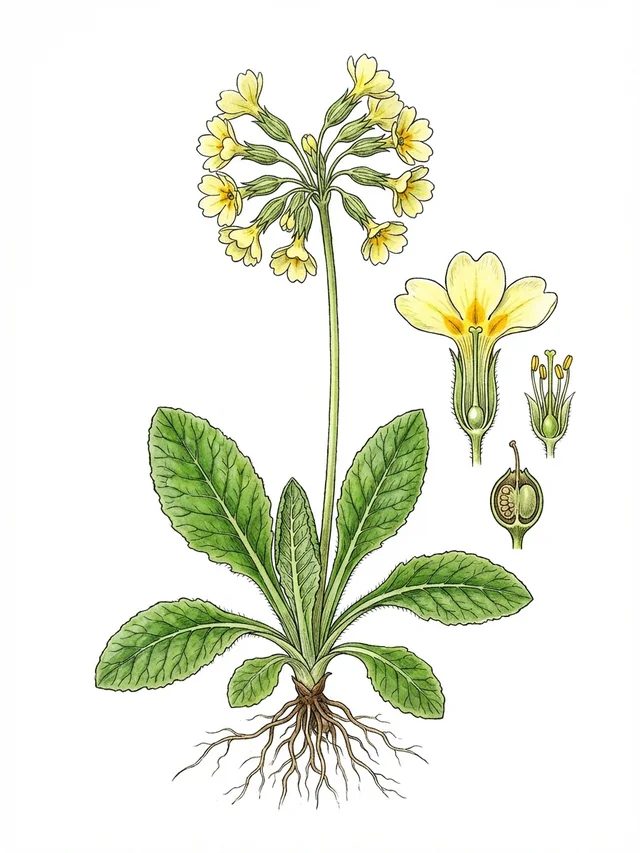
 Bild folgtKI-generierte Illustration
aesculus hippocastanum
Aesculus hippocastanum
FamilyGenus: Rosskastanienheimisch in Deutschland
🌿
51
Species
interact
🔗
87
Interactions
documented
🐛
6
Host relationships
Species
About this species
Aesculus hippocastanum is a large, broad-leaved deciduous tree reaching about 17 m in height. Introduced and established in Great Britain, it flowers in June and produces notably heavy seeds. The tree prefers semi-shade and moist, nutrient-rich soil.
Ecological network
Click to highlight connections · Click again to open species page
Netzwerk wird geladen...
PollinationLarval hostFlower visit
Ecological significance
Aesculus hippocastanum is an introduced tree that has become established in Great Britain. No specific ecological impacts are recorded.
Annual cycle
Flowering occurs in June. The deciduous leaves are shed in autumn, when the large seeds mature and are released.
Standort & Merkmale
Light
Halbschatten
Moisture
Frisch (Mäßig feucht)
Soil
—
Bloom time
Jun – Jun
Bioregion
Continental
Growth form
Baum
Woodiness
Verholzt
Leaf type
Breitblättrig
Leaf phenology
Laubabwerfend
Plant height
17.036 m
Morphological traits: TRY ID3 (CC BY 3.0) & TRY ID81 (CC BY)
Corolla tube
4.5 mm
Nectar
0.5399 µl/Blüte
Pflege & Anbau
•
Light : Semi-shade.
•
Soil : Moist, nutrient-rich, neutral to slightly acid.
•
Height : Can reach around 17 m; allow ample space.
•
Maintenance : No special pruning required; remove dead or damaged branches as needed.
Scientific profile
Aesculus hippocastanum is a deciduous, broad-leaved tree in the family Sapindaceae. Typically reaching around 17 m in height, it has large leaves (mean leaf area about 5,886 mm²) and woody tissues. The species forms arbuscular mycorrhizal associations. In Great Britain it is introduced and established. The tree favours semi-shade (Ellenberg light value 5) and moist, nutrient-rich soils (moisture value 6, nutrient value 7), with a preference for neutral to weakly acid conditions (reaction value 6). It is considered a low-disturbance species (disturbance severity 0.7) and is adapted to moderately warm temperatures (temperature value 6). Flowering takes place in June, and the large diaspores (mean mass about 9,672 mg) are typical. The leaves are shed in autumn.
Bestäuber & Besucher
27 Arten interagieren mit dieser Pflanze
Andrena flavipesBombus hypnorumAndrena chrysoscelesBombus pratorumBombus lucorumBombus hortorumBombus pascuorumBombus vestalisApis melliferaBombus sylvestrisAndrena minutuloidesAndrena nitidaBombus lapidariusBombus terrestrisCyanistes caeruleusVanessa carduiXylocopa violaceaVanessa atalantaVespa crabroAndrena scoticaAndrena erythrogasterAnthophora walshiiBombus griseocollisBombus huntiiMegachile texanaOsmia rufaXylocopa sp.1
Host relationships
6 species use this plant as a host
Ourapteryx sambucariaCampaea margaritariaAcronicta acerisZeuzera pyrinaLithophane sociaCameraria ohridella Deschka & Dimić, 1986
Other flower visitors
18 other species visit the flowers
Nyctalus noctulaPsittacula krameriStrophosoma melanogrammumPolydrusus formosusMelolontha melolonthaSciurus carolinensisMyotis nattereriPipistrellus pipistrellusPipistrellus pygmaeusMyotis bechsteiniiPlecotus auritusAgapostemon texanusCoelioxys alternataHabropoda depressaMelissodes menuachusPseudopanurgus labrosusTriepeolus nevadensisXenoglossa strenua
Sources & data origin
•TraitCH — CC BY 4.0TraitCH 2.0 contributors; imported as source-preserving NaturKompass taxon evidence.
•Interaktionsdaten via GloBI (CC-BY 4.0)
•Cook et al. (2025) UK Butterfly & Moth Traits (DOI: 10.5285/dbc7cc17-cbbd-49dd-bab4-8e8855768d66)
•pollinator_interactions
•Baden-Böhm F, App M, Thiele J (2022) — The FloRes Database: A floral resources trait database for pollinator habitat-assessment generated by a multistep workflow. Johann Heinrich von Thünen-Institut, Dryad, DOI: 10.5061/dryad.djh9w0w29 (CC0)
•EIVE 1.0 — Dengler et al. (2023), DOI: 10.3897/VCS.98324 (CC BY 4.0)
•GBIF Backbone Taxonomy — GBIF Secretariat (2024), DOI: 10.15468/39omei (CC BY 4.0)
•TRY Categorical Traits (ID3) — Kattge et al. (2012), DOI: 10.17871/TRY.3 (CC BY 3.0)
•TRY Global Spectrum (ID81) — Díaz et al. (2016/2021), DOI: 10.17871/TRY.81 (CC BY)
•Checklist Alien Plants Belgium — Verloove F (2023), Botanic Garden Meise (CC BY 4.0)
•Govaerts R et al. (2025) — World Checklist of Vascular Plants (WCVP) v14. Royal Botanic Gardens, Kew. DOI: 10.34885/xs7h-ze42 (CC BY 4.0)
All data is licensed under CC BY 4.0, CC0, or compatible. Attribution according to license terms. Full source overview →