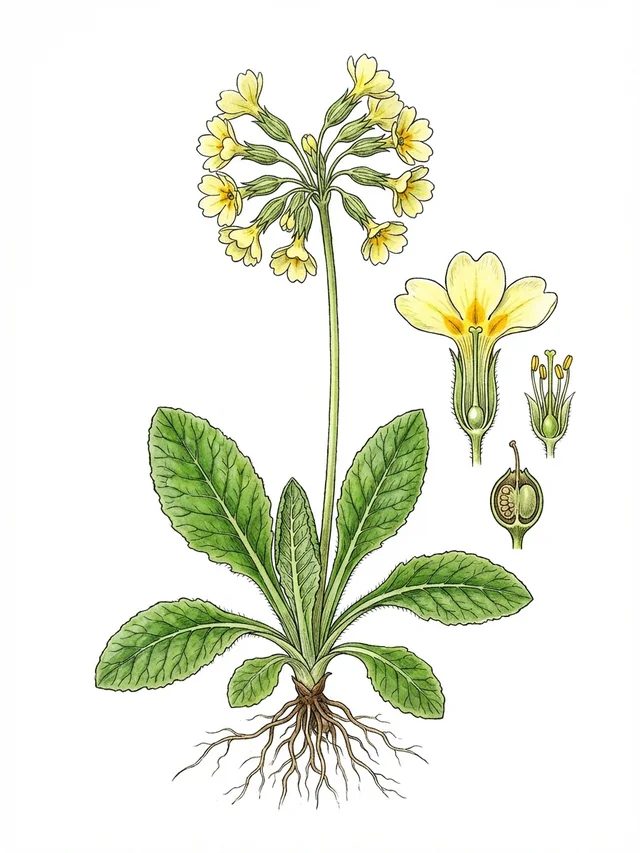
 Bild folgtKI-generierte Illustration
Ophrys sphegodes
Ophrys sphegodes subsp. sphegodes
FamilyGenus: Ophrysheimisch in Deutschland
🌿
4
Species
interact
🔗
4
Interactions
documented
About this species
Native to Great Britain, Ophrys sphegodes is a terrestrial orchid of dry, sunny calcareous grasslands on impoverished soils. It flowers between February and May and typically reaches a height of around 18 cm.
Ecological network
Click to highlight connections · Click again to open species page
Netzwerk wird geladen...
Pollination
Ecological significance
As a native member of calcareous grassland communities, it contributes to the structure and biodiversity of those habitats. Specific ecological interactions are not documented in the available record.
Annual cycle
Plants produce a basal rosette of broad leaves in late winter. Flowering stems rise from February to May. After seed set, the foliage senesces and the plant survives the summer and autumn as a dormant underground tuber, relying on mycorrhizal partners.
Standort & Merkmale
Light
Sonne
Moisture
Trocken
Soil
Schwachzehrer (Magerer Boden)
Bloom time
Feb – Mai
Soil reaction
Basisch / Kalkhold
Bioregion
Continental
Growth form
Krautige Pflanze
Woodiness
Nicht verholzt
Leaf type
Breitblättrig
Plant height
0.178 m
Morphological traits: TRY ID3 (CC BY 3.0) & TRY ID81 (CC BY)
Pflege & Anbau
Suitable only for experienced growers, this orchid demands full sun, a very well-drained calcareous substrate, and low nutrient levels. Keep the soil dry and avoid fertiliser. Successful cultivation depends on the presence of appropriate mycorrhizal fungi; without them the plant will not survive. It is best appreciated in its natural habitat.
Scientific profile
Ophrys sphegodes is a terrestrial, non-woody orchid with broad leaves. It grows in full sun on dry, base-rich, nutrient-poor soils and prefers moderately warm conditions. Plants reach about 18 cm in height. The species is obligately mycorrhizal (OM type), relying on specific fungi for germination and nutrient uptake. Flowering occurs from February to May. In some parts of its European range it is listed under red list category 2.
Bestäuber & Besucher
4 Arten interagieren mit dieser Pflanze
Sources & data origin
•TraitCH — CC BY 4.0TraitCH 2.0 contributors; imported as source-preserving NaturKompass taxon evidence.
•Interaktionsdaten via GloBI (CC-BY 4.0)
•FloraWeb / BfN
•EIVE 1.0 — Dengler et al. (2023), DOI: 10.3897/VCS.98324 (CC BY 4.0)
•GBIF Backbone Taxonomy — GBIF Secretariat (2024), DOI: 10.15468/39omei (CC BY 4.0)
•TRY Categorical Traits (ID3) — Kattge et al. (2012), DOI: 10.17871/TRY.3 (CC BY 3.0)
•TRY Global Spectrum (ID81) — Díaz et al. (2016/2021), DOI: 10.17871/TRY.81 (CC BY)
•Govaerts R et al. (2025) — World Checklist of Vascular Plants (WCVP) v14. Royal Botanic Gardens, Kew. DOI: 10.34885/xs7h-ze42 (CC BY 4.0)
All data is licensed under CC BY 4.0, CC0, or compatible. Attribution according to license terms. Full source overview →