Pilosella aurantiaca
Pilosella aurantiaca
FamilyGenus: Pilosellaheimisch in Deutschland
🌿
21
Species
interact
🔗
25
Interactions
documented
🐛
3
Host relationships
Species
About this species
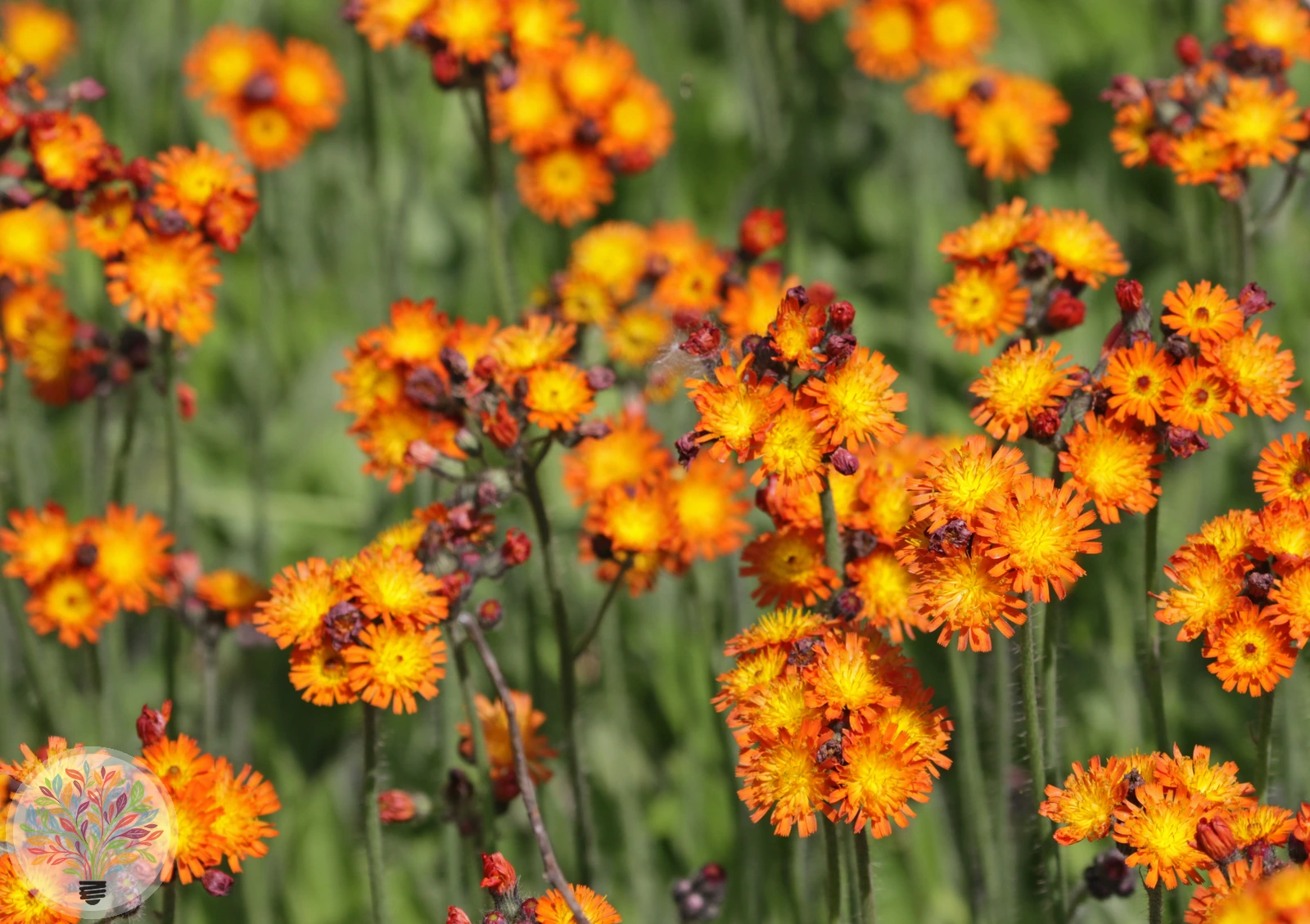
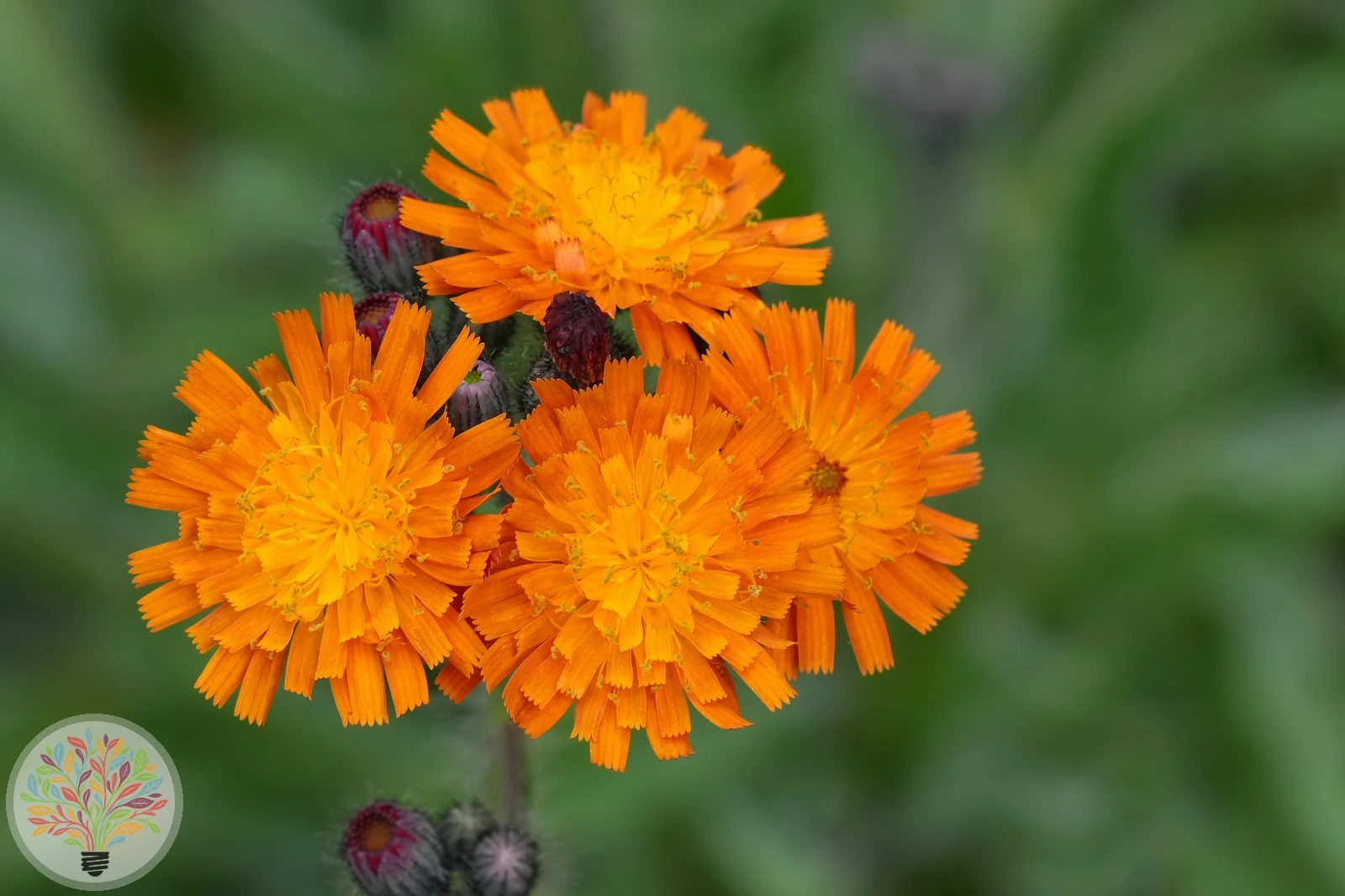
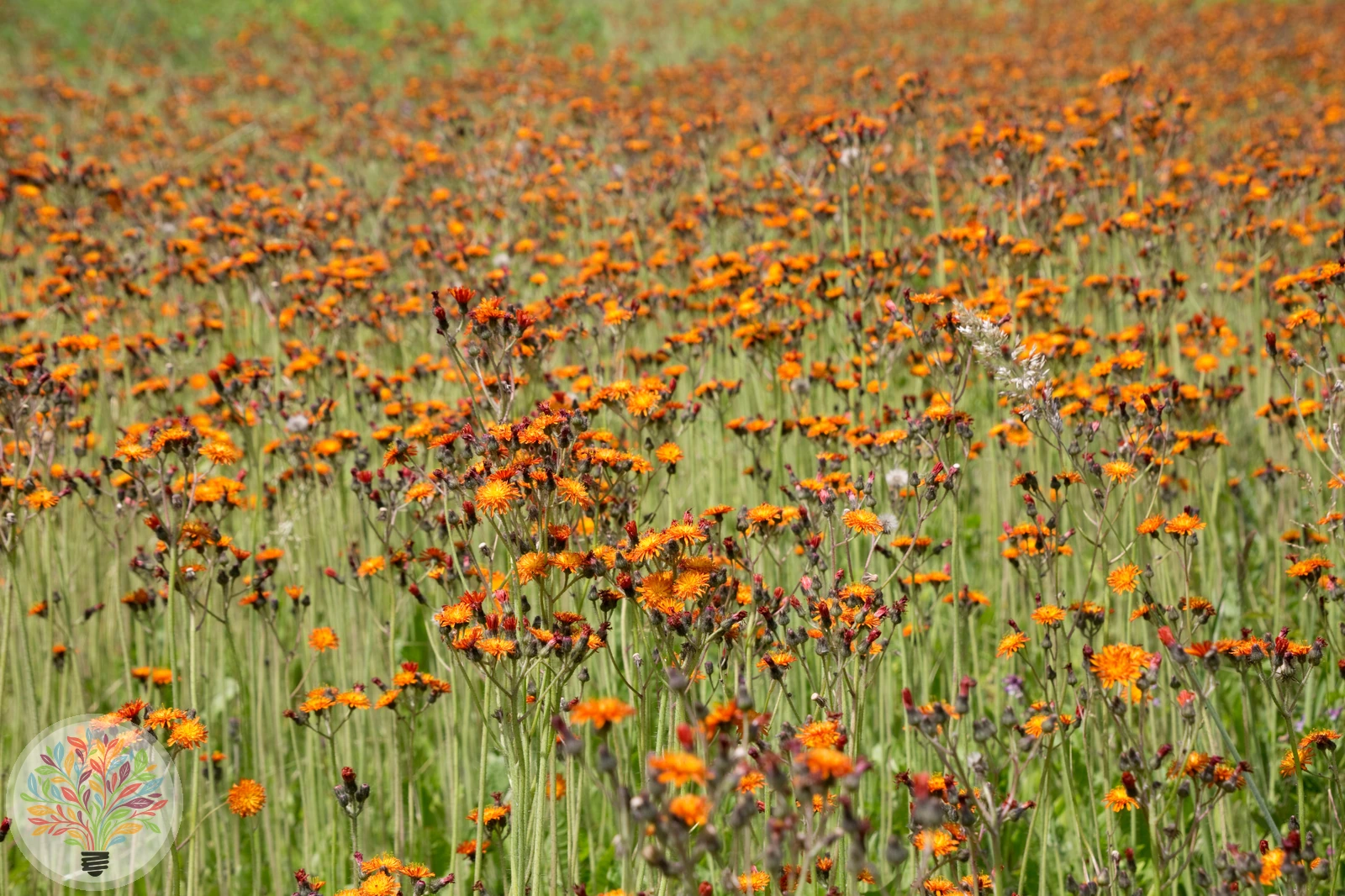
An introduced herbaceous plant with bright orange flower heads that appear from June to August. It favours full sun and lean, moderately moist, neutral to slightly acid soils.
Ecological network
Click to highlight connections · Click again to open species page
Netzwerk wird geladen...
PollinationLarval host
Ecological significance
The flowers provide a small amount of nectar and pollen, which can support bees and other insects.
Annual cycle
Flowers from June to August.
Standort & Merkmale
Light
Sonne
Moisture
Frisch (Mäßig feucht)
Soil
Schwachzehrer (Magerer Boden)
Bloom time
Jun – Aug
Soil reaction
Mäßig sauer bis neutral
Bioregion
Continental
Nectar value
1
Pollen value
1
Growth form
Krautige Pflanze
Woodiness
Nicht verholzt
Leaf type
Breitblättrig
Plant height
0.313 m
Morphological traits: TRY ID3 (CC BY 3.0) & TRY ID81 (CC BY)
Pflege & Anbau
Grow in full sun in poor to moderately fertile, moist but well-drained soil, preferably neutral to slightly acid. Suitable for rock gardens and gravel beds. Avoid heavy disturbance and rich soils.
Scientific profile
Pilosella aurantiaca is an introduced herbaceous species that has become established in Britain. It is a non-woody, broad-leaved plant reaching about 31 cm in height. The orange inflorescences are borne from June to August. It grows in full sun on moderately moist, lean soils with a neutral to slightly acid reaction and tolerates only low levels of disturbance. The flowers yield a modest amount of nectar and pollen, attracting some pollinating insects.
Bestäuber & Besucher
18 Arten interagieren mit dieser Pflanze
Bombus lapidariusMegachile centuncularisMegachile willughbiellaAndrena carantonicaOsmia leaianaBombus jonellusAnthidium manicatumAndrena wilkellaBombus pascuorumPolyommatus icarusHesperia commaThymelicus lineolaMegachile rotundataApis melliferaBombus hortorumSyrphus ribesiiScaeva pyrastriEpisyrphus balteatus
Host relationships
3 species use this plant as a host
Sources & data origin
•TraitCH — CC BY 4.0TraitCH 2.0 contributors; imported as source-preserving NaturKompass taxon evidence.
•TRY v6.0 / BiolFlor flowering phenology (Request 47350) — CC BY 4.0TRY request 47350 (Public, Data Released, TRY v6.0; 2026-02-15). Cite TRY: Kattge et al. (2020), doi:10.1111/gcb.14904; original source: Trefflich, A., Klotz, S. & Kühn, I. (2002). Blühphänologie. BIOLFLOR, Schriftenreihe für Vegetationskunde 38:127–131.
•Interaktionsdaten via GloBI (CC-BY 4.0)
•pollinator_interactions
•FloraWeb / BfN
•EIVE 1.0 — Dengler et al. (2023), DOI: 10.3897/VCS.98324 (CC BY 4.0)
•EuPPollNet — Kuppler et al. (2025), DOI: 10.1111/geb.70000 (CC BY 4.0)
•Database of Pollinator Interactions (DoPI) — Pocock et al. (2022), DOI: 10.1002/ecy.3801 (CC BY)
•GBIF Backbone Taxonomy — GBIF Secretariat (2024), DOI: 10.15468/39omei (CC BY 4.0)
•TRY Categorical Traits (ID3) — Kattge et al. (2012), DOI: 10.17871/TRY.3 (CC BY 3.0)
•TRY Global Spectrum (ID81) — Díaz et al. (2016/2021), DOI: 10.17871/TRY.81 (CC BY)
•Checklist Alien Plants Belgium — Verloove F (2023), Botanic Garden Meise (CC BY 4.0)
•Govaerts R et al. (2025) — World Checklist of Vascular Plants (WCVP) v14. Royal Botanic Gardens, Kew. DOI: 10.34885/xs7h-ze42 (CC BY 4.0)
•Foto: © Adobe Stock / AdobeStock_55073233
All data is licensed under CC BY 4.0, CC0, or compatible. Attribution according to license terms. Full source overview →