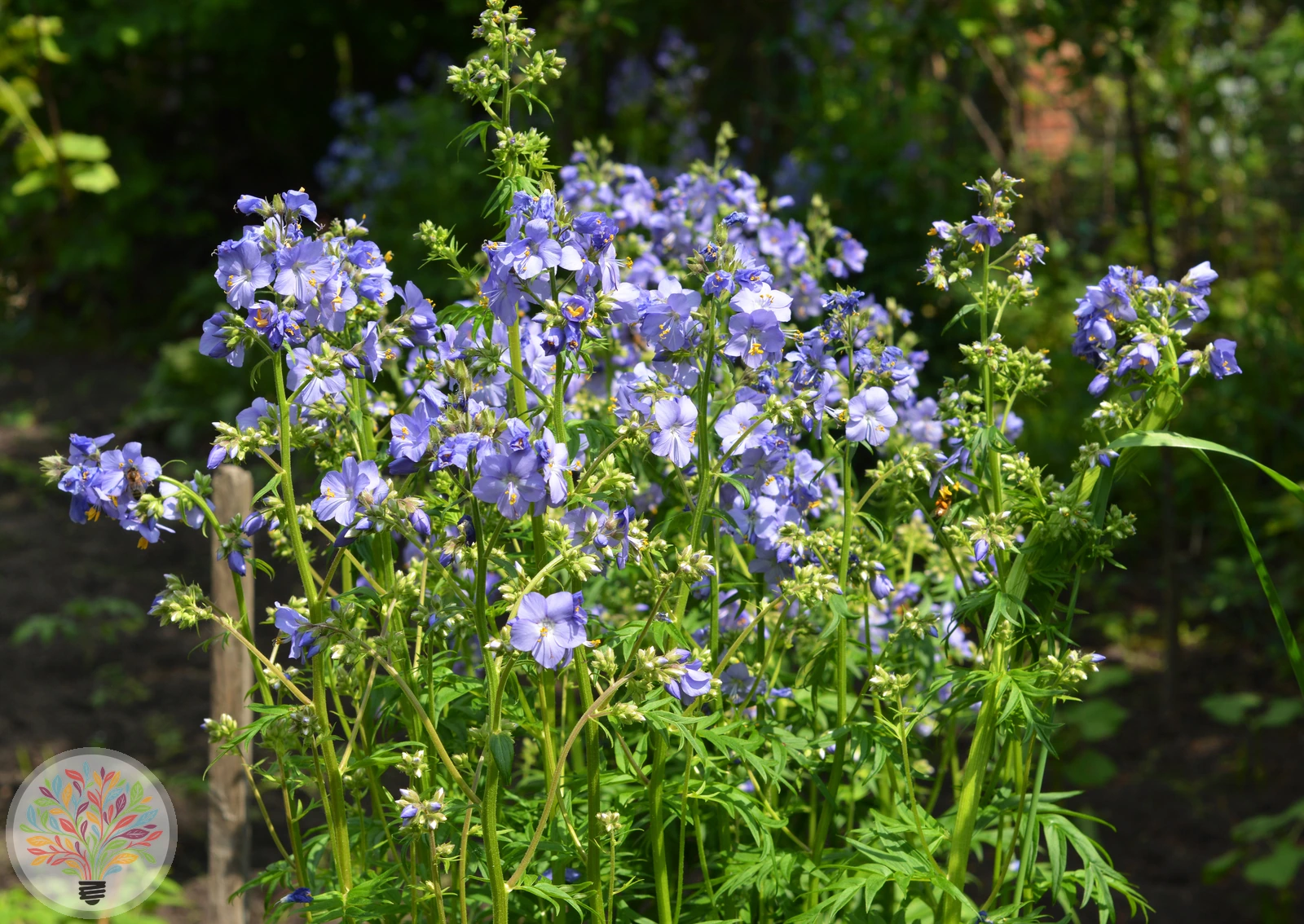
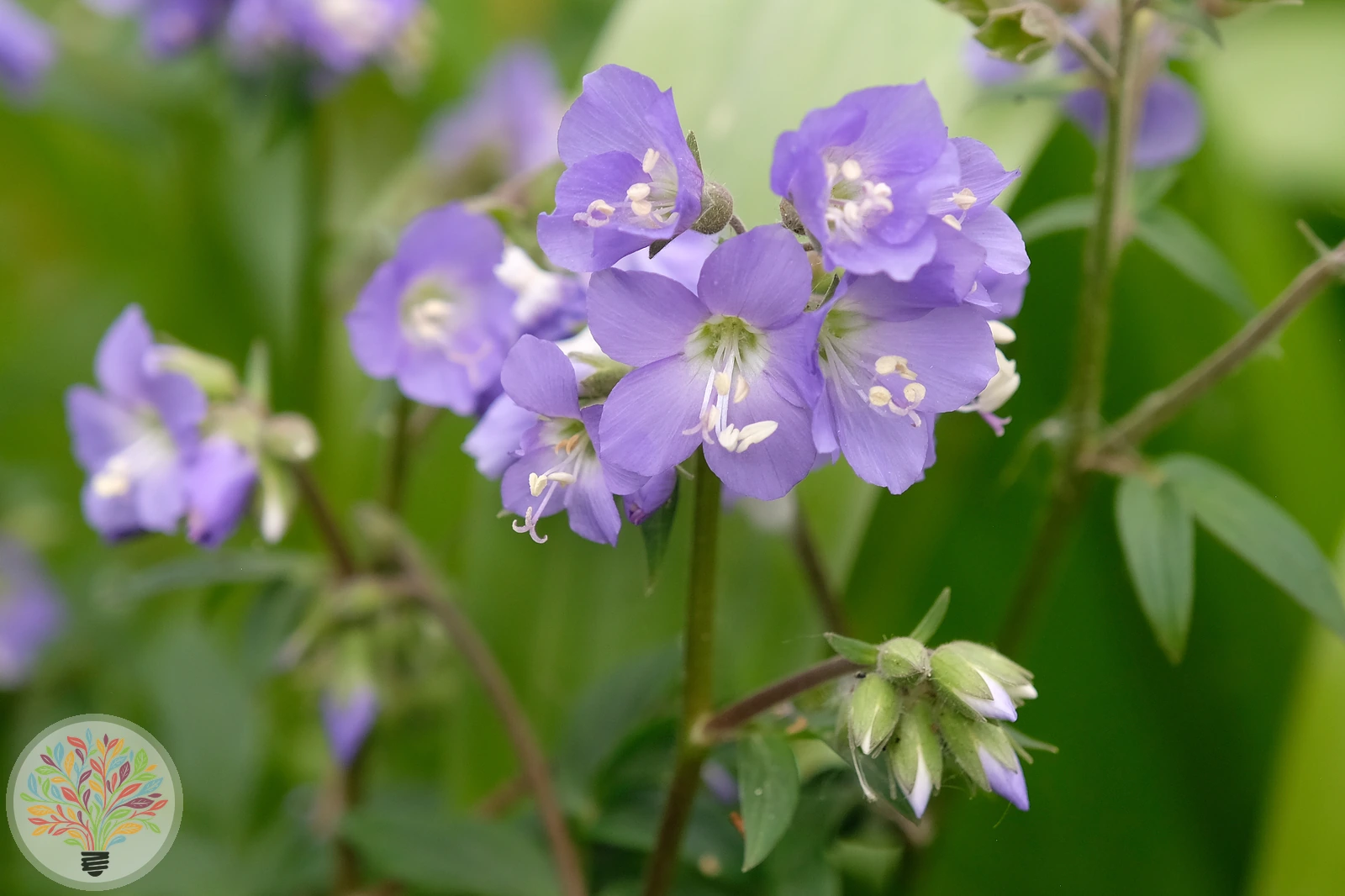
Polemonium caeruleum
Polemonium caeruleum
FamilyGenus: Polemoniumheimisch in Deutschland
🌿
14
Species
interact
🔗
19
Interactions
documented
About this species
A native herbaceous perennial of partial shade and fresh, moist, lime-rich soils, Polemonium caeruleum produces its flowers from June to July. It forms arbuscular mycorrhizal associations and reaches about half a metre in height.
Ecological network
Click to highlight connections · Click again to open species page
Netzwerk wird geladen...
PollinationFlower visit
Ecological significance
It supports soil health through arbuscular mycorrhizal associations and has a low tolerance to physical disturbance.
Annual cycle
Herbaceous perennial; growth begins in spring, flowers from June to July, sets seed, and the aerial parts die back in autumn.
Standort & Merkmale
Light
Halbschatten
Moisture
Frisch (Mäßig feucht)
Soil
Mittelzehrer (Normaler Boden)
Bloom time
Jun – Jul
Soil reaction
Basisch / Kalkhold
Bioregion
Continental
Growth form
Krautige Pflanze
Woodiness
Nicht verholzt
Leaf type
Breitblättrig
Plant height
0.565 m
Morphological traits: TRY ID3 (CC BY 3.0) & TRY ID81 (CC BY)
Pflege & Anbau
Grow in partial shade in a fresh, moderately moist, fertile, lime-rich soil. Avoid heavy disturbance. It is a low-maintenance herbaceous perennial that dies back in autumn and re-emerges in spring.
Scientific profile
Polemonium caeruleum is a broad-leaved, non-woody herbaceous plant belonging to the family Polemoniaceae. It typically attains a height of about 0.57 m, with leaves averaging 1840 mm² in area. The species is characteristic of partial shade and fresh, moderately moist, calcareous to basic soils that provide a moderate nutrient supply. It tolerates only low levels of disturbance and is found in areas with moderately warm temperatures. Flowering occurs in June and July. The seeds are light, with a mean diaspore mass of 0.95 mg. It forms arbuscular mycorrhizas.
Bestäuber & Besucher
13 Arten interagieren mit dieser Pflanze
Pieris rapaeBombus hypnorumBombus lucorumBombus lapidariusBombus sylvestrisApis melliferaBombus pratorumBombus jonellusBombus hortorumBombus terrestrisPlatycheirus manicatusVolucella bombylansBombus honshuensis
Other flower visitors
1 other species visit the flowers
Panorpa communis
Sources & data origin
•TraitCH — CC BY 4.0TraitCH 2.0 contributors; imported as source-preserving NaturKompass taxon evidence.
•TRY v6.0 / BiolFlor flowering phenology (Request 47350) — CC BY 4.0TRY request 47350 (Public, Data Released, TRY v6.0; 2026-02-15). Cite TRY: Kattge et al. (2020), doi:10.1111/gcb.14904; original source: Trefflich, A., Klotz, S. & Kühn, I. (2002). Blühphänologie. BIOLFLOR, Schriftenreihe für Vegetationskunde 38:127–131.
•Interaktionsdaten via GloBI (CC-BY 4.0)
•pollinator_interactions
•FloraWeb / BfN
•EIVE 1.0 — Dengler et al. (2023), DOI: 10.3897/VCS.98324 (CC BY 4.0)
•GBIF Backbone Taxonomy — GBIF Secretariat (2024), DOI: 10.15468/39omei (CC BY 4.0)
•TRY Categorical Traits (ID3) — Kattge et al. (2012), DOI: 10.17871/TRY.3 (CC BY 3.0)
•TRY Global Spectrum (ID81) — Díaz et al. (2016/2021), DOI: 10.17871/TRY.81 (CC BY)
•Checklist Alien Plants Belgium — Verloove F (2023), Botanic Garden Meise (CC BY 4.0)
•Govaerts R et al. (2025) — World Checklist of Vascular Plants (WCVP) v14. Royal Botanic Gardens, Kew. DOI: 10.34885/xs7h-ze42 (CC BY 4.0)
•Foto: © Adobe Stock / AdobeStock_450041532
All data is licensed under CC BY 4.0, CC0, or compatible. Attribution according to license terms. Full source overview →