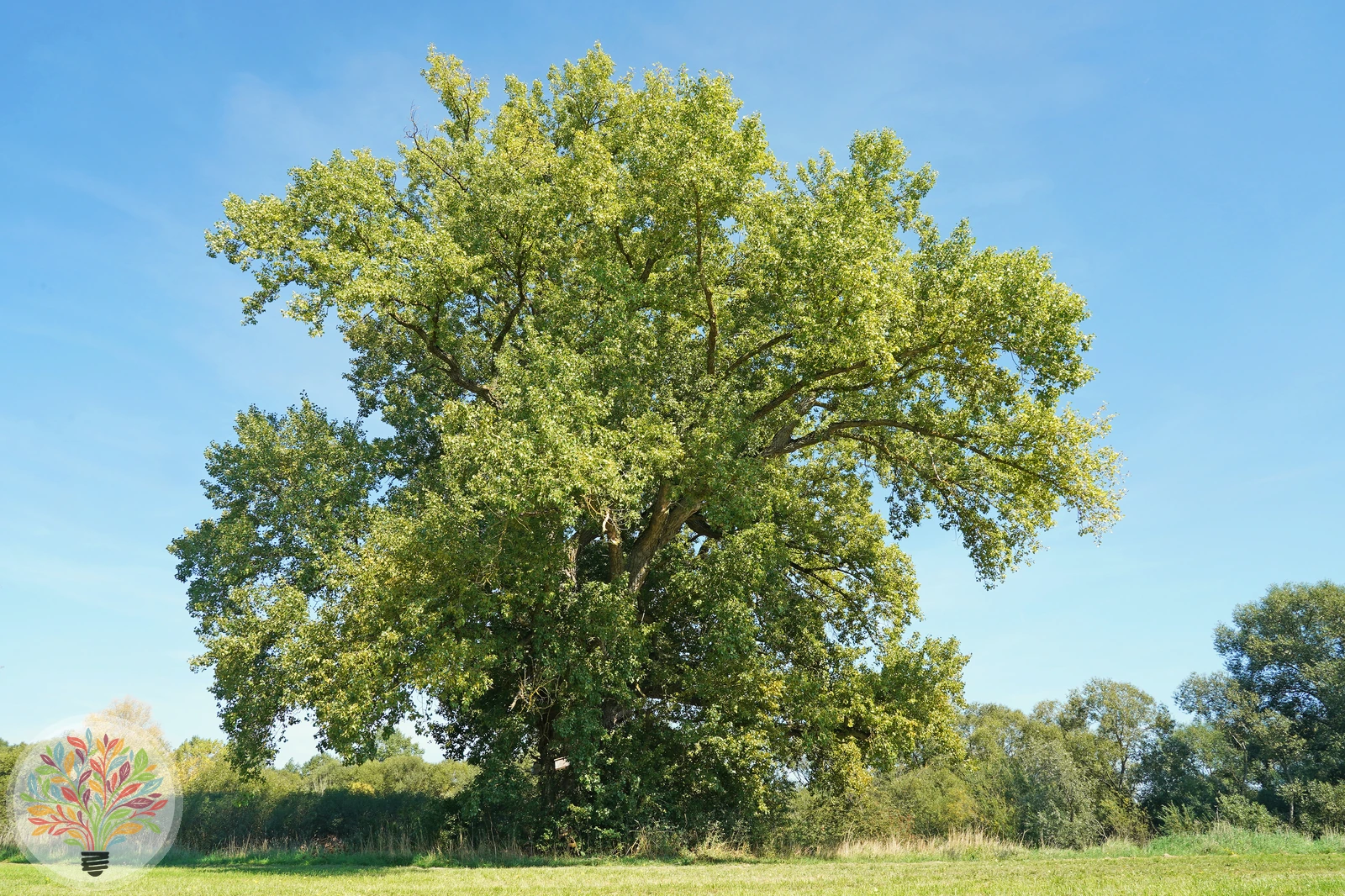
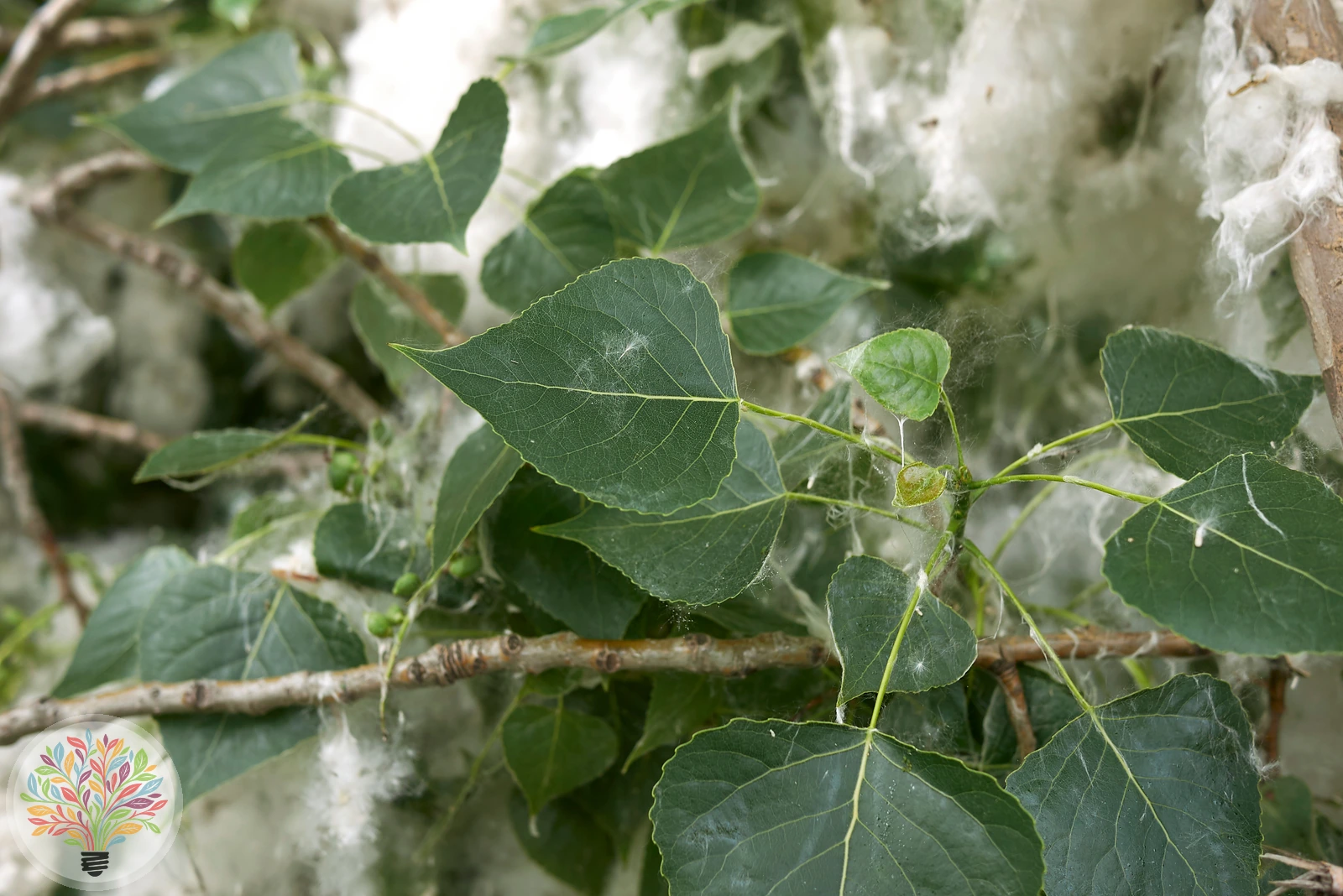
Populus nigra
Populus nigra
FamilyGenus: Populusheimisch in Deutschland
🌿
10
Species
interact
🔗
10
Interactions
documented
🐛
10
Host relationships
Species
About this species
A large deciduous tree reaching up to 25 metres in height. It is introduced and established in Great Britain, bearing broad leaves and flowering in early spring. It prefers moist, nutrient-rich, limey soils in partial shade to full sun.
Ecological network
Click to highlight connections · Click again to open species page
Netzwerk wird geladen...
Larval host
Ecological significance
There is currently no evidence of negative ecological impacts in Great Britain. Although introduced and established, its status is not recorded as invasive. It may provide habitat and food for wildlife.
Annual cycle
Leafless in winter. Catkins appear in April before or as the leaves emerge. Leaves expand fully through spring and remain green all summer, turning yellow in autumn before falling. The tree drops its foliage by late autumn.
Standort & Merkmale
Light
Halbschatten
Moisture
Frisch (Mäßig feucht)
Soil
Starkzehrer (Nährstoffreicher/Fetter Boden)
Bloom time
Apr – Apr
Soil reaction
Basisch / Kalkhold
Bioregion
Continental
Growth form
Baum
Woodiness
Verholzt
Leaf type
Breitblättrig
Leaf phenology
Laubabwerfend
Plant height
24.785 m
Morphological traits: TRY ID3 (CC BY 3.0) & TRY ID81 (CC BY)
Pflege & Anbau
Plant in a sunny or partially shaded position. It thrives in deep, fertile, moisture-retentive yet well-drained loamy or clay soils. A neutral to alkaline pH is ideal. Keep the soil consistently moist, especially during establishment. Once settled, the tree is robust but benefits from a sheltered site to reduce wind damage to young shoots. No regular pruning is required, other than removing dead or crossing branches.
Scientific profile
Populus nigra is a woody, broad-leaved deciduous tree that can grow to around 25 metres tall. It flowers in April, producing catkins. The tree has an ectomycorrhizal association. Leaf area averages about 2,300 square millimetres, and the tiny wind-dispersed seeds (diaspores) have a mass of roughly 0.7 milligrams. It tends to occur in habitats with moist, calcareous, nutrient-rich soils and tolerates moderate warmth and low disturbance. The species’ light preference is for partial shade (Ellenberg value 6), and it is considered a nutrient-demanding species (Ellenberg nutrient value 7). In Great Britain it is an introduced and established plant, not native.
Host relationships
10 species use this plant as a host
Tethea ocularisLobophora halterataEpione repandariaLeucoma salicisIpimorpha retusaOrthosia cerasiOrthosia gracilisCatocala nuptaOrthosia populetiIpimorpha subtusa
Sources & data origin
•TRY v6.0 / BiolFlor flowering phenology (Request 47350) — CC BY 4.0TRY request 47350 (Public, Data Released, TRY v6.0; 2026-02-15). Cite TRY: Kattge et al. (2020), doi:10.1111/gcb.14904; original source: Trefflich, A., Klotz, S. & Kühn, I. (2002). Blühphänologie. BIOLFLOR, Schriftenreihe für Vegetationskunde 38:127–131.
•Cook et al. (2025) UK Butterfly & Moth Traits (DOI: 10.5285/dbc7cc17-cbbd-49dd-bab4-8e8855768d66)
•FloraWeb / BfN
•EIVE 1.0 — Dengler et al. (2023), DOI: 10.3897/VCS.98324 (CC BY 4.0)
•GBIF Backbone Taxonomy — GBIF Secretariat (2024), DOI: 10.15468/39omei (CC BY 4.0)
•TRY Categorical Traits (ID3) — Kattge et al. (2012), DOI: 10.17871/TRY.3 (CC BY 3.0)
•TRY Global Spectrum (ID81) — Díaz et al. (2016/2021), DOI: 10.17871/TRY.81 (CC BY)
•Checklist Alien Plants Belgium — Verloove F (2023), Botanic Garden Meise (CC BY 4.0)
•Govaerts R et al. (2025) — World Checklist of Vascular Plants (WCVP) v14. Royal Botanic Gardens, Kew. DOI: 10.34885/xs7h-ze42 (CC BY 4.0)
•Foto: © Adobe Stock / AdobeStock_675777702
All data is licensed under CC BY 4.0, CC0, or compatible. Attribution according to license terms. Full source overview →