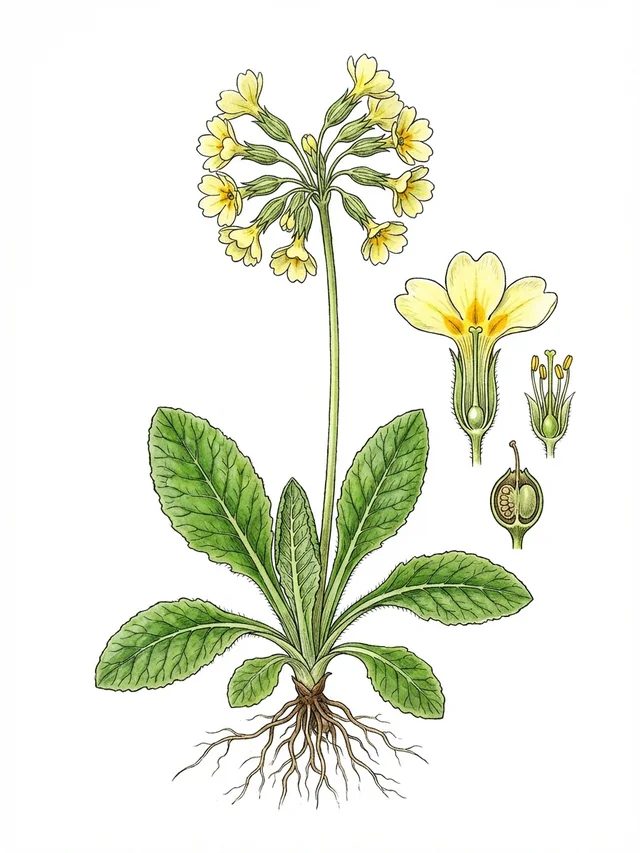
 Bild folgtKI-generierte Illustration
Prunus domestica
Prunus domestica
FamilyGenus: Prunusheimisch in Deutschland
🌿
36
Species
interact
🔗
107
Interactions
documented
🐛
24
Host relationships
Species
About this species
A deciduous broad-leaved tree or shrub of the rose family, long established in Britain as an archaeophyte. It bears white blossom in spring and thrives on moderately moist, calcareous soil in semi-shade.
Ecological network
Click to highlight connections · Click again to open species page
Netzwerk wird geladen...
PollinationLarval hostFlower visit
Ecological significance
An archaeophyte that has been present in Great Britain since at least the 1500s. No evidence of an invasive or disruptive ecological role is documented; its early blossom offers nectar for pollinators, and the fruit is taken by birds and mammals.
Annual cycle
A deciduous tree or shrub. Buds break in early spring, and the white blossom opens between March and April. Leaves follow or appear with the flowers. Fruits develop through summer and can persist into early autumn. Foliage yellows in autumn before falling, leaving the plant bare over winter until the next spring cycle.
Safety note
The plant is considered safe around children, with no known toxicity.
Standort & Merkmale
Light
Halbschatten
Moisture
Frisch (Mäßig feucht)
Soil
Mittelzehrer (Normaler Boden)
Bloom time
Mär – Apr
Soil reaction
Basisch / Kalkhold
Bioregion
Continental
Growth form
Strauch/Baum
Woodiness
Verholzt
Leaf type
Breitblättrig
Leaf phenology
Laubabwerfend
Plant height
4.707 m
Morphological traits: TRY ID3 (CC BY 3.0) & TRY ID81 (CC BY)
Pflege & Anbau
**Siting:** Choose a spot in semi-shade; full sun is tolerated but may increase moisture loss.
**Soil:** A moderately moist, well-drained, normal to chalky soil is ideal. Avoid waterlogged or strongly acidic ground.
**Watering:** Water regularly during the first few seasons to aid establishment. Afterwards, soak deeply during prolonged dry spells.
**Feeding:** Apply a balanced general-purpose fertiliser in early spring if growth appears weak; otherwise mature plants thrive in average soil.
Scientific profile
Prunus domestica is a woody, deciduous broadleaf in the Rosaceae family, typically growing as a shrub or small tree to between 4 and 6 metres in height. Its leaves fall in autumn, and new growth appears in spring alongside or after the flowering period. Blossom appears from March into April. The plant prefers semi-shaded positions but will tolerate full sun, and it grows best on fresh, moderately moist, nutrient‑average soils with a basic to calcareous reaction. Ecological indicator values place it in moderately warm environments with a low disturbance regime. Long naturalised in the British Isles, it arrived as an archaeophyte – recorded since at least 1500 – and its original range spans Europe, northern Africa and western Asia. It is fully terrestrial in habit, with a moderate nutrient demand and a slight preference for alkaline ground.
Bestäuber & Besucher
8 Arten interagieren mit dieser Pflanze
Eristalis tenaxApis melliferaBombus hortorumAnthophora plumipesBombus lucorumPieris napiBombus lucorum/terrestrisXylocopa sp.1
Host relationships
24 species use this plant as a host
Cossus cossusthecla betulaeLasiocampa trifoliiAbraxas grossulariataAngerona prunariaSelenia lunulariaLycia hirtariaTheria primariaLomographa temerataCampaea margaritariaPhalera bucephalaSpilosoma luteaCatocala nuptaAcronicta acerisAcronicta psiAllophyes oxyacanthaeLomographa bimaculataCosmia pyralinaOdontopera bidentataDicallomera fascelinaAcronicta tridensEriogaster lanestrisPeribatodes rhomboidariaLithophane socia
Other flower visitors
4 other species visit the flowers
NematoceraAphididae 1Pentatomidae 1Halictidae unknown
Sources & data origin
•TraitCH — CC BY 4.0TraitCH 2.0 contributors; imported as source-preserving NaturKompass taxon evidence.
•Cook et al. (2025) UK Butterfly & Moth Traits (DOI: 10.5285/dbc7cc17-cbbd-49dd-bab4-8e8855768d66)
•pollinator_interactions
•FloraWeb / BfN
•EIVE 1.0 — Dengler et al. (2023), DOI: 10.3897/VCS.98324 (CC BY 4.0)
•GBIF Backbone Taxonomy — GBIF Secretariat (2024), DOI: 10.15468/39omei (CC BY 4.0)
•TRY Categorical Traits (ID3) — Kattge et al. (2012), DOI: 10.17871/TRY.3 (CC BY 3.0)
•TRY Global Spectrum (ID81) — Díaz et al. (2016/2021), DOI: 10.17871/TRY.81 (CC BY)
•Checklist Alien Plants Belgium — Verloove F (2023), Botanic Garden Meise (CC BY 4.0)
•Govaerts R et al. (2025) — World Checklist of Vascular Plants (WCVP) v14. Royal Botanic Gardens, Kew. DOI: 10.34885/xs7h-ze42 (CC BY 4.0)
All data is licensed under CC BY 4.0, CC0, or compatible. Attribution according to license terms. Full source overview →