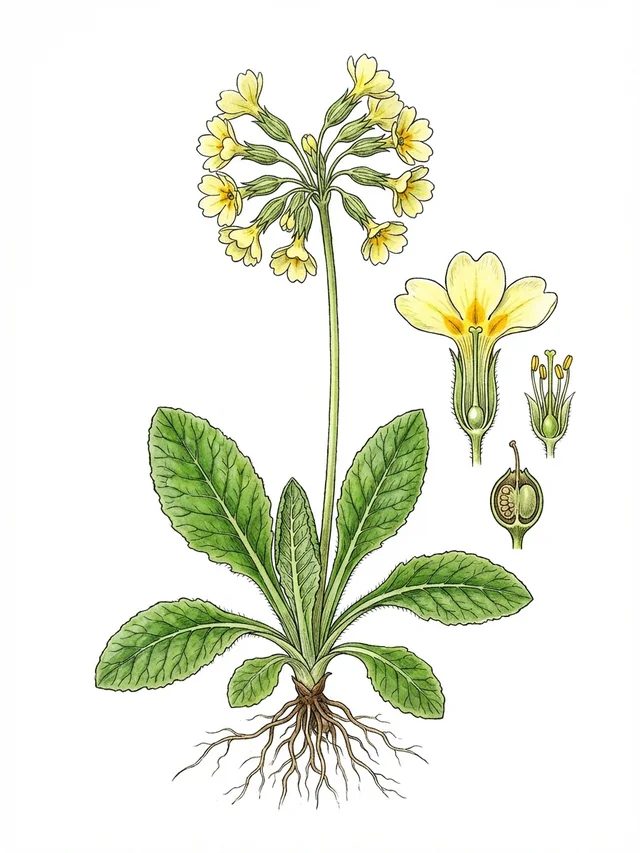
 Bild folgtKI-generierte Illustration
Prunus dulcis
Prunus dulcis
FamilyGenus: Prunusheimisch in Deutschland
🌿
29
Species
interact
🔗
31
Interactions
documented
🐛
7
Host relationships
Species
About this species
An introduced tree that has become established in Great Britain. It favours a sunny, warm position on calcareous, moderately moist soil, typically reaching around 7 m in height. Its blossoms appear in early spring, from March to April.
Ecological network
Click to highlight connections · Click again to open species page
Netzwerk wird geladen...
PollinationLarval hostFlower visit
Ecological significance
Prunus dulcis is introduced and established in Great Britain. The available evidence does not indicate invasive behaviour or detrimental ecological impacts.
Annual cycle
Blossom period from March to April.
Safety note
No safety information is recorded for this species in the provided dataset.
Standort & Merkmale
Light
Sonne
Moisture
Frisch (Mäßig feucht)
Soil
—
Bloom time
Mär – Apr
Bioregion
Continental
Growth form
Baum
Woodiness
Verholzt
Leaf type
Breitblättrig
Plant height
7 m
Morphological traits: TRY ID3 (CC BY 3.0) & TRY ID81 (CC BY)
Pflege & Anbau
Plant in a location that receives full sun and offers a warm microclimate. The soil should be calcareous or alkaline, moderately moist but free-draining, and of average fertility. An arbuscular mycorrhizal partnership can support root function, so avoid excessive soil disturbance.
Scientific profile
Prunus dulcis is an introduced tree that has become established in Great Britain; it occurs naturally in parts of Europe, Northern Africa and temperate Asia. It is a broad-leaved, woody tree growing up to 7 m in height with a terrestrial habit. The blossoms appear in March and April. This species is adapted to full sun and warmth, preferring a fresh (moderately moist) moisture regime and a calcareous or basic reaction. It shows moderate nutrient demands, tolerates low disturbance and forms arbuscular mycorrhizal associations. The leaves are broad-leaved, with a measured leaf area of approximately 785 mm², and the diaspores are notably large, weighing around 2,740 mg.
Bestäuber & Besucher
20 Arten interagieren mit dieser Pflanze
Apis melliferaIphiclides podaliriusCaliroa cerasiSpialia sertoriusSpialia rosaeSpialia orbiferMuschampia cribrellumMuschampia tessellumBoloria polarisBoloria friggaBoloria freijaBoloria charicleaPolygonia c-albumNymphalis polychlorosMelitaea diaminaAndrena caeruleaAndrena cerasifoliiBombus melanopygusBombus vosnesenskiiLasioglossum (austrevylaeus) maunga
Host relationships
7 species use this plant as a host
Yponomeuta padellaDiloba caeruleocephalaEriogaster lanestrisPlodia interpunctellaAcronicta psiLymantria disparMalacosoma neustria
Other flower visitors
2 other species visit the flowers
Eucera lunataPanurginus gracilis
Sources & data origin
•TraitCH — CC BY 4.0TraitCH 2.0 contributors; imported as source-preserving NaturKompass taxon evidence.
•Interaktionsdaten via GloBI (CC-BY 4.0)
•Cook et al. (2025) UK Butterfly & Moth Traits (DOI: 10.5285/dbc7cc17-cbbd-49dd-bab4-8e8855768d66)
•Middleton-Welling_2020
•pollinator_interactions
•EIVE 1.0 — Dengler et al. (2023), DOI: 10.3897/VCS.98324 (CC BY 4.0)
•GBIF Backbone Taxonomy — GBIF Secretariat (2024), DOI: 10.15468/39omei (CC BY 4.0)
•TRY Categorical Traits (ID3) — Kattge et al. (2012), DOI: 10.17871/TRY.3 (CC BY 3.0)
•TRY Global Spectrum (ID81) — Díaz et al. (2016/2021), DOI: 10.17871/TRY.81 (CC BY)
•Govaerts R et al. (2025) — World Checklist of Vascular Plants (WCVP) v14. Royal Botanic Gardens, Kew. DOI: 10.34885/xs7h-ze42 (CC BY 4.0)
All data is licensed under CC BY 4.0, CC0, or compatible. Attribution according to license terms. Full source overview →