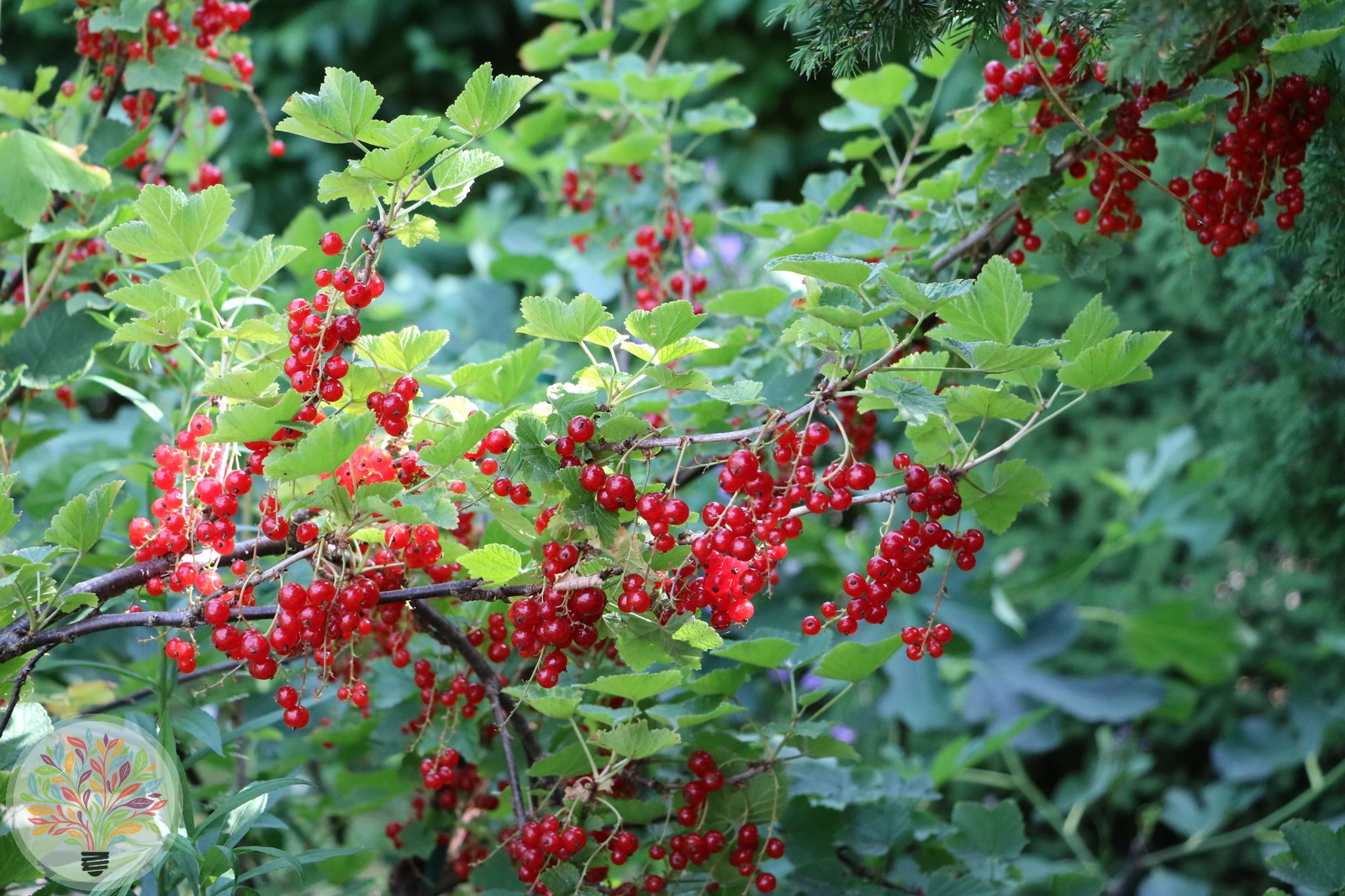
Ribes rubrum
Ribes rubrum
FamilyGenus: Ribesheimisch in Deutschland
🌿
7
Species
interact
🔗
7
Interactions
documented
🐛
7
Host relationships
Species
About this species
Ribes rubrum is a deciduous woody shrub reaching about 1.3 m in height, with broad leaves and a preference for shady, moderately moist soils. It bears flowers in April and May.
Ecological network
Click to highlight connections · Click again to open species page
Netzwerk wird geladen...
Larval host
Ecological significance
No detailed ecological impact information is recorded for this species.
Annual cycle
Flowers appear in April and May. In autumn, the deciduous leaves are shed, leaving bare woody stems through the winter months.
Safety note
This plant is considered safe for children; no toxic effects are documented.
Standort & Merkmale
Light
Schatten
Moisture
Frisch (Mäßig feucht)
Soil
Mittelzehrer (Normaler Boden)
Bloom time
Apr – Mai
Soil reaction
Mäßig sauer bis neutral
Bioregion
Continental
Growth form
Strauch
Woodiness
Verholzt
Leaf type
Breitblättrig
Leaf phenology
Laubabwerfend
Plant height
1.299 m
Morphological traits: TRY ID3 (CC BY 3.0) & TRY ID81 (CC BY)
Pflege & Anbau
Prefers a shady position with fresh, moderately moist soil of medium fertility. No special soil preparation is required beyond normal garden conditions. Being a woody shrub, it will develop a structural framework over time.
Scientific profile
Ribes rubrum is a deciduous, woody shrub that typically reaches a height of around 1.3 metres. It possesses broad leaves with an average area of approximately 37 cm². The plant is adapted to terrestrial habitats and shows a preference for shady conditions, with an Ellenberg light indicator value of 4. It thrives in fresh, moderately moist soils (moisture value 6) that are neutral to weakly acidic (reaction value 6) and of average nutrient supply (nutrient value 6). The species experiences a moderately warm temperature regime (value 4) in the available central European site records. Flowering takes place in April and May. Diaspores have a mass of about 9.16 milligrams. The shrub is fully deciduous, shedding its leaves in autumn.
Host relationships
7 species use this plant as a host
Polygonia c-albumEulithis prunataEulithis mellinataDysstroma truncataEupithecia assimilataAbraxas grossulariataMacaria wauaria
Sources & data origin
•TRY v6.0 / BiolFlor flowering phenology (Request 47350) — CC BY 4.0TRY request 47350 (Public, Data Released, TRY v6.0; 2026-02-15). Cite TRY: Kattge et al. (2020), doi:10.1111/gcb.14904; original source: Trefflich, A., Klotz, S. & Kühn, I. (2002). Blühphänologie. BIOLFLOR, Schriftenreihe für Vegetationskunde 38:127–131.
•Cook et al. (2025) UK Butterfly & Moth Traits (DOI: 10.5285/dbc7cc17-cbbd-49dd-bab4-8e8855768d66)
•FloraWeb / BfN
•EIVE 1.0 — Dengler et al. (2023), DOI: 10.3897/VCS.98324 (CC BY 4.0)
•GBIF Backbone Taxonomy — GBIF Secretariat (2024), DOI: 10.15468/39omei (CC BY 4.0)
•TRY Categorical Traits (ID3) — Kattge et al. (2012), DOI: 10.17871/TRY.3 (CC BY 3.0)
•TRY Global Spectrum (ID81) — Díaz et al. (2016/2021), DOI: 10.17871/TRY.81 (CC BY)
•Govaerts R et al. (2025) — World Checklist of Vascular Plants (WCVP) v14. Royal Botanic Gardens, Kew. DOI: 10.34885/xs7h-ze42 (CC BY 4.0)
•Foto: © Adobe Stock / AdobeStock_547509483
All data is licensed under CC BY 4.0, CC0, or compatible. Attribution according to license terms. Full source overview →