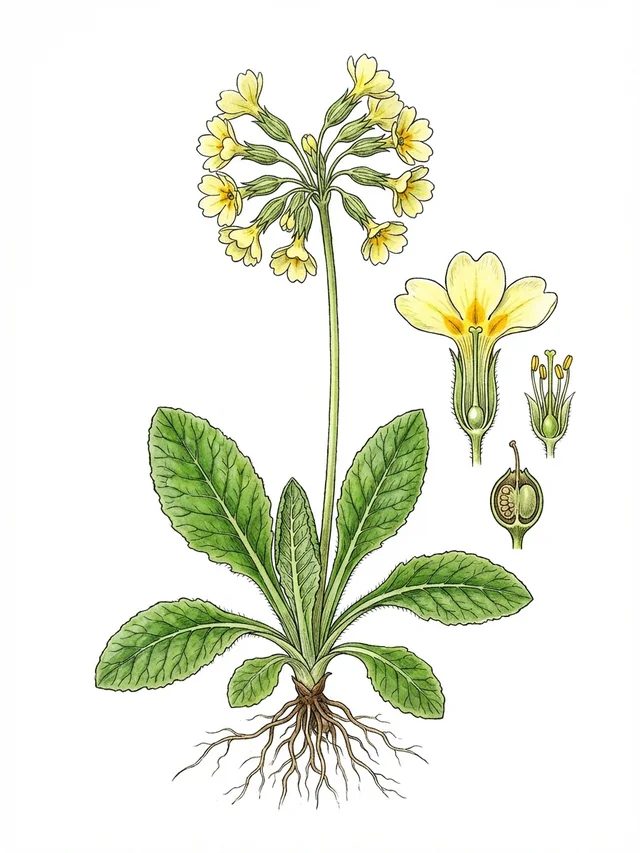
 Bild folgtKI-generierte Illustration
Ribes spicatum
Ribes spicatum
FamilyGenus: Ribesheimisch in Deutschland
🌿
29
Species
interact
🔗
29
Interactions
documented
About this species
A deciduous shrub native to British broadleaved woodland on lime-rich soils, flowering in April and May. Its broad leaves emerge in spring and it is regarded as safe for children.
Ecological network
Click to highlight connections · Click again to open species page
Netzwerk wird geladen...
Flower visit
Ecological significance
As a native shrub of calcareous broadleaved woodland, Ribes spicatum forms a natural part of the understorey flora. It has no adverse ecological impact in its native range.
Annual cycle
Leaf flush in spring is followed by flowering from April to May. The shrub is fully deciduous and drops its leaves in autumn.
Safety note
The plant is considered safe for children, with no known toxic effects.
Standort & Merkmale
Light
Schatten
Moisture
Frisch (Mäßig feucht)
Soil
Starkzehrer (Nährstoffreicher/Fetter Boden)
Bloom time
Apr – Mai
Soil reaction
Basisch / Kalkhold
Bioregion
Continental
Growth form
Strauch
Woodiness
Verholzt
Leaf type
Breitblättrig
Leaf phenology
Laubabwerfend
Plant height
1.261 m
Morphological traits: TRY ID3 (CC BY 3.0) & TRY ID81 (CC BY)
Pflege & Anbau
•
Light: Shade
•
Moisture: Moderately moist
•
Soil: Nutrient-rich, calcareous (alkaline to neutral)
Scientific profile
Ribes spicatum is a woody, deciduous shrub in the gooseberry family (Grossulariaceae). It reaches about 1.3 metres in height and bears broad leaves. The species is native in Great Britain and typically occupies the shaded understorey of beech and mixed deciduous woodland on calcareous, nutrient-rich soils. Flowering takes place from April to May, after which the leaves are shed in autumn.
Other flower visitors
29 other species visit the flowers
Turdus merulaFringilla coelebsLuscinia lusciniaTurdus iliacusPoecile palustrisFicedula hypoleucaApodemus flavicollisSylvia borinGarrulus glandariusPhylloscopus trochilusCoccothraustes coccothraustesSitta europaeaPyrrhula pyrrhulaMuscardinus avellanariusPoecile montanusOriolus oriolusPeriparus aterMartes martesSylvia atricapillaTurdus philomelosMuscicapa striataParus majorColumba palumbusDendrocopos majorHippolais icterinaDryocopus martiusErithacus rubeculaTurdus pilarisFicedula parva
Sources & data origin
•TraitCH — CC BY 4.0TraitCH 2.0 contributors; imported as source-preserving NaturKompass taxon evidence.
•Interaktionsdaten via GloBI (CC-BY 4.0)
•FloraWeb / BfN
•EIVE 1.0 — Dengler et al. (2023), DOI: 10.3897/VCS.98324 (CC BY 4.0)
•GBIF Backbone Taxonomy — GBIF Secretariat (2024), DOI: 10.15468/39omei (CC BY 4.0)
•TRY Categorical Traits (ID3) — Kattge et al. (2012), DOI: 10.17871/TRY.3 (CC BY 3.0)
•TRY Global Spectrum (ID81) — Díaz et al. (2016/2021), DOI: 10.17871/TRY.81 (CC BY)
•Checklist Alien Plants Belgium — Verloove F (2023), Botanic Garden Meise (CC BY 4.0)
•Govaerts R et al. (2025) — World Checklist of Vascular Plants (WCVP) v14. Royal Botanic Gardens, Kew. DOI: 10.34885/xs7h-ze42 (CC BY 4.0)
All data is licensed under CC BY 4.0, CC0, or compatible. Attribution according to license terms. Full source overview →