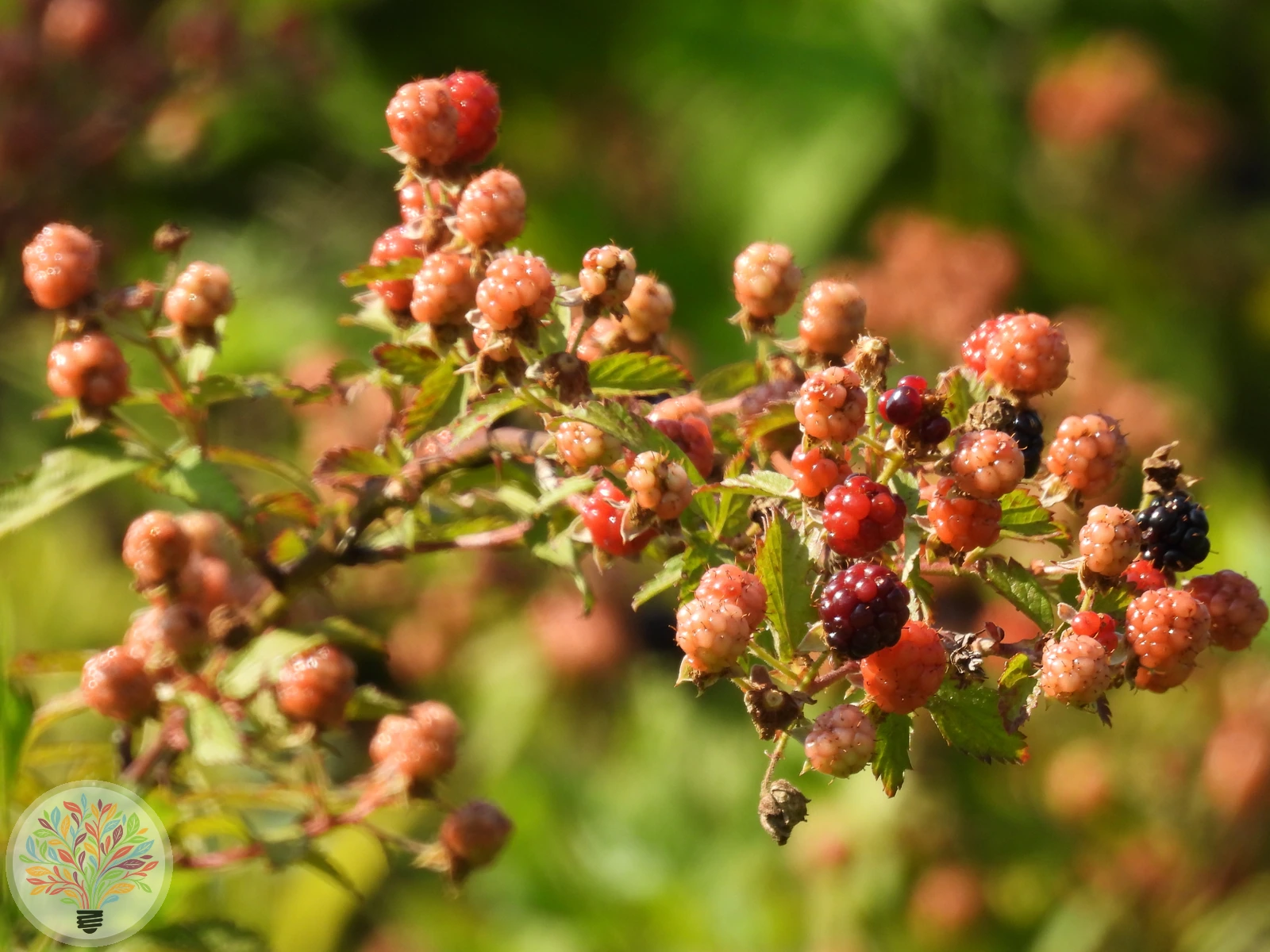
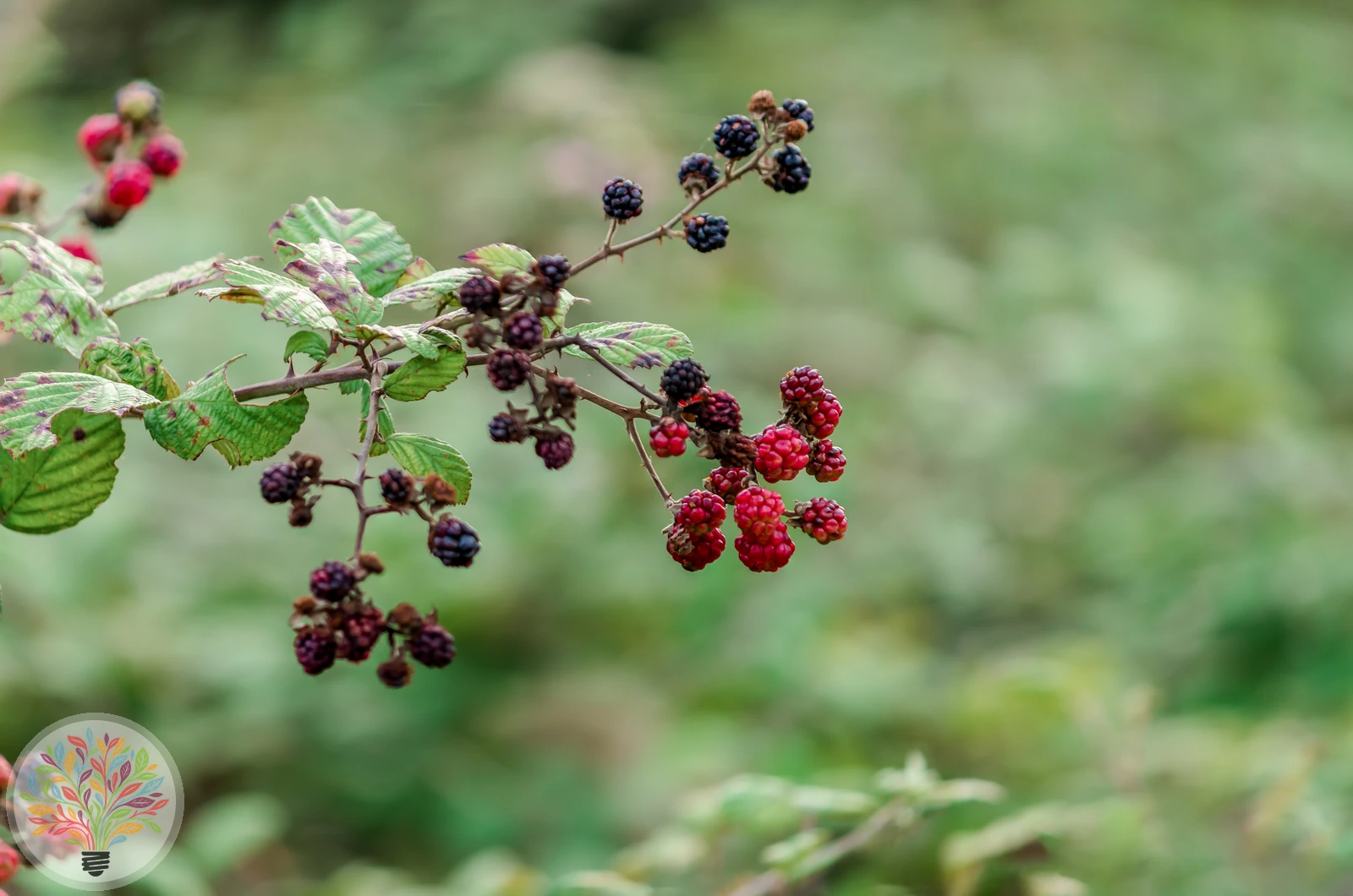
Rubus allegheniensis
Rubus allegheniensis
FamilyGenus: Rubusheimisch in Deutschland
🌿
45
Species
interact
🔗
47
Interactions
documented
🐛
11
Host relationships
Species
About this species
A deciduous shrub, introduced and now established in Great Britain, which produces white or pinkish flowers from May to July. It thrives in sunny locations with fresh, moderately moist, neutral to slightly acid soil.
Ecological network
Click to highlight connections · Click again to open species page
Netzwerk wird geladen...
PollinationLarval hostFlower visit
Ecological significance
Rubus allegheniensis is not native to Great Britain but has been introduced and is now established. Its recorded range includes parts of North and Southern America. No specific ecological impacts are documented in the provided data.
Annual cycle
Flowering takes place from May to July. Leaves emerge in spring and are lost in autumn, leaving a bare framework over winter.
Safety note
This plant is considered safe for children. No toxic or irritant properties are recorded in the available evidence.
Standort & Merkmale
Light
Sonne
Moisture
Frisch (Mäßig feucht)
Soil
Mittelzehrer (Normaler Boden)
Bloom time
Mai – Jul
Soil reaction
Mäßig sauer bis neutral
Bioregion
Continental
Growth form
Strauch
Woodiness
Verholzt
Leaf type
Breitblättrig
Leaf phenology
Laubabwerfend
Plant height
1.056 m
Morphological traits: TRY ID3 (CC BY 3.0) & TRY ID81 (CC BY)
Pflege & Anbau
Choose a sunny site with fresh, moderately moist, ordinary garden soil that is neutral to slightly acid. Once established, this deciduous shrub requires little special attention. No specific pruning needs are recorded, but it can be cut back as required.
Scientific profile
Belonging to the rose family (Rosaceae), Rubus allegheniensis is a woody, broad-leaved shrub reaching a typical height of about one metre. Its deciduous foliage is shed in autumn. The plant prefers sunny conditions and fresh, moderately moist soils of neutral to slightly acid reaction. Flowering occurs between May and July. Arbuscular mycorrhizal (AM) associations have been recorded. Its original distribution covers Northern America, Eastern Canada, the Northeastern and Southeastern United States, and parts of Southern America. In Great Britain it is an introduced neophyte that has become established.
Bestäuber & Besucher
32 Arten interagieren mit dieser Pflanze
Megachile centuncularisHalictus confususApis melliferaBombus soroeensisEctemnius continuusPieris rapaeVanessa virginiensisSpialia sertoriusSpialia rosaeSpialia orbiferMuschampia cribrellumMuschampia tessellumBoloria polarisBoloria friggaBoloria freijaBoloria charicleaPolygonia c-albumNymphalis polychlorosMelitaea diaminaAndrena milwaukeensisAndrena nasoniiAndrena nudaAndrena rufosignataBombus bimaculatusBombus citrinusBombus griseocollisBombus impatiensBombus prshewalskyiBombus ternariusNomada imbricataOsmia bucephalaOsmia taurus
Host relationships
11 species use this plant as a host
Actebia fennicaPyrrhia umbraAnaplectoides prasinaLymantria disparOrgyia antiquaDysstroma citrataAncylis comptanaEuproctis chrysorrhoeaHyphantria cuneaPeridroma sauciaRheumaptera undulata
Sources & data origin
•TraitCH — CC BY 4.0TraitCH 2.0 contributors; imported as source-preserving NaturKompass taxon evidence.
•Interaktionsdaten via GloBI (CC-BY 4.0)
•Middleton-Welling_2020
•pollinator_interactions
•FloraWeb / BfN
•EIVE 1.0 — Dengler et al. (2023), DOI: 10.3897/VCS.98324 (CC BY 4.0)
•GBIF Backbone Taxonomy — GBIF Secretariat (2024), DOI: 10.15468/39omei (CC BY 4.0)
•TRY Categorical Traits (ID3) — Kattge et al. (2012), DOI: 10.17871/TRY.3 (CC BY 3.0)
•TRY Global Spectrum (ID81) — Díaz et al. (2016/2021), DOI: 10.17871/TRY.81 (CC BY)
•Govaerts R et al. (2025) — World Checklist of Vascular Plants (WCVP) v14. Royal Botanic Gardens, Kew. DOI: 10.34885/xs7h-ze42 (CC BY 4.0)
•Foto: © Adobe Stock / AdobeStock_1513990779
All data is licensed under CC BY 4.0, CC0, or compatible. Attribution according to license terms. Full source overview →