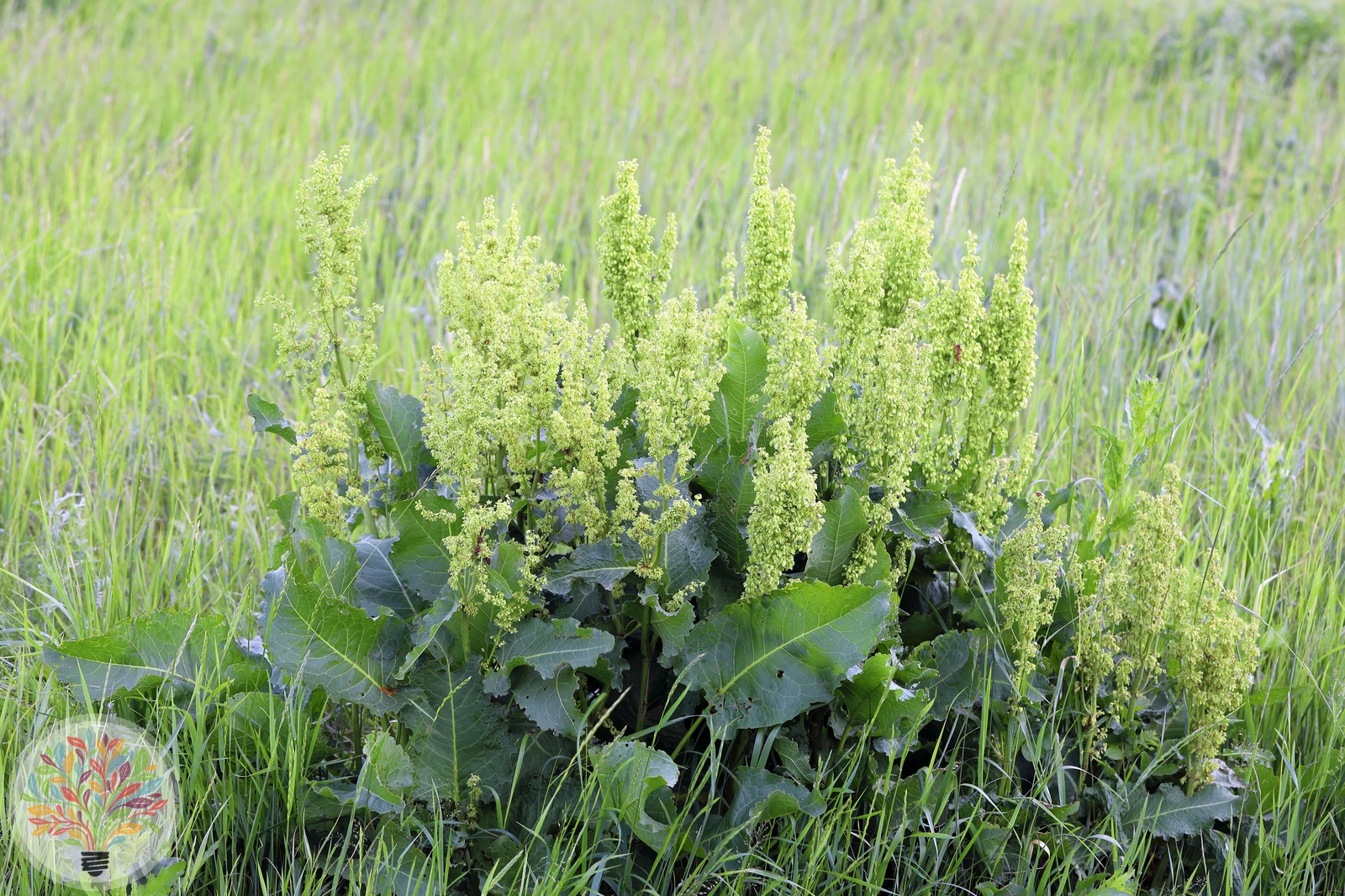
Rumex acetosa
Rumex acetosa
FamilyGenus: Rumexheimisch in Deutschland
🌿
47
Species
interact
🔗
79
Interactions
documented
🐛
13
Host relationships
Species
About this species
Rumex acetosa is a native herbaceous plant found in Great Britain, thriving in sunny, moderately moist, normal soils. It flowers from April to September, supplying nectar and pollen to insects, and reaches around 44 cm in height.
Ecological network
Click to highlight connections · Click again to open species page
Netzwerk wird geladen...
PollinationLarval hostFlower visit
Ecological significance
As a native wildflower, it provides nectar and pollen for insects and forms arbuscular mycorrhizal associations with soil fungi.
Annual cycle
Herbaceous growth appears in spring, with the flowering period extending from April to September. Above-ground parts die back outside the growing season.
Safety note
No data on toxicity or safety concerns are recorded in the source material.
Standort & Merkmale
Light
Sonne
Moisture
Frisch (Mäßig feucht)
Soil
Mittelzehrer (Normaler Boden)
Bloom time
Apr – Sep
Soil reaction
Mäßig sauer bis neutral
Bioregion
Continental
Nectar value
3
Pollen value
3
Growth form
Krautige Pflanze
Woodiness
Nicht verholzt
Leaf type
Breitblättrig
Plant height
0.437 m
Morphological traits: TRY ID3 (CC BY 3.0) & TRY ID81 (CC BY)
Pflege & Anbau
Prefers full sun and a moderately moist, normal soil. It is intolerant of saline conditions and best suited to low-disturbance sites.
Scientific profile
Rumex acetosa belongs to the Polygonaceae family. This non-woody, broad-leaved plant grows to an average height of 0.44 m, with leaf blades averaging 1674 mm². Its diaspores weigh approximately 0.706 mg. It is native and widespread in Great Britain, favouring full sun, moderately moist, normal soils, and moderately warm temperatures; it does not tolerate salt and is associated with low-disturbance habitats. The species forms arbuscular mycorrhizas. Flowering spans April to September, and the blooms offer both nectar and pollen (value 3 on the applied scales) to visiting insects.
Bestäuber & Besucher
12 Arten interagieren mit dieser Pflanze
Lycaena phlaeasCelastrina argiolusLycaena virgaureaeLycaena alciphronPisaura mirabilisAcronicta rumicisBombus ssBombus soroeensisRiponnensia splendensApis melliferaBombus pascuorumBombus
Host relationships
13 species use this plant as a host
Adscita staticesTimandra comaeOrgyia recensHoplodrina octogenariaAgrochola lituraAgrochola macilentaEugnorisma depunctaCaradrina clavipalpisAgrotis exclamationisAmphipyra tragopoginisAmmoconia caecimacula (Denis & Schiffermüller), 1775Palaeochrysophanus hippothoeLythria cruentaria
Other flower visitors
22 other species visit the flowers
Pyrrhula pyrrhulaHarpalus rufipesAmara communisHarpalus latusHarpalus griseusAmara ovataCantharis fuscaHarpalus distinguendusTrechus quadristriatusAmara lunicollisAmara plebejaHemicrepidius nigerHemicrepidius hirtusDiachromus germanusApion frumentariumPterostichus melanariusAmara convexiorHarpalus affinisValgus hemipterusPerapion violaceum (Kirby,1808)Cryptocephalus fulvus Goeze,1777Hemerobiidae
Sources & data origin
•Cook et al. (2025) UK Butterfly & Moth Traits (DOI: 10.5285/dbc7cc17-cbbd-49dd-bab4-8e8855768d66)
•Interaktionsdaten via GloBI (CC-BY 4.0)
•pollinator_interactions
•FloraWeb / BfN
•EIVE 1.0 — Dengler et al. (2023), DOI: 10.3897/VCS.98324 (CC BY 4.0)
•EuPPollNet — Kuppler et al. (2025), DOI: 10.1111/geb.70000 (CC BY 4.0)
•Database of Pollinator Interactions (DoPI) — Pocock et al. (2022), DOI: 10.1002/ecy.3801 (CC BY)
•GBIF Backbone Taxonomy — GBIF Secretariat (2024), DOI: 10.15468/39omei (CC BY 4.0)
•TRY Categorical Traits (ID3) — Kattge et al. (2012), DOI: 10.17871/TRY.3 (CC BY 3.0)
•TRY Global Spectrum (ID81) — Díaz et al. (2016/2021), DOI: 10.17871/TRY.81 (CC BY)
•Govaerts R et al. (2025) — World Checklist of Vascular Plants (WCVP) v14. Royal Botanic Gardens, Kew. DOI: 10.34885/xs7h-ze42 (CC BY 4.0)
•Foto: © Grigoriy Pisockiy / Adobe Stock / AdobeStock_453286801
All data is licensed under CC BY 4.0, CC0, or compatible. Attribution according to license terms. Full source overview →