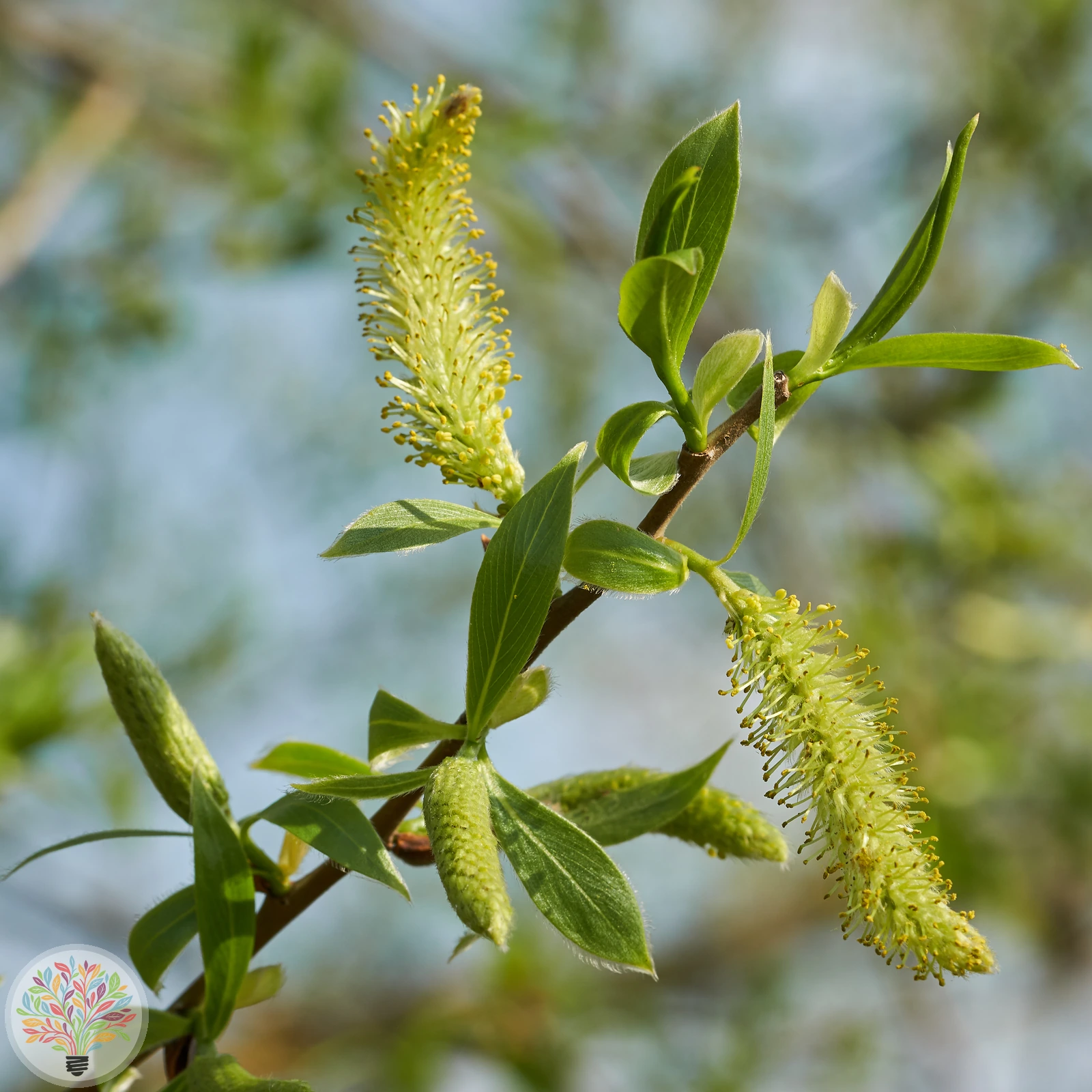
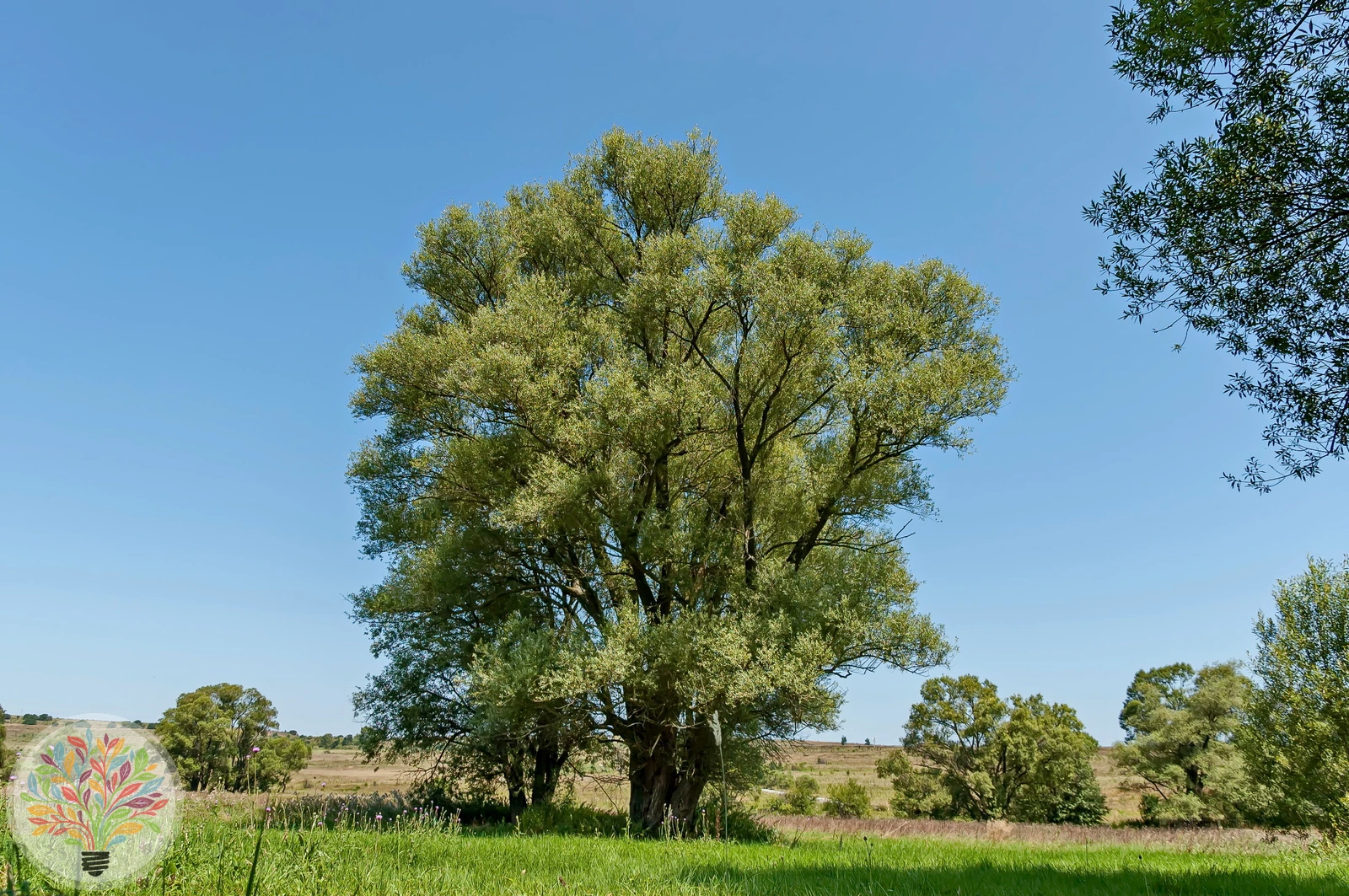
Salix alba
Salix alba
FamilyGenus: Salixheimisch in Deutschland
🌿
17
Species
interact
🔗
17
Interactions
documented
🐛
11
Host relationships
Species
About this species
A deciduous, broad-leaved tree that favours moist, nutrient-rich, calcareous soils in partial shade. Salix alba is an archaeophyte in Great Britain. It flowers from March to May and can reach a height of around 17 metres.
Ecological network
Click to highlight connections · Click again to open species page
Netzwerk wird geladen...
PollinationLarval host
Ecological significance
Salix alba forms ectomycorrhizal symbioses with soil fungi, contributing to nutrient cycling. The minute, wind-dispersed seeds allow colonisation of suitable wet habitats. As an archaeophyte, it has long been part of the British landscape.
Annual cycle
Flowering takes place between March and May. Deciduous leaves expand in spring and are dropped in autumn. Seed dispersal occurs after flowering, with tiny seeds carried by the wind.
Standort & Merkmale
Light
Halbschatten
Moisture
Feucht
Soil
Starkzehrer (Nährstoffreicher/Fetter Boden)
Bloom time
Mär – Mai
Soil reaction
Basisch / Kalkhold
Bioregion
Continental
Growth form
Baum
Woodiness
Verholzt
Leaf type
Breitblättrig
Leaf phenology
Laubabwerfend
Plant height
17.363 m
Morphological traits: TRY ID3 (CC BY 3.0) & TRY ID81 (CC BY)
Pflege & Anbau
Plant in moist, fertile, calcareous soil in partial shade. This tree suits damp sites where its preference for nutrient-rich, alkaline conditions can be met. It does not tolerate saline soils. Its deciduous habit and tolerance of mild disturbance levels should be considered when choosing a location.
Scientific profile
Salix alba is a deciduous, broad-leaved tree in the willow family (Salicaceae), reaching a typical height of around 17 metres. In Great Britain it is an archaeophyte. The tree produces its flowers from March to May. It prefers moist, nutrient-rich, calcareous soils with a semi-shaded light environment, and shows low tolerance of salinity. The leaves are broad, with an average leaf area of approximately 652 mm², and are shed in autumn. Salix alba forms ectomycorrhizal associations, and its seeds are extremely light – each diaspore weighs about 0.12 mg – enabling wind dispersal. It is a woody terrestrial species that does not withstand frequent disturbance.
Bestäuber & Besucher
6 Arten interagieren mit dieser Pflanze
Host relationships
11 species use this plant as a host
Drepana falcatariaPterapherapteryx sexalataLymantria monachaAcronicta menyanthidisEarias cloranaBrachylomia viminalisAcronicta leporinaCatocala nuptaFurcula furculaAmphipyra tragopoginisLeucoma salicis
Sources & data origin
•Cook et al. (2025) UK Butterfly & Moth Traits (DOI: 10.5285/dbc7cc17-cbbd-49dd-bab4-8e8855768d66)
•pollinator_interactions
•FloraWeb / BfN
•EIVE 1.0 — Dengler et al. (2023), DOI: 10.3897/VCS.98324 (CC BY 4.0)
•GBIF Backbone Taxonomy — GBIF Secretariat (2024), DOI: 10.15468/39omei (CC BY 4.0)
•TRY Categorical Traits (ID3) — Kattge et al. (2012), DOI: 10.17871/TRY.3 (CC BY 3.0)
•TRY Global Spectrum (ID81) — Díaz et al. (2016/2021), DOI: 10.17871/TRY.81 (CC BY)
•Govaerts R et al. (2025) — World Checklist of Vascular Plants (WCVP) v14. Royal Botanic Gardens, Kew. DOI: 10.34885/xs7h-ze42 (CC BY 4.0)
•Foto: © Adobe Stock / AdobeStock_297576650
All data is licensed under CC BY 4.0, CC0, or compatible. Attribution according to license terms. Full source overview →