 Bild folgtKI-generierte Illustration
Saxifraga rotundifolia
Saxifraga rotundifolia
FamilyGenus: Saxifragaheimisch in Deutschland
🌿
6
Species
interact
🔗
11
Interactions
documented
About this species
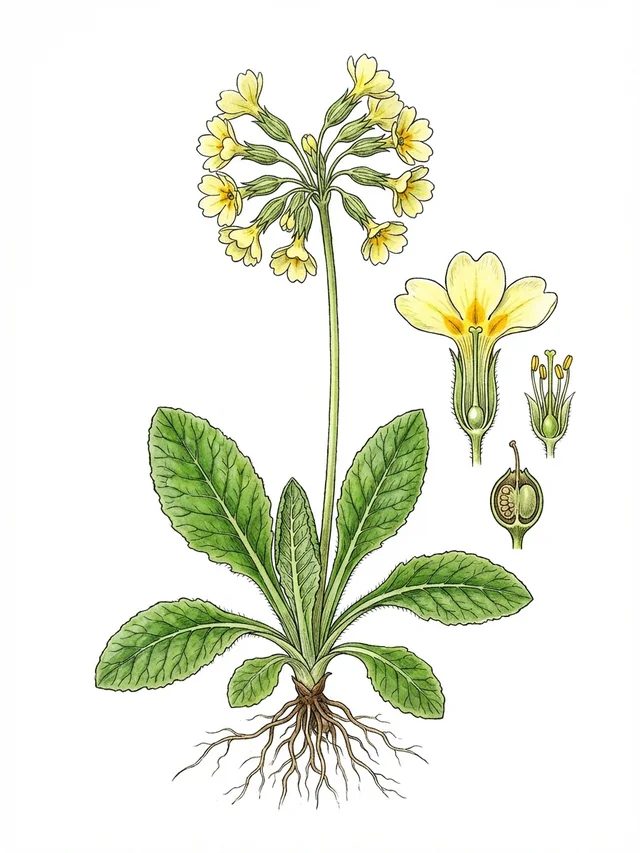
Saxifraga rotundifolia is an introduced, evergreen herbaceous plant established in Great Britain. It bears broad leaves and produces flowers from May to September. Typically found in shady, modestly moist, calcareous conditions and growing to a height of around 0.26 m, it shows a preference for low-disturbance habitats. The tiny seeds weigh about 0.04 mg.
Ecological network
Click to highlight connections · Click again to open species page
Netzwerk wird geladen...
PollinationFlower visit
Ecological significance
Evidence from the available datasets indicates that Saxifraga rotundifolia is introduced and established in Great Britain, but no invasive behaviour or negative ecological consequences are documented.
Annual cycle
This evergreen perennial retains its broad leaves throughout the year. Flowering occurs from late spring into early autumn, peaking between May and September. Seed set follows the bloom period, with tiny seeds dispersed late in the season.
Standort & Merkmale
Light
Schatten
Moisture
Frisch (Mäßig feucht)
Soil
Mittelzehrer (Normaler Boden)
Bloom time
Mai – Sep
Soil reaction
Basisch / Kalkhold
Bioregion
Continental
Growth form
Krautige Pflanze
Woodiness
Nicht verholzt
Leaf type
Breitblättrig
Leaf phenology
Immergrün
Plant height
0.263 m
Morphological traits: TRY ID3 (CC BY 3.0) & TRY ID81 (CC BY)
Pflege & Anbau
## Light
Place in full shade.
## Soil
Grow in moist but well-drained, moderately fertile, calcareous to slightly alkaline soil.
## Water
Keep soil consistently fresh; avoid prolonged drought or waterlogging.
## Maintenance
The plant is herbaceous and evergreen; little pruning is needed beyond removing dead foliage. Flowers appear from May to September.
Scientific profile
Saxifraga rotundifolia is a herbaceous, non-woody species with a terrestrial growth form. It reaches an average height of 0.26 m and produces broad leaves that are evergreen. Leaf area averages 1,876 mm². Flowering extends from May to September, and the plant produces minute diaspores weighing around 0.04 mg. The species is associated with calcareous, basic soils and moderate nutrient levels, and it typically grows in shaded situations on moist but fresh ground. It tolerates low disturbance regimes. In Great Britain, it is an introduced species that has become established. Mycorrhizal associations are of the arbuscular type.
Bestäuber & Besucher
4 Arten interagieren mit dieser Pflanze
Other flower visitors
2 other species visit the flowers
Thricops nigritellusPegoplata aestiva
Sources & data origin
•TraitCH — CC BY 4.0TraitCH 2.0 contributors; imported as source-preserving NaturKompass taxon evidence.
•pollinator_interactions
•FloraWeb / BfN
•EIVE 1.0 — Dengler et al. (2023), DOI: 10.3897/VCS.98324 (CC BY 4.0)
•GBIF Backbone Taxonomy — GBIF Secretariat (2024), DOI: 10.15468/39omei (CC BY 4.0)
•TRY Categorical Traits (ID3) — Kattge et al. (2012), DOI: 10.17871/TRY.3 (CC BY 3.0)
•TRY Global Spectrum (ID81) — Díaz et al. (2016/2021), DOI: 10.17871/TRY.81 (CC BY)
•Checklist Alien Plants Belgium — Verloove F (2023), Botanic Garden Meise (CC BY 4.0)
•Govaerts R et al. (2025) — World Checklist of Vascular Plants (WCVP) v14. Royal Botanic Gardens, Kew. DOI: 10.34885/xs7h-ze42 (CC BY 4.0)
All data is licensed under CC BY 4.0, CC0, or compatible. Attribution according to license terms. Full source overview →