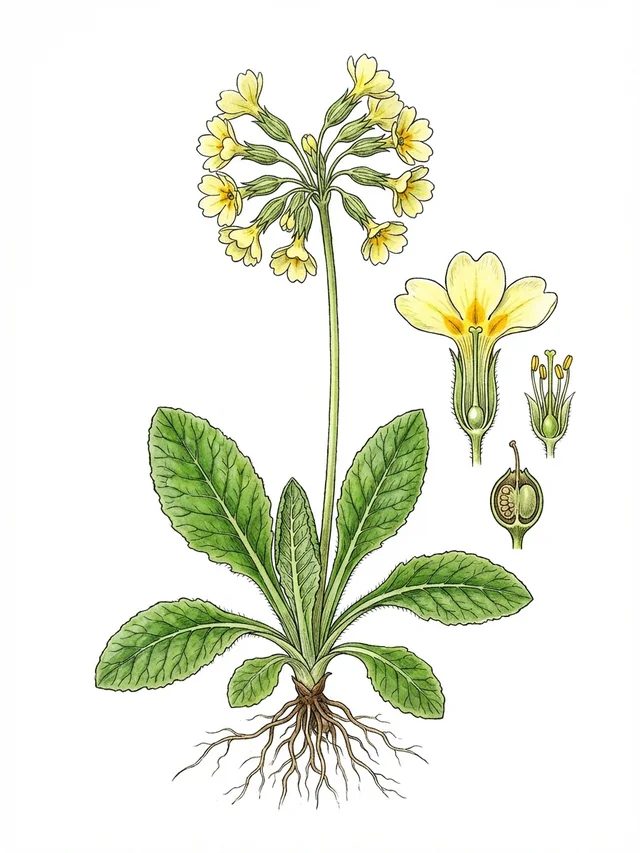
 Bild folgtKI-generierte Illustration
Elaeagnus commutata
Elaeagnus commutata
FamilyGenus: Ölweidenheimisch in Deutschland
🌿
10
Species
interact
🔗
11
Interactions
documented
🐛
1
Host relationships
Species
About this species
A deciduous shrub from the Elaeagnaceae family, introduced and established in Great Britain. It reaches about 2.8 metres in height, bears broad leaves, and produces flowers in May and June. It is suited to half-shade, dry, neutral to weakly acid soils of low fertility and moderately warm conditions.
Ecological network
Click to highlight connections · Click again to open species page
Netzwerk wird geladen...
PollinationLarval host
Ecological significance
Introduced and established in Great Britain, primarily through ornamental use. No detailed ecological impact data are available.
Annual cycle
Flowering occurs in May and June.
Safety note
No toxicity or hazard data are recorded.
Standort & Merkmale
Light
Halbschatten
Moisture
Trocken
Soil
—
Bloom time
Mai – Jun
Growth form
Strauch
Woodiness
Verholzt
Leaf type
Breitblättrig
Plant height
2.818 m
Morphological traits: TRY ID3 (CC BY 3.0) & TRY ID81 (CC BY)
Pflege & Anbau
Grow in half shade, in dry, neutral to weakly acid, low-fertility soil. It tolerates moderately warm conditions and has an arbuscular mycorrhizal association.
Scientific profile
Elaeagnus commutata is a woody, broad-leaved shrub in the Elaeagnaceae family. It typically attains a height of around 2.8 metres. The species flowers from May to June. It is adapted to terrestrial habitats and forms arbuscular mycorrhizal associations. The plant originates from North America (Northern America, eastern Canada, the northeastern and southeastern United States, and parts of southern America) and is considered a neophyte in central Europe. In Great Britain it is an introduced and established species, having arrived via ornamental cultivation. It favours half-shade, dry, neutral to weakly acid, nutrient-poor soils, and moderately warm temperatures. Its diaspores are relatively heavy, with a mean mass of about 119 milligrams.
Bestäuber & Besucher
9 Arten interagieren mit dieser Pflanze
Apis melliferaVanessa carduiAndrena carliniAndrena dunningiBombus huntiiBombus insularisBombus nevadensisBombus prshewalskyiBombus ternarius
Sources & data origin
•TraitCH — CC BY 4.0TraitCH 2.0 contributors; imported as source-preserving NaturKompass taxon evidence.
•TRY v6.0 / BiolFlor flowering phenology (Request 47350) — CC BY 4.0TRY request 47350 (Public, Data Released, TRY v6.0; 2026-02-15). Cite TRY: Kattge et al. (2020), doi:10.1111/gcb.14904; original source: Trefflich, A., Klotz, S. & Kühn, I. (2002). Blühphänologie. BIOLFLOR, Schriftenreihe für Vegetationskunde 38:127–131.
•Interaktionsdaten via GloBI (CC-BY 4.0)
•pollinator_interactions
•FloraWeb / BfN
•EIVE 1.0 — Dengler et al. (2023), DOI: 10.3897/VCS.98324 (CC BY 4.0)
•GBIF Backbone Taxonomy — GBIF Secretariat (2024), DOI: 10.15468/39omei (CC BY 4.0)
•TRY Categorical Traits (ID3) — Kattge et al. (2012), DOI: 10.17871/TRY.3 (CC BY 3.0)
•TRY Global Spectrum (ID81) — Díaz et al. (2016/2021), DOI: 10.17871/TRY.81 (CC BY)
•Govaerts R et al. (2025) — World Checklist of Vascular Plants (WCVP) v14. Royal Botanic Gardens, Kew. DOI: 10.34885/xs7h-ze42 (CC BY 4.0)
All data is licensed under CC BY 4.0, CC0, or compatible. Attribution according to license terms. Full source overview →