
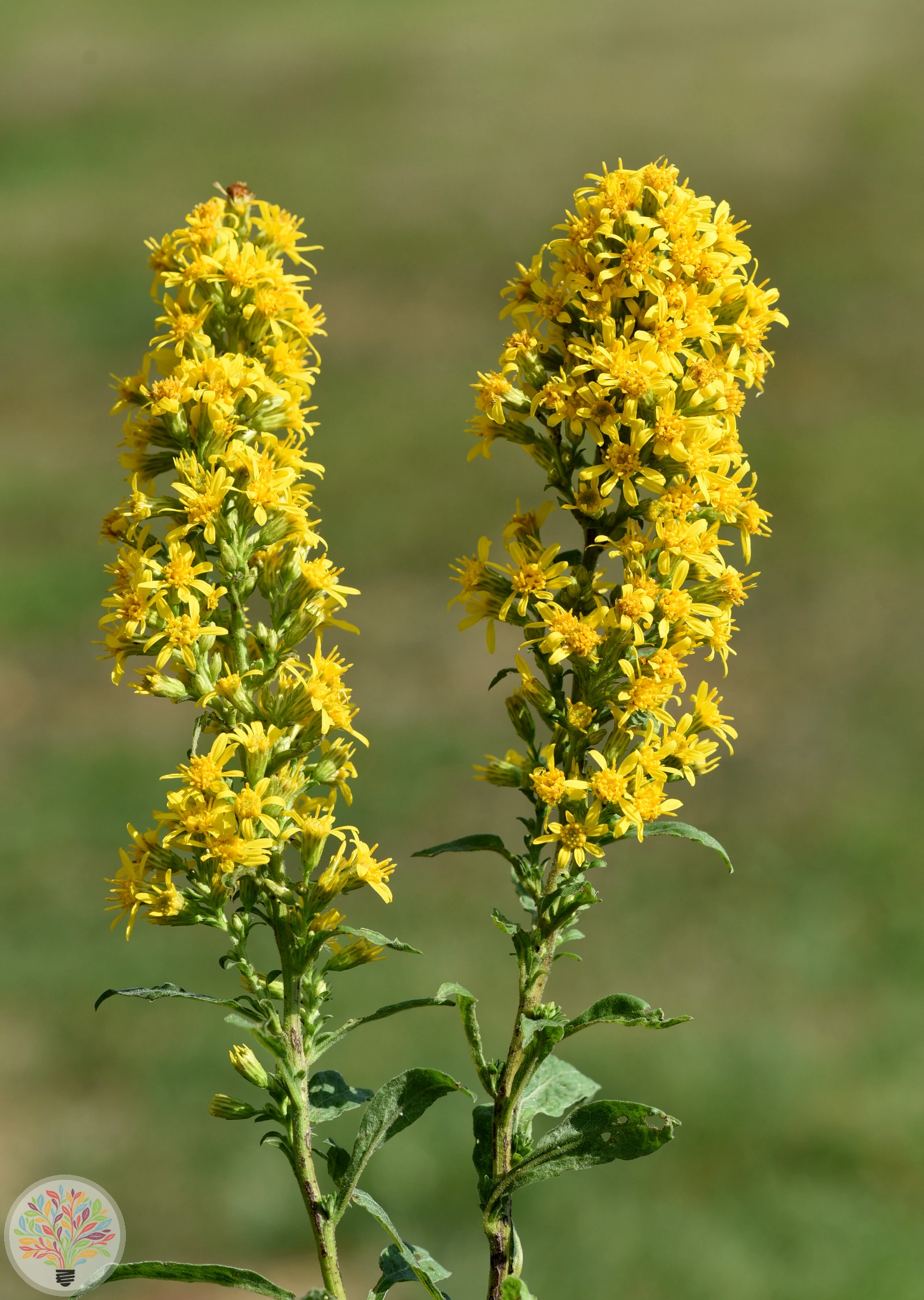
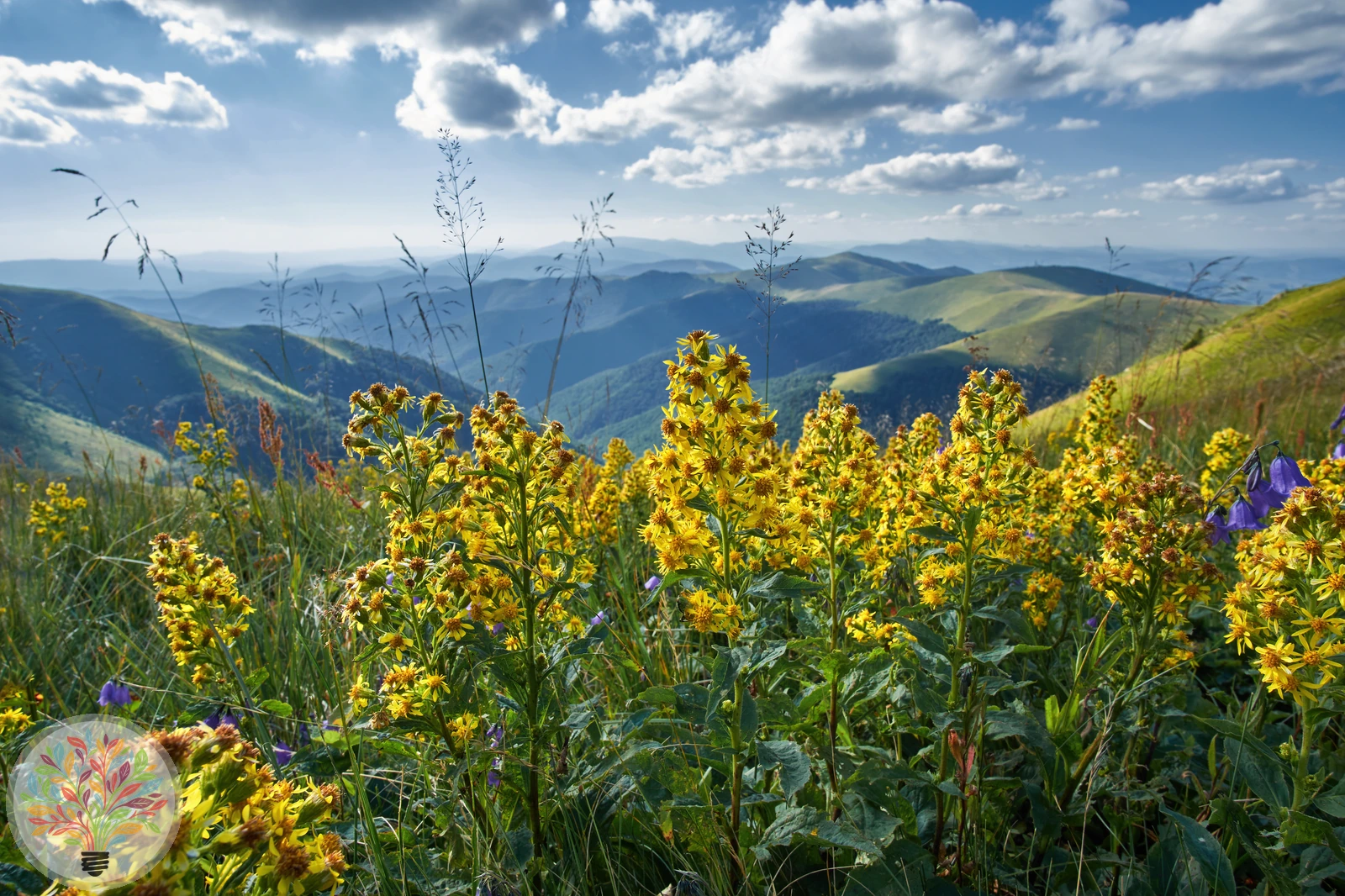
Solidago virgaurea
Solidago virgaurea
FamilyGenus: Solidagoheimisch in Deutschland
🌿
194
Species
interact
🔗
1194
Interactions
documented
🐛
11
Host relationships
Species
About this species
Solidago virgaurea is a native herbaceous plant of semi-shaded, moderately moist habitats. It produces flowers from May to September, providing abundant nectar and pollen for wildlife.
Ecological network
Click to highlight connections · Click again to open species page
Netzwerk wird geladen...
PollinationLarval hostFlower visit
Ecological significance
The flowers offer an excellent source of nectar and pollen, supporting pollinating insects from late spring into early autumn.
Annual cycle
Flowering takes place from May to September.
Standort & Merkmale
Light
Halbschatten
Moisture
Frisch (Mäßig feucht)
Soil
Mittelzehrer (Normaler Boden)
Bloom time
Mai – Sep
Soil reaction
Mäßig sauer bis neutral
Bioregion
Continental
Nectar value
5
Pollen value
5
Growth form
Krautige Pflanze
Woodiness
Nicht verholzt
Leaf type
Breitblättrig
Plant height
0.508 m
Morphological traits: TRY ID3 (CC BY 3.0) & TRY ID81 (CC BY)
Pflege & Anbau
Plant in semi-shade with fresh, moderately moist, average garden soil. Avoid heavily disturbed sites.
Scientific profile
A member of the Asteraceae family, Solidago virgaurea is a herbaceous, non-woody plant that typically reaches about 0.5 metres in height. Its leaves are broad, with an average leaf area of 984 mm². The species grows in semi-shade and prefers fresh, moderately moist soils of medium nutrient status. It is terrestrial and forms arbuscular mycorrhizal associations. Flowering takes place from May to September; the blooms are rich in both nectar and pollen, each scored 5 out of 5 in available data. The diaspores are small (mean mass 0.52 mg) and the plant shows little tolerance of disturbance (severity 0.63 on a low disturbance scale). It is native in Great Britain.
Bestäuber & Besucher
95 Arten interagieren mit dieser Pflanze
Hoplitis mitisLasioglossum leucopusBombus terrestrisSphaerophoria scriptaBombus jonellusBombus pratorumPlatycheirus albimanusBombus vestalisEpisyrphus balteatusEupeodes latifasciatusLasioglossum calceatumLasioglossum fulvicorneLasioglossum morioLasioglossum quadrinotatumPolyommatus icarusBombus sylvestrisHelophilus pendulusBombus semenoviellusEristalis horticolaPsithyrus bohemicusOxybelus mandibularisMelitaea athaliaEristalis tenaxLasioglossum smeathmanellumParagus haemorrhousbombus confususCheilosia canicularisPsithyrus campestrisEristalis similisSyrphus torvusCheilosia psilophthalmaBombus pyrenaeusScaeva pyrastriEupeodes corollaePlatycheirus granditarsusSyritta pipiensEristalis rupiumAmmophila pubescensPsithyrus rupestrisApis melliferaLasioglossum leucozoniumLasioglossum sp4Lasioglossum albipesBombus pascuorumErebia medusaMelanostoma scalareBombus sicheliiChrysotoxum intermediumErebia euryaleIssoria lathonia
Host relationships
11 species use this plant as a host
Eupithecia tripunctariaEupithecia virgaureataEupithecia centaureataEupithecia expallidataBiston betulariaCucullia asterisLacanobia contiguaPhragmatobia fuliginosaEupithecia vulgataEupithecia subfuscataChloroclystis v-ata
Other flower visitors
88 other species visit the flowers
Microlepidoptera 5Sphaeroforia scriptaNitidulidae (Latreille,Melinda viridicyaneaTachinidae sp10Pyrophaena granditarsisMeligethes aeneusHydrotaea irritansAnthomyia liturataNeomyia cornicinaPollenia rudisSarcophaga nigriventrisTachina feraSarcophaga subvicinaMorellia hortorumEggisops pecchioliiProsena siberitaDelia dilutaScatophaga stercorariaHydrotaea dentipesEriothrix rufomaculatusThricops nigritellusDilophus febrilisCalliphora vicinaDrymeia alpicolaPhaonia angelicaePhaonia incanaSiphona geniculataBellardia vulgarisSicus ferrugineusPhysocephala rufipesDalopius marginatusCerceris ArenariaFormica fuscaBruchidius villosusRhagonycha fulvaArge ustulataFormicidaeAnthomyiidaeBrassicogethes aeneusStenurella melanuraMyrmica ruginodisScathophaga stercorariaSphaerophoriaTricholinumPolietes lardariaBarycnemisCantharis figurataEctobius sylvestrisProsternon tessellatum
Sources & data origin
•Cook et al. (2025) UK Butterfly & Moth Traits (DOI: 10.5285/dbc7cc17-cbbd-49dd-bab4-8e8855768d66)
•pollinator_interactions
•FloraWeb / BfN
•EIVE 1.0 — Dengler et al. (2023), DOI: 10.3897/VCS.98324 (CC BY 4.0)
•EuPPollNet — Kuppler et al. (2025), DOI: 10.1111/geb.70000 (CC BY 4.0)
•Database of Pollinator Interactions (DoPI) — Pocock et al. (2022), DOI: 10.1002/ecy.3801 (CC BY)
•GBIF Backbone Taxonomy — GBIF Secretariat (2024), DOI: 10.15468/39omei (CC BY 4.0)
•TRY Categorical Traits (ID3) — Kattge et al. (2012), DOI: 10.17871/TRY.3 (CC BY 3.0)
•TRY Global Spectrum (ID81) — Díaz et al. (2016/2021), DOI: 10.17871/TRY.81 (CC BY)
•Govaerts R et al. (2025) — World Checklist of Vascular Plants (WCVP) v14. Royal Botanic Gardens, Kew. DOI: 10.34885/xs7h-ze42 (CC BY 4.0)
•Foto: © Adobe Stock / AdobeStock_288466021
All data is licensed under CC BY 4.0, CC0, or compatible. Attribution according to license terms. Full source overview →