Sorbus aria
Sorbus aria
Familyheimisch in Deutschland
🌿
6
Species
interact
🔗
6
Interactions
documented
About this species
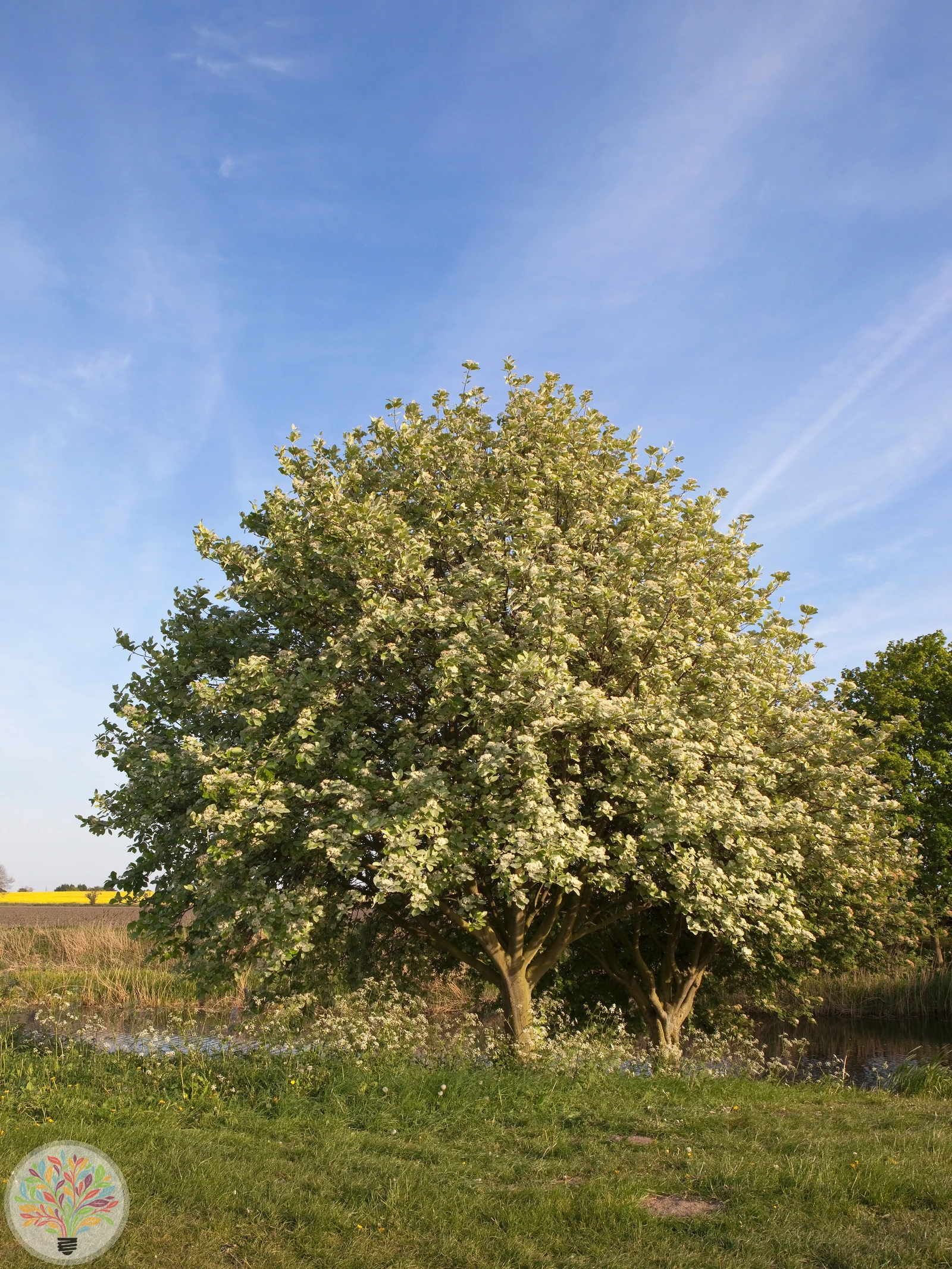
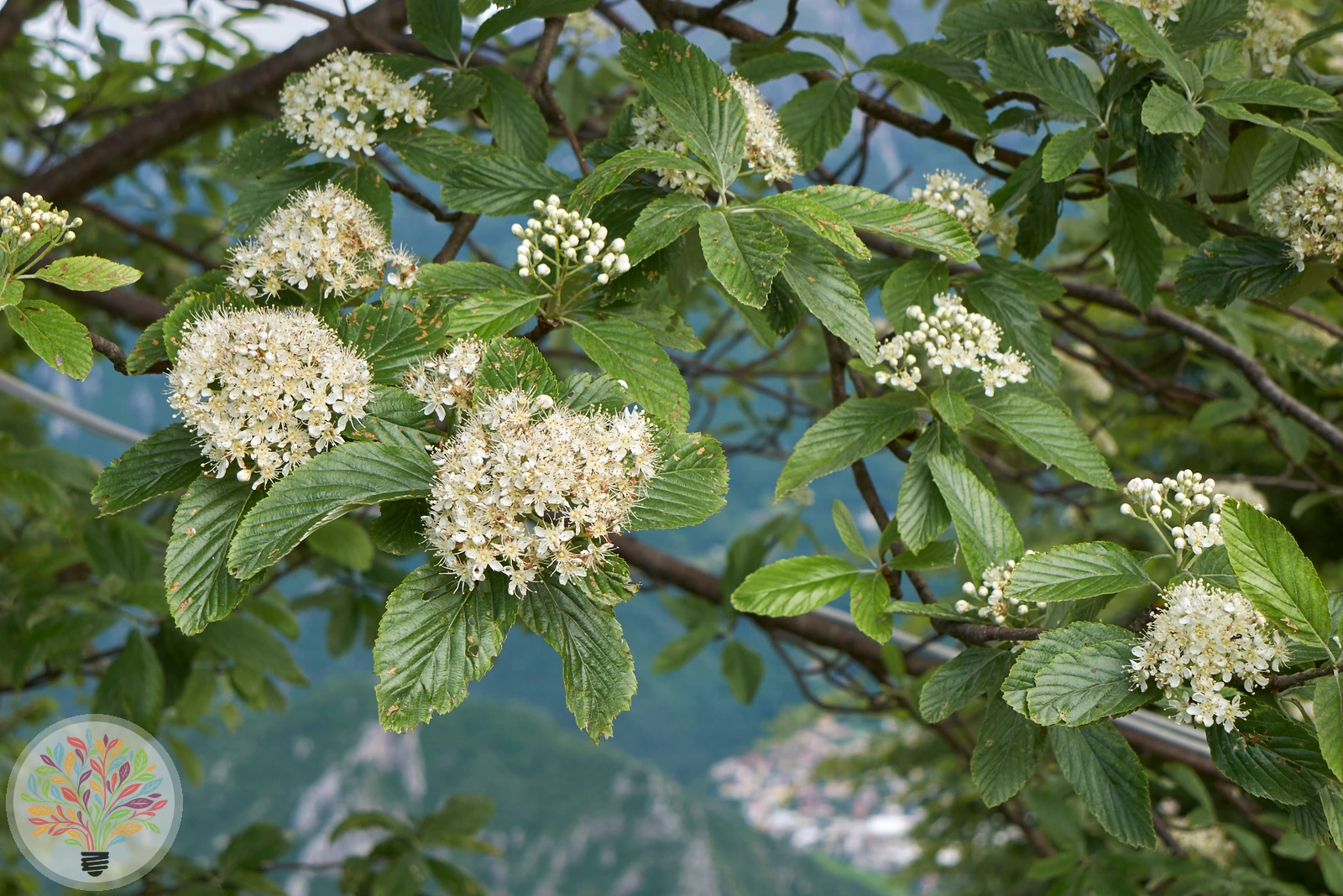
A native, deciduous tree reaching around 7 m, Sorbus aria flowers in May and June and grows naturally on calcareous, moderately moist but nutrient-poor soils in partial shade.
Ecological network
Click to highlight connections · Click again to open species page
Netzwerk wird geladen...
PollinationFlower visit
Ecological significance
Native in Great Britain, Sorbus aria provides habitat and food resources for wildlife within its natural range.
Annual cycle
A deciduous tree, leaves emerge in spring and are shed in autumn. Flowers appear in May and June.
Safety note
No specific safety hazards are documented for this plant.
Standort & Merkmale
Light
Halbschatten
Moisture
Frisch (Mäßig feucht)
Soil
Schwachzehrer (Magerer Boden)
Bloom time
Mai – Jun
Soil reaction
Basisch / Kalkhold
Bioregion
Continental
Growth form
Baum
Woodiness
Verholzt
Leaf type
Breitblättrig
Leaf phenology
Laubabwerfend
Plant height
7.213 m
Morphological traits: TRY ID3 (CC BY 3.0) & TRY ID81 (CC BY)
Pflege & Anbau
### Light
Partial shade.
### Moisture
Moderately moist but well‑drained.
### Soil
Calcareous, nutrient‑poor soils.
Scientific profile
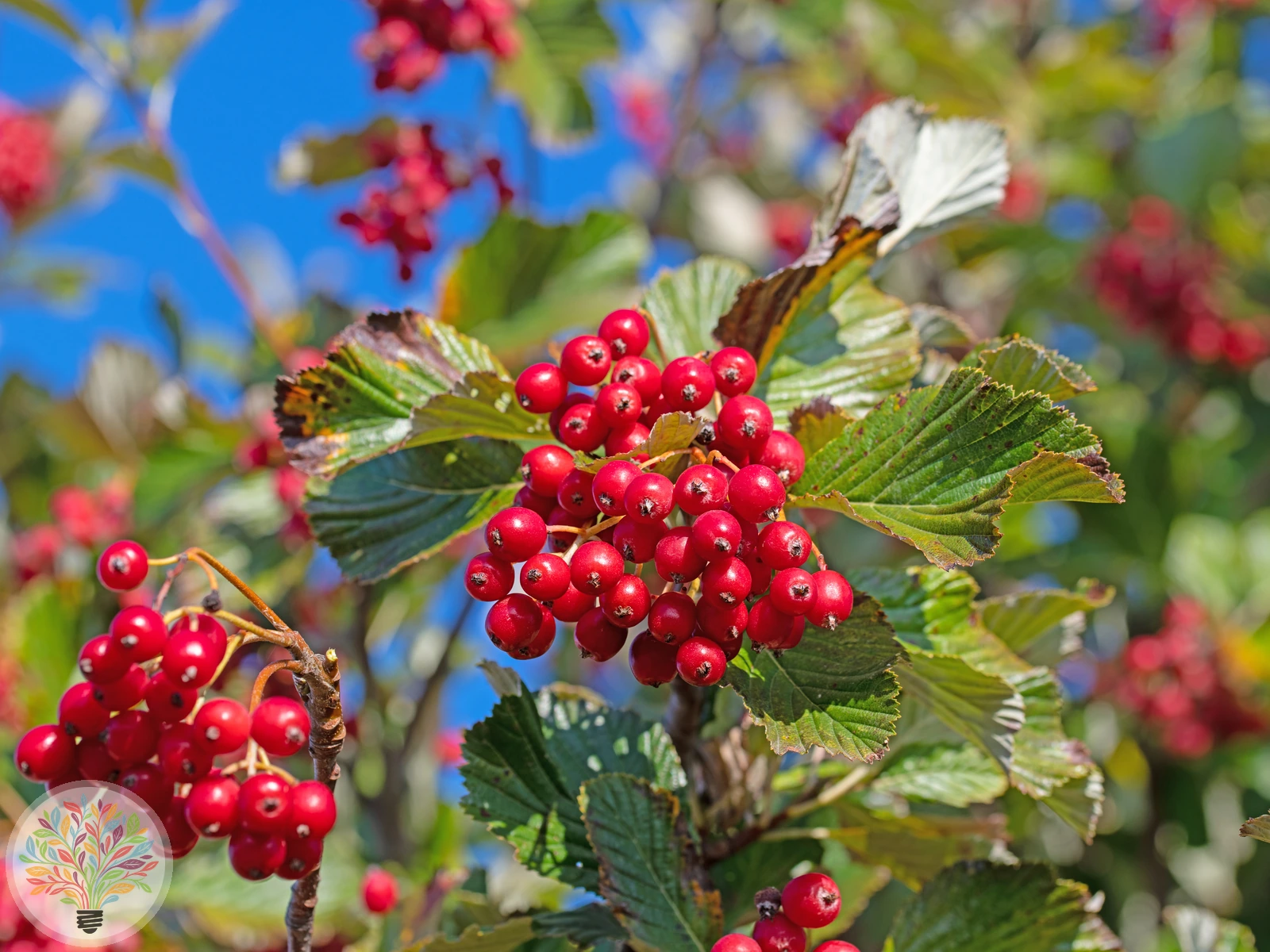
Sorbus aria is a native, deciduous broad‑leaved tree that typically reaches a height of about 7 m. Its woody growth forms a rounded crown, and it develops a terrestrial root system. The leaves are broad and are shed each autumn. Flowering occurs from May to June. The species is found naturally in Great Britain, primarily on calcareous, moderately moist soils that are nutrient‑poor, and it grows best in partial shade. It is not currently considered threatened.
Other flower visitors
5 other species visit the flowers
Sources & data origin
•TRY v6.0 / BiolFlor flowering phenology (Request 47350) — CC BY 4.0TRY request 47350 (Public, Data Released, TRY v6.0; 2026-02-15). Cite TRY: Kattge et al. (2020), doi:10.1111/gcb.14904; original source: Trefflich, A., Klotz, S. & Kühn, I. (2002). Blühphänologie. BIOLFLOR, Schriftenreihe für Vegetationskunde 38:127–131.
•Interaktionsdaten via GloBI (CC-BY 4.0)
•pollinator_interactions
•FloraWeb / BfN
•EIVE 1.0 — Dengler et al. (2023), DOI: 10.3897/VCS.98324 (CC BY 4.0)
•GBIF Backbone Taxonomy — GBIF Secretariat (2024), DOI: 10.15468/39omei (CC BY 4.0)
•TRY Categorical Traits (ID3) — Kattge et al. (2012), DOI: 10.17871/TRY.3 (CC BY 3.0)
•TRY Global Spectrum (ID81) — Díaz et al. (2016/2021), DOI: 10.17871/TRY.81 (CC BY)
•Govaerts R et al. (2025) — World Checklist of Vascular Plants (WCVP) v14. Royal Botanic Gardens, Kew. DOI: 10.34885/xs7h-ze42 (CC BY 4.0)
•Foto: © Adobe Stock / AdobeStock_32076894
All data is licensed under CC BY 4.0, CC0, or compatible. Attribution according to license terms. Full source overview →