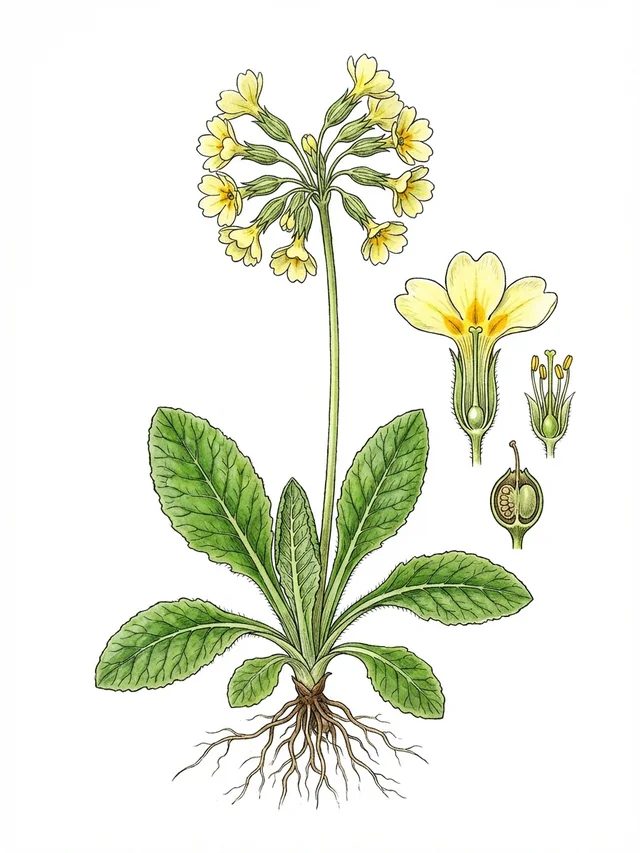
 Bild folgtKI-generierte Illustration
Sparganium erectum
Sparganium erectum
FamilyGenus: Sparganiumheimisch in Deutschland
🌿
1
Species
interact
🔗
1
Interactions
documented
🐛
1
Host relationships
Species
About this species
A native perennial grass-like aquatic plant, Sparganium erectum is found in shallow water and at the margins of ponds, lakes and slow-moving streams. It bears broad, erect leaves and spherical flower heads in summer, and its evergreen foliage provides year-round structure in wetland settings.
Ecological network
Click to highlight connections · Click again to open species page
Netzwerk wird geladen...
Larval host
Ecological significance
Sparganium erectum is a native component of wetland vegetation in Great Britain, playing a role in the natural structure of water-margin habitats.
Annual cycle
Evergreen leaves remain present throughout the year. Flowering occurs from June to August, with spherical seed heads developing in late summer.
Standort & Merkmale
Light
Sonne
Moisture
Feucht
Soil
Mittelzehrer (Normaler Boden)
Bloom time
Jun – Aug
Soil reaction
Basisch / Kalkhold
Bioregion
Continental
Growth form
Gras
Woodiness
Nicht verholzt
Leaf type
Breitblättrig
Leaf phenology
Immergrün
Plant height
0.51 m
Morphological traits: TRY ID3 (CC BY 3.0) & TRY ID81 (CC BY)
Pflege & Anbau
Requires a position in full sun and permanently moist soil, or shallow water at the edge of a pond. A moderately fertile, lime-rich substrate is ideal. No additional feeding is needed if the soil is reasonably nutrient-rich. The foliage remains green throughout the year, offering winter interest in a wildlife pond or bog garden.
Scientific profile
Sparganium erectum is a member of the bur-reed family (Typhaceae). It forms clumps of upright, grass-like foliage, reaching a typical height of around 0.5 m. The plant is non-woody and broad-leaved, with leaves that remain evergreen. Its inflorescences consist of globular heads that appear from June to August. Well adapted to aquatic conditions, it thrives in full sun on permanently moist to shallowly submerged, calcareous to neutral, moderately fertile substrates. The diaspore mass averages 16.4 mg, and maximum leaf area is approximately 14,000 mm². This species typically colonises still or slow-moving water bodies.
Host relationships
1 species use this plant as a host
Plusia festucae
Sources & data origin
•TRY v6.0 / BiolFlor flowering phenology (Request 47350) — CC BY 4.0TRY request 47350 (Public, Data Released, TRY v6.0; 2026-02-15). Cite TRY: Kattge et al. (2020), doi:10.1111/gcb.14904; original source: Trefflich, A., Klotz, S. & Kühn, I. (2002). Blühphänologie. BIOLFLOR, Schriftenreihe für Vegetationskunde 38:127–131.
•Cook et al. (2025) UK Butterfly & Moth Traits (DOI: 10.5285/dbc7cc17-cbbd-49dd-bab4-8e8855768d66)
•FloraWeb / BfN
•EIVE 1.0 — Dengler et al. (2023), DOI: 10.3897/VCS.98324 (CC BY 4.0)
•GBIF Backbone Taxonomy — GBIF Secretariat (2024), DOI: 10.15468/39omei (CC BY 4.0)
•TRY Categorical Traits (ID3) — Kattge et al. (2012), DOI: 10.17871/TRY.3 (CC BY 3.0)
•TRY Global Spectrum (ID81) — Díaz et al. (2016/2021), DOI: 10.17871/TRY.81 (CC BY)
•Govaerts R et al. (2025) — World Checklist of Vascular Plants (WCVP) v14. Royal Botanic Gardens, Kew. DOI: 10.34885/xs7h-ze42 (CC BY 4.0)
All data is licensed under CC BY 4.0, CC0, or compatible. Attribution according to license terms. Full source overview →