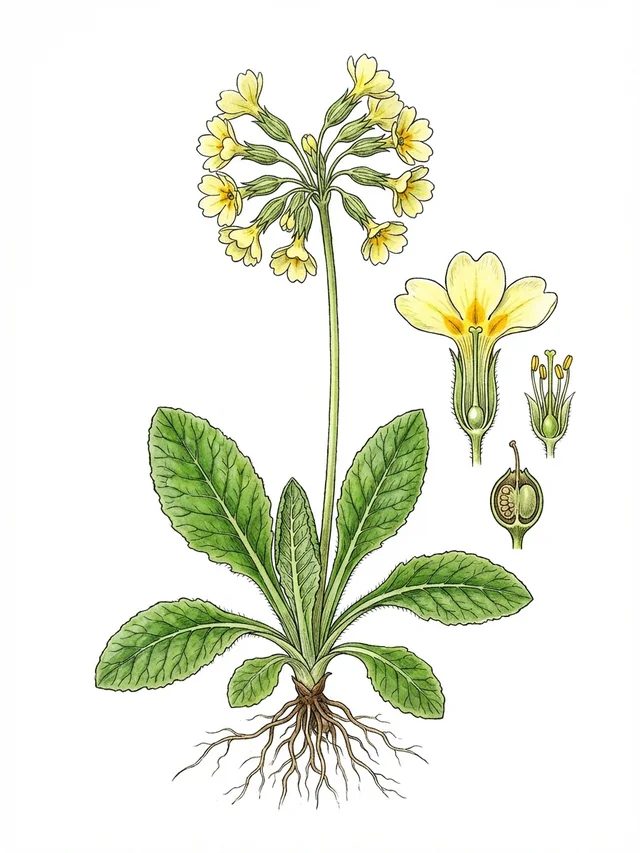
 Bild folgtKI-generierte Illustration
Stellaria nemorum
Stellaria nemorum
FamilyGenus: Stellariaheimisch in Deutschland
🌿
21
Species
interact
🔗
21
Interactions
documented
About this species
A native perennial of damp, shady places, Stellaria nemorum produces small white flowers from late spring into early autumn and thrives on moist, fertile soils.
Ecological network
Click to highlight connections · Click again to open species page
Netzwerk wird geladen...
PollinationFlower visit
Ecological significance
The flowers provide a limited nectar and pollen source for visiting insects.
Annual cycle
Flowers from May to September.
Standort & Merkmale
Light
Schatten
Moisture
Frisch (Mäßig feucht)
Soil
Starkzehrer (Nährstoffreicher/Fetter Boden)
Bloom time
Mai – Sep
Soil reaction
Mäßig sauer bis neutral
Bioregion
Continental
Nectar value
2
Pollen value
2
Growth form
Krautige Pflanze
Woodiness
Nicht verholzt
Leaf type
Breitblättrig
Plant height
0.406 m
Morphological traits: TRY ID3 (CC BY 3.0) & TRY ID81 (CC BY)
Pflege & Anbau
Grow in shade in a moist, fertile soil that is neutral to slightly acid. It is suited to damp, woodland-style gardens or shaded borders where the soil does not dry out.
Scientific profile
Stellaria nemorum is a native herbaceous perennial reaching about 40 centimetres in height. Its broad, non-woody leaves typify the growth form. The plant is adapted to shade and occurs on fresh to moist soils that are nutrient-rich; soil reaction tends to be neutral to weakly acid. It is a non-mycorrhizal species that typically occupies sites with little disturbance. Flowering extends from May to September, the blooms offering a modest supply of nectar and pollen. The species is native in Great Britain and not currently considered threatened.
Bestäuber & Besucher
20 Arten interagieren mit dieser Pflanze
Nomada lathburianaNomada goodenianaLeptidea sinapisSphecodes puncticepsSphecodes monilicornisAricia agestisSphecodes geoffrellusNomada fucataLasioglossum laevigatumAndrena flavipesBombus pascuorumBombus pratorumBombus terrestrisAndrena labiataAndrena bicolorBombus lapidariusBombus humilisEupeodes lapponicusSphegina sibiricaEpisyrphus balteatus
Other flower visitors
1 other species visit the flowers
Meligethes aeneus
Sources & data origin
•Interaktionsdaten via GloBI (CC-BY 4.0)
•pollinator_interactions
•FloraWeb / BfN
•EIVE 1.0 — Dengler et al. (2023), DOI: 10.3897/VCS.98324 (CC BY 4.0)
•EuPPollNet — Kuppler et al. (2025), DOI: 10.1111/geb.70000 (CC BY 4.0)
•Database of Pollinator Interactions (DoPI) — Pocock et al. (2022), DOI: 10.1002/ecy.3801 (CC BY)
•GBIF Backbone Taxonomy — GBIF Secretariat (2024), DOI: 10.15468/39omei (CC BY 4.0)
•TRY Categorical Traits (ID3) — Kattge et al. (2012), DOI: 10.17871/TRY.3 (CC BY 3.0)
•TRY Global Spectrum (ID81) — Díaz et al. (2016/2021), DOI: 10.17871/TRY.81 (CC BY)
•Govaerts R et al. (2025) — World Checklist of Vascular Plants (WCVP) v14. Royal Botanic Gardens, Kew. DOI: 10.34885/xs7h-ze42 (CC BY 4.0)
All data is licensed under CC BY 4.0, CC0, or compatible. Attribution according to license terms. Full source overview →