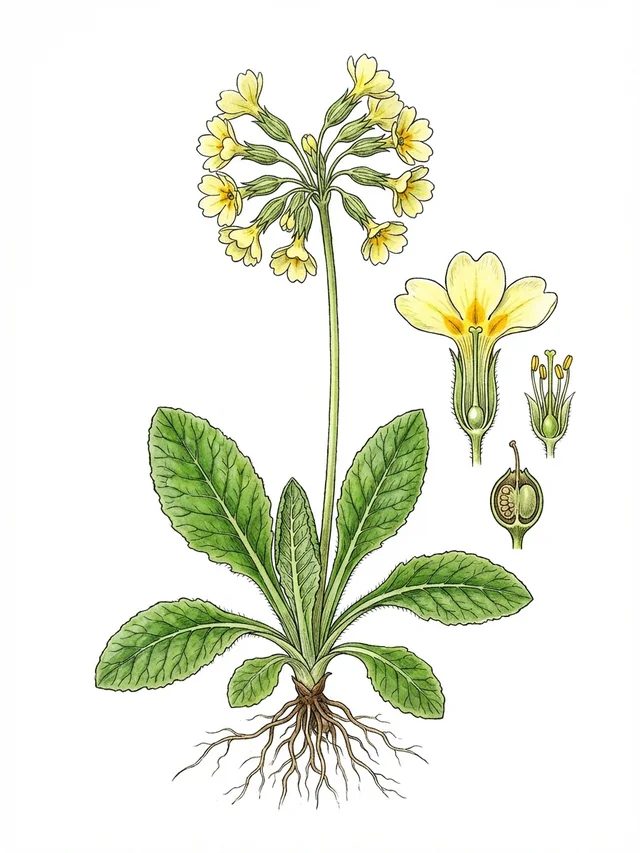
 Bild folgtKI-generierte Illustration
Syringa vulgaris
Syringa vulgaris
FamilyGenus: Syringaheimisch in Deutschland
🌿
72
Species
interact
🔗
100
Interactions
documented
🐛
18
Host relationships
Species
About this species
An introduced deciduous shrub that has become naturalised in Great Britain since at least 1501. Its blooms appear in May, and it prefers a sheltered site in partial shade with moderately moist, normal garden soil. Mature plants reach about 5 m in height.
Ecological network
Click to highlight connections · Click again to open species page
Netzwerk wird geladen...
PollinationLarval hostFlower visit
Ecological significance
Syringa vulgaris is a long-established introduced species in Great Britain. It is not currently recognised as invasive. The shrub forms arbuscular mycorrhizal partnerships and has a low floral reward score for both nectar and pollen, limiting its direct value to pollinators. It may appear in semi-natural habitats such as fresh, moderately infertile meadows.
Annual cycle
Deciduous. New leaves emerge in spring. Flowering occurs in May. Leaves are shed in autumn.
Safety note
No specific safety information is recorded for this plant in Great Britain.
Standort & Merkmale
Light
Halbschatten
Moisture
Frisch (Mäßig feucht)
Soil
Mittelzehrer (Normaler Boden)
Bloom time
Mai – Mai
Soil reaction
Mäßig sauer bis neutral
Bioregion
Continental
Nectar value
1
Pollen value
1
Growth form
Strauch/Baum
Woodiness
Verholzt
Leaf type
Breitblättrig
Leaf phenology
Laubabwerfend
Plant height
5.012 m
Morphological traits: TRY ID3 (CC BY 3.0) & TRY ID81 (CC BY)
Pflege & Anbau
Prefers a position in partial shade, though it can succeed in full sun. The soil should be moderately moist and well-drained, with average fertility. Mature specimens attain a height of around 5 m, so allow sufficient space.
Scientific profile
Syringa vulgaris, a member of the olive family (Oleaceae), is a deciduous broad-leaved woody shrub or small tree. It typically grows to around 5 m in height, with individual leaf areas averaging 2406 mm² and a seed mass of approximately 5.5 mg. The leaves expand in spring and are shed in autumn; flowering occurs in May. Originating from parts of south-eastern and eastern Europe and temperate Asia, it was introduced to cultivation by 1501 and is now an established introduced species in Great Britain, where it is considered a neophyte. Its ecological indicator values point to a warm-loving plant that thrives in sunny or partially shaded locations, fresh to moderately moist conditions, and neutral to weakly acidic soils of moderate fertility. The species forms arbuscular mycorrhizal associations and provides only modest amounts of nectar and pollen. Habitats derived from these preferences suggest it can persist in moderately nutrient-poor fresh meadows.
Bestäuber & Besucher
43 Arten interagieren mit dieser Pflanze
Pieris brassicaeCelastrina argiolusBombus hypnorumAndrena haemorrhoaAglais urticaePieris napiAbrostola tripartitaBombus campestrisApis melliferaBombus jonellusAgrotis ipsilonMythimna unipunctaVanessa atalantaOrgyia antiquaBombus pascuorumPapilio machaonOpisthograptis luteolataIphiclides podaliriusNymphalis antiopaVanessa carduiBombus soroeensisAnthophora plumipesidaea rusticataVespa crabroMacrophya punctumalbumCampaea margaritariaMelecta albifronsAndrena wilkellaPieris rapaeHalictus rubicundusOsmia caerulescensColletes cuniculariusBombus hortorumRhingia campestrisSyrphus vitripennisBombus bimaculatusBombus borealisBombus griseocollisBombus impatiensBombus nevadensisBombus pensylvanicusBombus vagansXylocampa areola
Host relationships
18 species use this plant as a host
Angerona prunariaApeira syringariaEnnomos quercinariaOurapteryx sambucariaAlsophila aesculariaMenophra abruptariaAmphipyra berbera svenssoniLithophane sociaOrthosia gothicaAcherontia atroposSphinx ligustriZeuzera pyrinaPeribatodes rhomboidariaTenthredo vespaAcronicta rumicisLasiocampa quercusMalacosoma neustriaCrocallis elinguaria
Other flower visitors
11 other species visit the flowers
Orsodacne cerasiAnthrenus verbasciHarmonia axyridisCetonia aurataMisumena vatiaPyrrhula pyrrhulaAnarta melanopaDelia nigrescensDrymeia hamataMeligethes viridescensAugochlora pura
Sources & data origin
•TraitCH — CC BY 4.0TraitCH 2.0 contributors; imported as source-preserving NaturKompass taxon evidence.
•Cook et al. (2025) UK Butterfly & Moth Traits (DOI: 10.5285/dbc7cc17-cbbd-49dd-bab4-8e8855768d66)
•Interaktionsdaten via GloBI (CC-BY 4.0)
•pollinator_interactions
•FloraWeb / BfN
•EIVE 1.0 — Dengler et al. (2023), DOI: 10.3897/VCS.98324 (CC BY 4.0)
•EuPPollNet — Kuppler et al. (2025), DOI: 10.1111/geb.70000 (CC BY 4.0)
•Database of Pollinator Interactions (DoPI) — Pocock et al. (2022), DOI: 10.1002/ecy.3801 (CC BY)
•GBIF Backbone Taxonomy — GBIF Secretariat (2024), DOI: 10.15468/39omei (CC BY 4.0)
•TRY Categorical Traits (ID3) — Kattge et al. (2012), DOI: 10.17871/TRY.3 (CC BY 3.0)
•TRY Global Spectrum (ID81) — Díaz et al. (2016/2021), DOI: 10.17871/TRY.81 (CC BY)
•Checklist Alien Plants Belgium — Verloove F (2023), Botanic Garden Meise (CC BY 4.0)
•Govaerts R et al. (2025) — World Checklist of Vascular Plants (WCVP) v14. Royal Botanic Gardens, Kew. DOI: 10.34885/xs7h-ze42 (CC BY 4.0)
All data is licensed under CC BY 4.0, CC0, or compatible. Attribution according to license terms. Full source overview →