Thalictrum aquilegiifolium
Thalictrum aquilegiifolium
FamilyGenus: Thalictrumheimisch in Deutschland
🌿
7
Species
interact
🔗
12
Interactions
documented
About this species
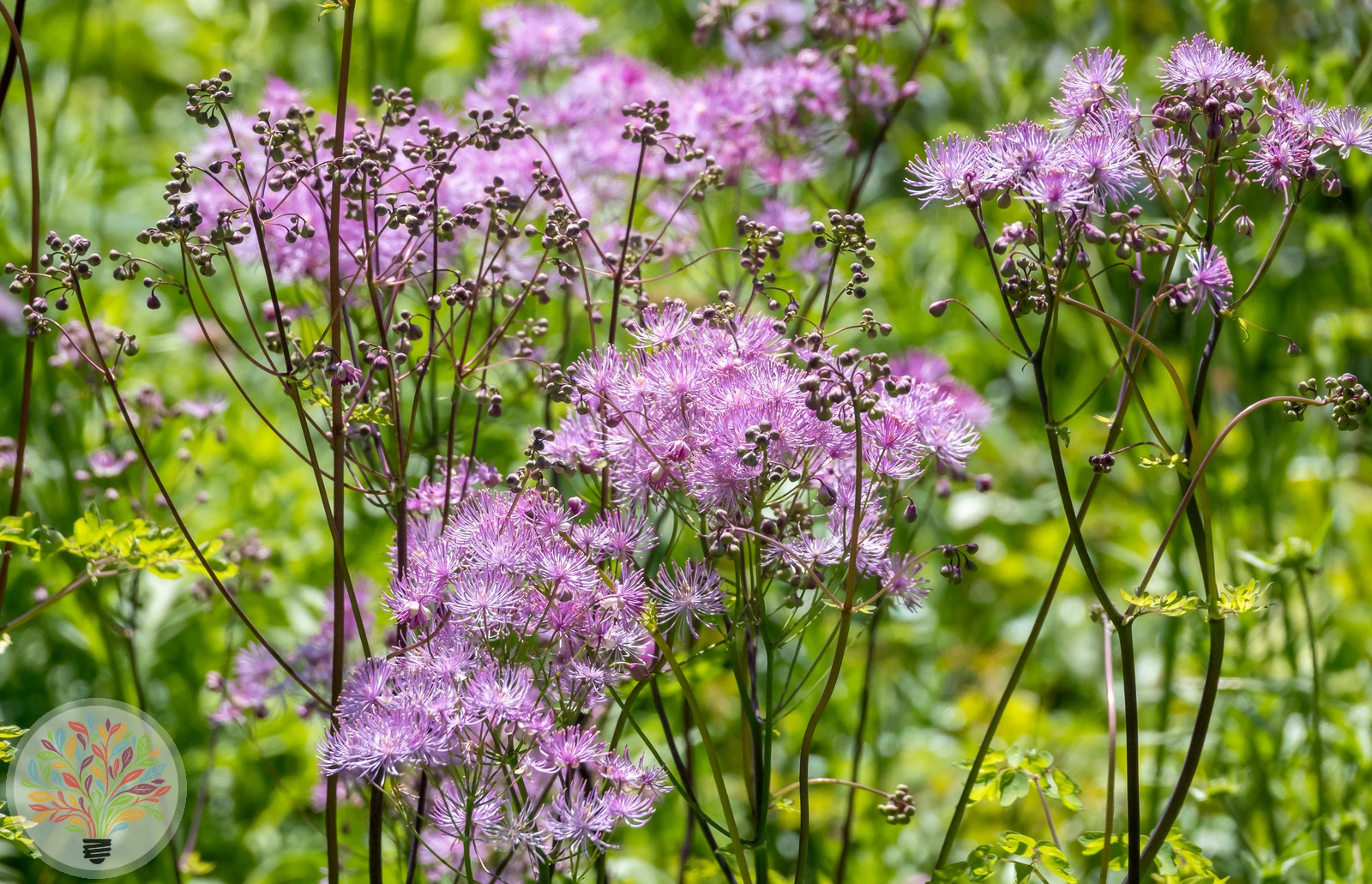
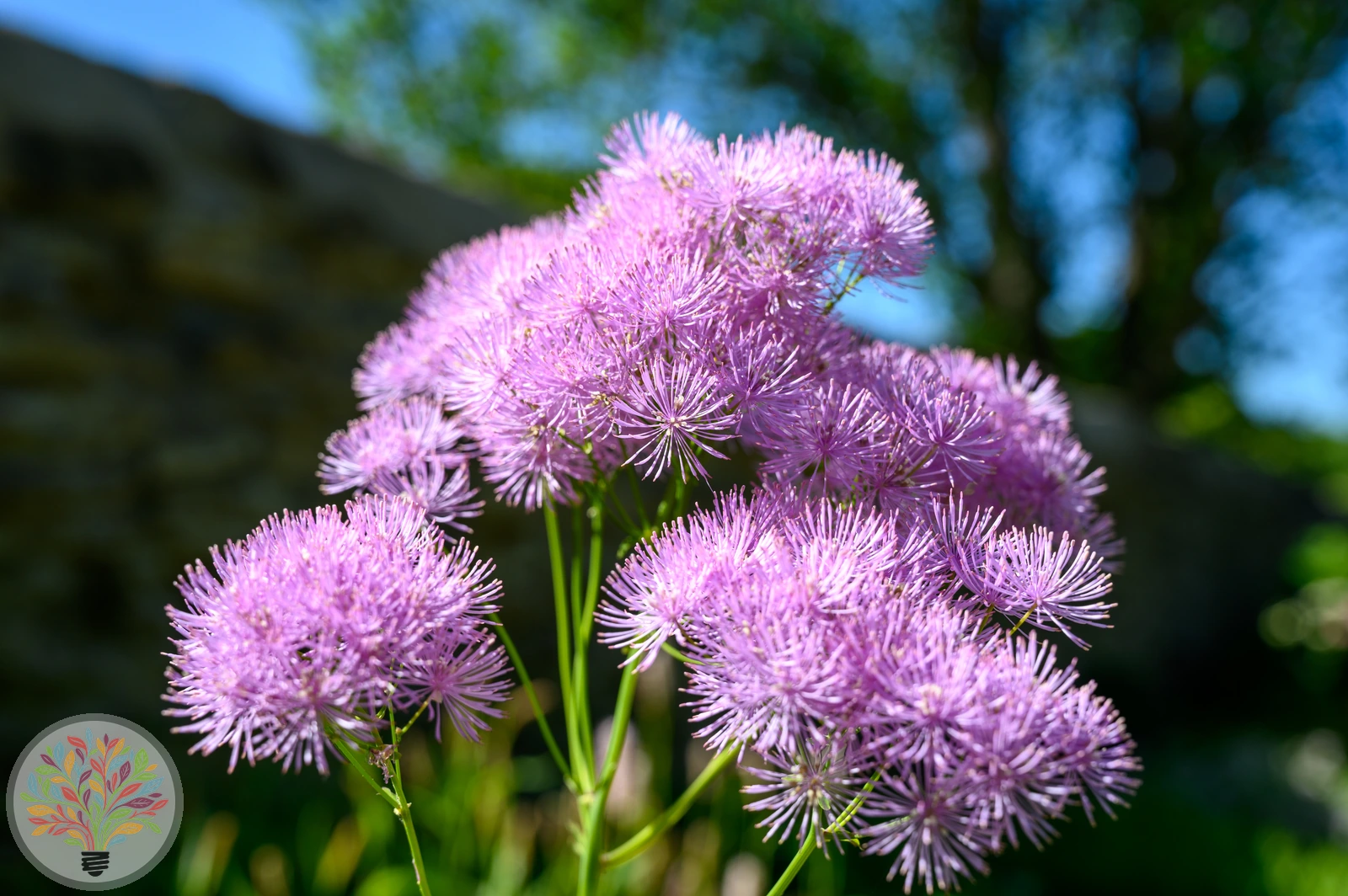
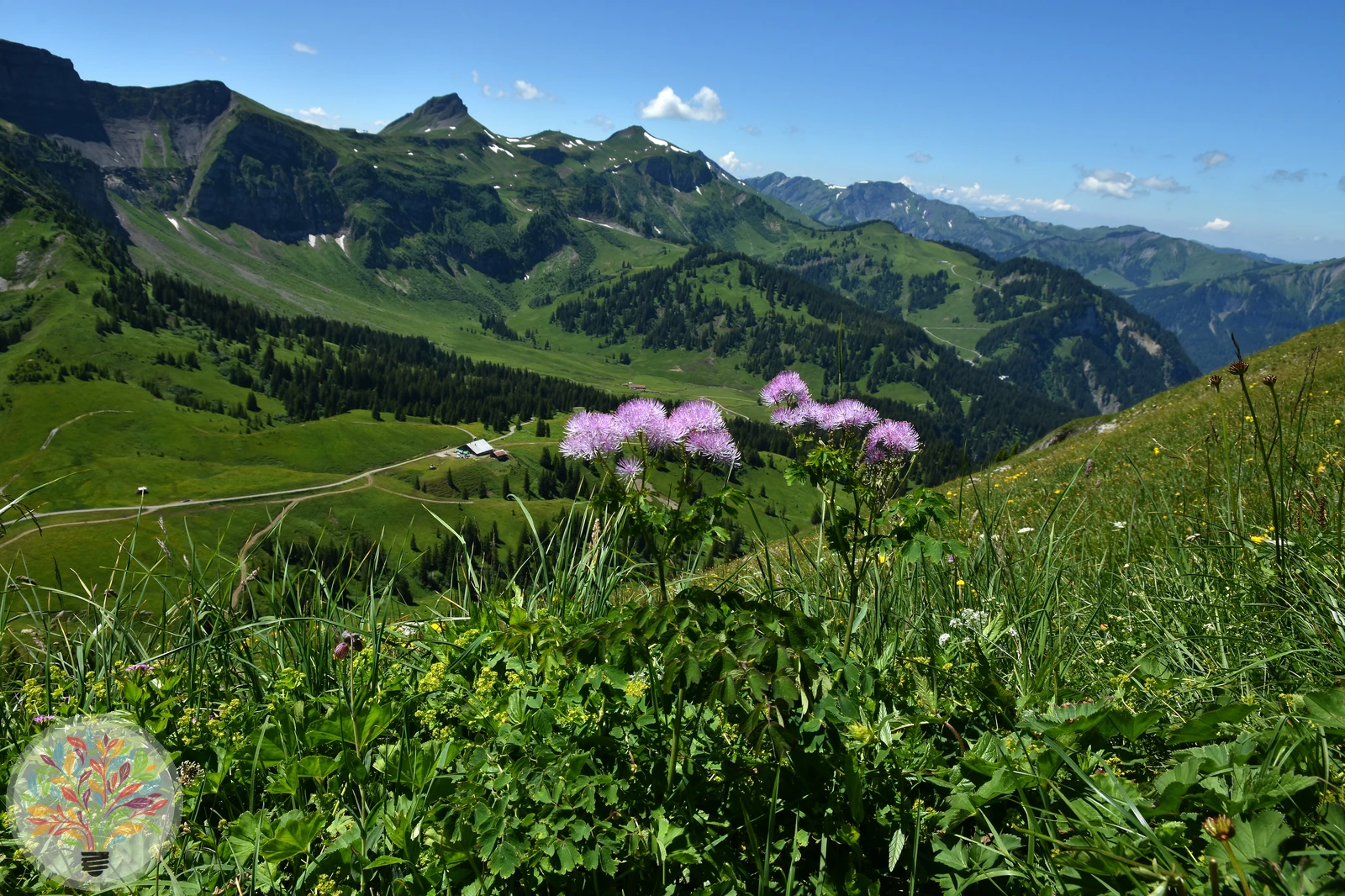
An introduced herb established in Great Britain, Thalictrum aquilegiifolium produces broad leaflets and airy, rounded heads of pinkish-mauve or white flowers from May to September. Reaching about 90 cm tall, it grows in partial shade and offers moderate nectar and pollen for wildlife.
Ecological network
Click to highlight connections · Click again to open species page
Netzwerk wird geladen...
PollinationFlower visit
Ecological significance
The flowers offer nectar and pollen to a range of insects throughout the summer.
Annual cycle
Leaves appear in spring. Flowering continues from May to September, followed by seed set. The foliage dies back with the end of the growing season.
Standort & Merkmale
Light
Halbschatten
Moisture
Frisch (Mäßig feucht)
Soil
Starkzehrer (Nährstoffreicher/Fetter Boden)
Bloom time
Mai – Sep
Soil reaction
Basisch / Kalkhold
Bioregion
Continental
Nectar value
3
Pollen value
3
Growth form
Krautige Pflanze
Woodiness
Nicht verholzt
Leaf type
Breitblättrig
Plant height
0.935 m
Morphological traits: TRY ID3 (CC BY 3.0) & TRY ID81 (CC BY)
Pflege & Anbau
**Position**: partial shade.
**Soil**: fertile, humus-rich, moist but well-drained, ideally calcareous.
**Watering**: keep the soil consistently moist, especially during dry periods.
**Feeding**: a heavy feeder; apply a balanced fertiliser in spring.
Scientific profile
Thalictrum aquilegiifolium is a herbaceous, non-woody plant with broad leaves, typically reaching a height of 0.93–0.94 m. It blooms from May to September, providing nectar and pollen (both rated 3). The plant prefers partial shade and fresh, moderately moist soils. It is recorded as a heavy feeder, favouring nutrient-rich ground, and ecological indicator values place it on basic, calcareous substrates (reaction value 7) with moderate nutrient availability (value 6). Its light indicator value of 6 confirms a preference for semi-shaded conditions, and it shows tolerance of only low disturbance (severity 0.62).
Bestäuber & Besucher
2 Arten interagieren mit dieser Pflanze
Eristalis similisBombus ss
Other flower visitors
5 other species visit the flowers
Sources & data origin
•TraitCH — CC BY 4.0TraitCH 2.0 contributors; imported as source-preserving NaturKompass taxon evidence.
•Interaktionsdaten via GloBI (CC-BY 4.0)
•pollinator_interactions
•FloraWeb / BfN
•EIVE 1.0 — Dengler et al. (2023), DOI: 10.3897/VCS.98324 (CC BY 4.0)
•EuPPollNet — Kuppler et al. (2025), DOI: 10.1111/geb.70000 (CC BY 4.0)
•Database of Pollinator Interactions (DoPI) — Pocock et al. (2022), DOI: 10.1002/ecy.3801 (CC BY)
•GBIF Backbone Taxonomy — GBIF Secretariat (2024), DOI: 10.15468/39omei (CC BY 4.0)
•TRY Categorical Traits (ID3) — Kattge et al. (2012), DOI: 10.17871/TRY.3 (CC BY 3.0)
•TRY Global Spectrum (ID81) — Díaz et al. (2016/2021), DOI: 10.17871/TRY.81 (CC BY)
•Checklist Alien Plants Belgium — Verloove F (2023), Botanic Garden Meise (CC BY 4.0)
•Govaerts R et al. (2025) — World Checklist of Vascular Plants (WCVP) v14. Royal Botanic Gardens, Kew. DOI: 10.34885/xs7h-ze42 (CC BY 4.0)
•Foto: © Adobe Stock / AdobeStock_477738367
All data is licensed under CC BY 4.0, CC0, or compatible. Attribution according to license terms. Full source overview →