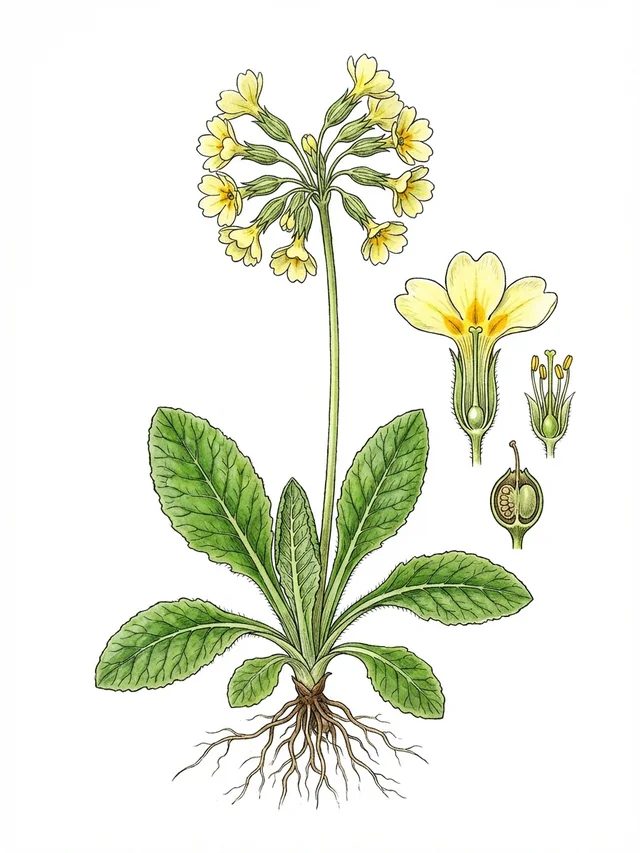
 Bild folgtKI-generierte Illustration
Veronica hederifolia
Veronica hederifolia
FamilyGenus: Veronicaheimisch in Deutschland
🌿
5
Species
interact
🔗
5
Interactions
documented
About this species
Veronica hederifolia is a small herbaceous archaeophyte plant, established in Great Britain, favouring nutrient-rich, calcareous soils in semi-shaded, moderately moist conditions. It blooms from March to May and typically reaches about 16 cm in height.
Ecological network
Click to highlight connections · Click again to open species page
Netzwerk wird geladen...
Flower visit
Ecological significance
This species is a long-established archaeophyte, integrated into the British flora over centuries. There are no indications of it acting as an invasive weed or causing ecological disruption.
Annual cycle
The plant emerges in early spring, blooms from March to May, and dies back by early summer, completing its above-ground growth cycle.
Safety note
There are no reported safety concerns associated with this species.
Standort & Merkmale
Light
Halbschatten
Moisture
Frisch (Mäßig feucht)
Soil
Starkzehrer (Nährstoffreicher/Fetter Boden)
Bloom time
Mär – Mai
Soil reaction
Basisch / Kalkhold
Bioregion
Continental
Growth form
Krautige Pflanze
Woodiness
Nicht verholzt
Leaf type
Breitblättrig
Plant height
0.161 m
Morphological traits: TRY ID3 (CC BY 3.0) & TRY ID81 (CC BY)
Pflege & Anbau
As an archaeophyte wild plant, this species requires no cultivation. It will naturally colonise nutrient-rich, calcareous soil in semi-shaded, moist garden areas or wild corners where the ground is disturbed.
Scientific profile
Veronica hederifolia is an archaeophyte established in Great Britain, belonging to the plantain family (Plantaginaceae). It is a terrestrial, non-woody, broad-leaved herbaceous plant that typically grows to around 16 cm in height. The species prefers semi-shaded conditions (light value 6) and moderately moist, fresh soils (moisture value 4). It is a strong nutrient indicator, thriving on calcareous, basic soils (reaction value 7, nutrients value 7) in moderately warm temperatures. The plant produces flowers from March to May. Its leaves have an average area of 260.68 mm², and the diaspore mass is relatively large at 3.74 mg. It is associated with arbuscular mycorrhiza.
Other flower visitors
5 other species visit the flowers
Sources & data origin
•TRY v6.0 / BiolFlor flowering phenology (Request 47350) — CC BY 4.0TRY request 47350 (Public, Data Released, TRY v6.0; 2026-02-15). Cite TRY: Kattge et al. (2020), doi:10.1111/gcb.14904; original source: Trefflich, A., Klotz, S. & Kühn, I. (2002). Blühphänologie. BIOLFLOR, Schriftenreihe für Vegetationskunde 38:127–131.
•Interaktionsdaten via GloBI (CC-BY 4.0)
•FloraWeb / BfN
•EIVE 1.0 — Dengler et al. (2023), DOI: 10.3897/VCS.98324 (CC BY 4.0)
•GBIF Backbone Taxonomy — GBIF Secretariat (2024), DOI: 10.15468/39omei (CC BY 4.0)
•TRY Categorical Traits (ID3) — Kattge et al. (2012), DOI: 10.17871/TRY.3 (CC BY 3.0)
•TRY Global Spectrum (ID81) — Díaz et al. (2016/2021), DOI: 10.17871/TRY.81 (CC BY)
•Govaerts R et al. (2025) — World Checklist of Vascular Plants (WCVP) v14. Royal Botanic Gardens, Kew. DOI: 10.34885/xs7h-ze42 (CC BY 4.0)
All data is licensed under CC BY 4.0, CC0, or compatible. Attribution according to license terms. Full source overview →