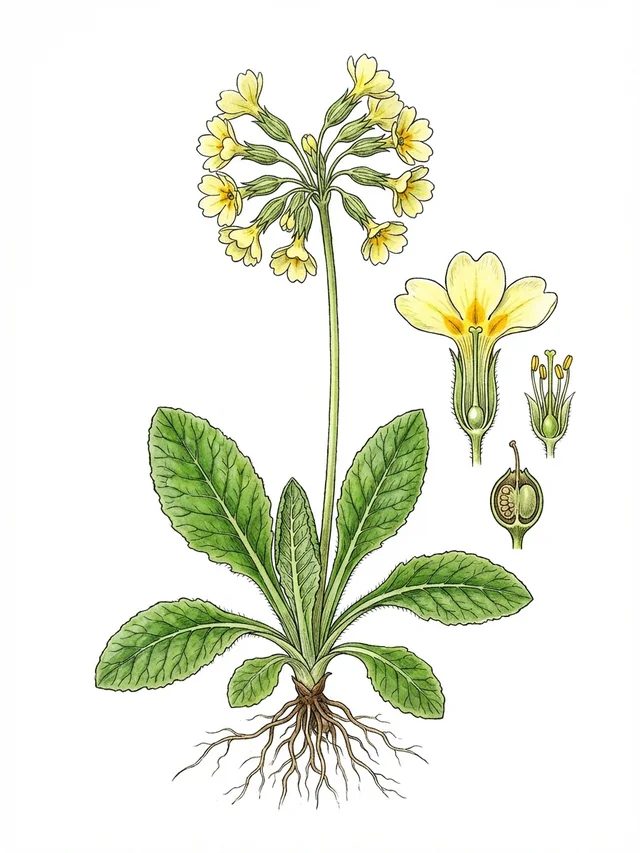
 Bild folgtKI-generierte Illustration
Iris versicolor
Iris versicolor
FamilyGenus: Schwertlilienheimisch in Deutschland
🌿
25
Species
interact
🔗
27
Interactions
documented
🐛
1
Host relationships
Species
About this species
Iris versicolor is a herbaceous perennial originally from Northern America that has become established as an introduced ornamental in Great Britain. It grows to about 0.7 m tall, has broad leaves and produces flowers in June and July. The plant favours full sun, moist neutral to slightly acidic soils and moderately warm conditions.
Ecological network
Click to highlight connections · Click again to open species page
Netzwerk wird geladen...
PollinationLarval hostFlower visit
Ecological significance
Iris versicolor is an introduced ornamental that has become established in Great Britain. No detailed ecological impact assessment is recorded.
Annual cycle
Flowering is observed in June and July.
Standort & Merkmale
Light
Sonne
Moisture
Feucht
Soil
—
Bloom time
Jun – Jul
Bioregion
Continental
Growth form
Krautige Pflanze
Woodiness
Nicht verholzt
Leaf type
Breitblättrig
Plant height
0.695 m
Morphological traits: TRY ID3 (CC BY 3.0) & TRY ID81 (CC BY)
Pflege & Anbau
Provide full sun and a moist, neutral to slightly acidic soil of moderate fertility. A site that offers moderately warm temperatures is beneficial. Ensure consistent moisture, especially during active growth.
Scientific profile
Iris versicolor is a herbaceous, non-woody perennial with broad leaves that reaches approximately 0.7 m in height. Originally from Northern America, it has been introduced and is now established in Great Britain, where it is grown ornamentally. The species thrives in full sun and moist, neutral to slightly acidic soils; it is a moderate feeder and prefers moderately warm temperatures. Flowering occurs from June to July. The plant forms arbuscular mycorrhizal associations.
Bestäuber & Besucher
19 Arten interagieren mit dieser Pflanze
Bombus jonellusApis melliferaLasioglossum zonulumMegachile centuncularisAndrena wilkellaAndrena geraniiAndrena miserabilisAndrena spiraeanaAnthophora terminalisAnthophora ursinaBombus bimaculatusBombus borealisBombus fervidusBombus griseocollisCeratina duplaNomada denticulataOsmia bucephalaSphecodes heracleiBombus hortorum
Other flower visitors
5 other species visit the flowers
Sources & data origin
•TraitCH — CC BY 4.0TraitCH 2.0 contributors; imported as source-preserving NaturKompass taxon evidence.
•TRY v6.0 / BiolFlor flowering phenology (Request 47350) — CC BY 4.0TRY request 47350 (Public, Data Released, TRY v6.0; 2026-02-15). Cite TRY: Kattge et al. (2020), doi:10.1111/gcb.14904; original source: Trefflich, A., Klotz, S. & Kühn, I. (2002). Blühphänologie. BIOLFLOR, Schriftenreihe für Vegetationskunde 38:127–131.
•Interaktionsdaten via GloBI (CC-BY 4.0)
•pollinator_interactions
•FloraWeb / BfN
•EIVE 1.0 — Dengler et al. (2023), DOI: 10.3897/VCS.98324 (CC BY 4.0)
•GBIF Backbone Taxonomy — GBIF Secretariat (2024), DOI: 10.15468/39omei (CC BY 4.0)
•TRY Categorical Traits (ID3) — Kattge et al. (2012), DOI: 10.17871/TRY.3 (CC BY 3.0)
•TRY Global Spectrum (ID81) — Díaz et al. (2016/2021), DOI: 10.17871/TRY.81 (CC BY)
•Govaerts R et al. (2025) — World Checklist of Vascular Plants (WCVP) v14. Royal Botanic Gardens, Kew. DOI: 10.34885/xs7h-ze42 (CC BY 4.0)
All data is licensed under CC BY 4.0, CC0, or compatible. Attribution according to license terms. Full source overview →