Vicia cracca
Vicia cracca
FamilyGenus: Viciaheimisch in Deutschland
🌿
120
Species
interact
🔗
2268
Interactions
documented
🐛
5
Host relationships
Species
About this species
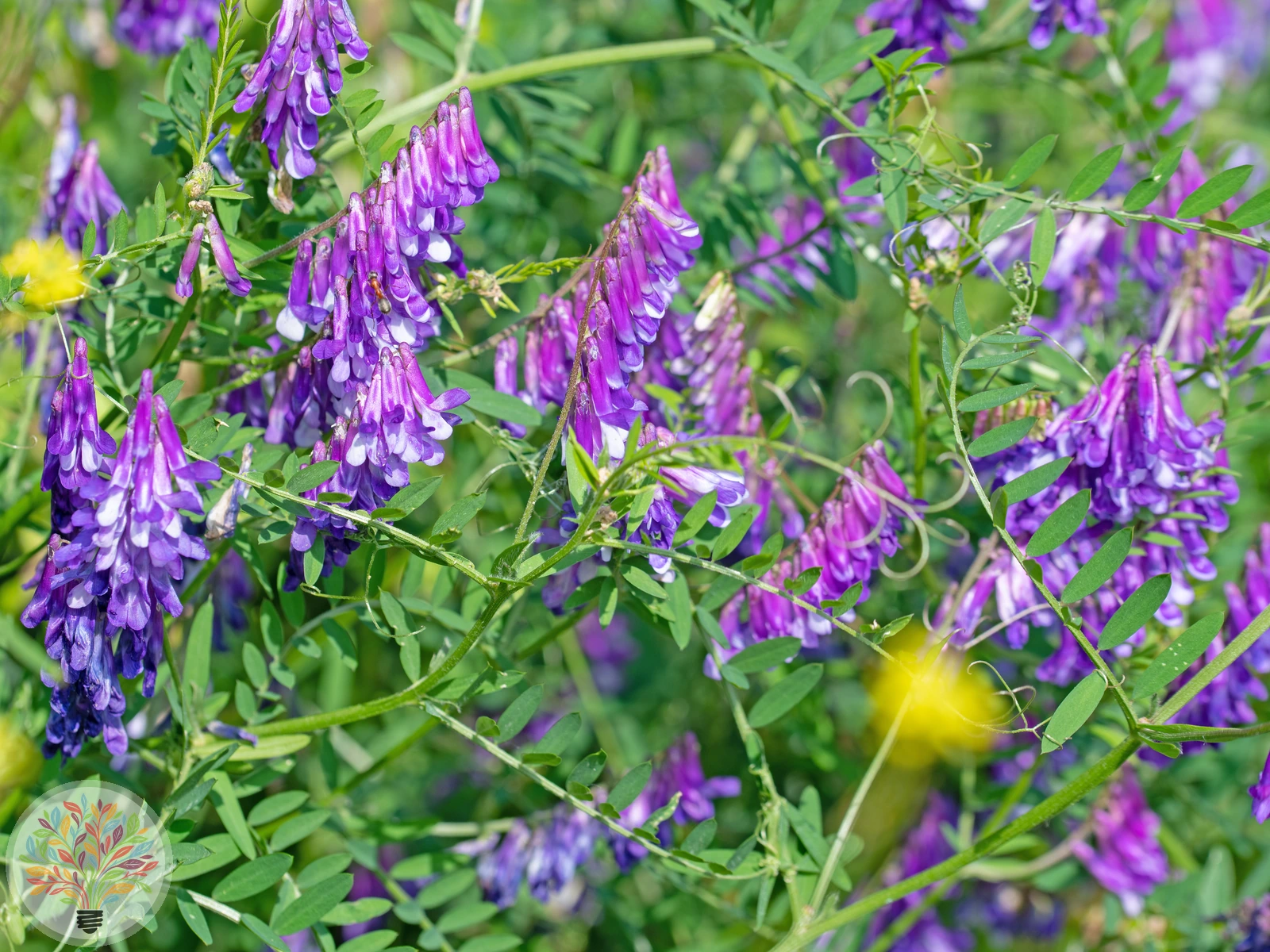
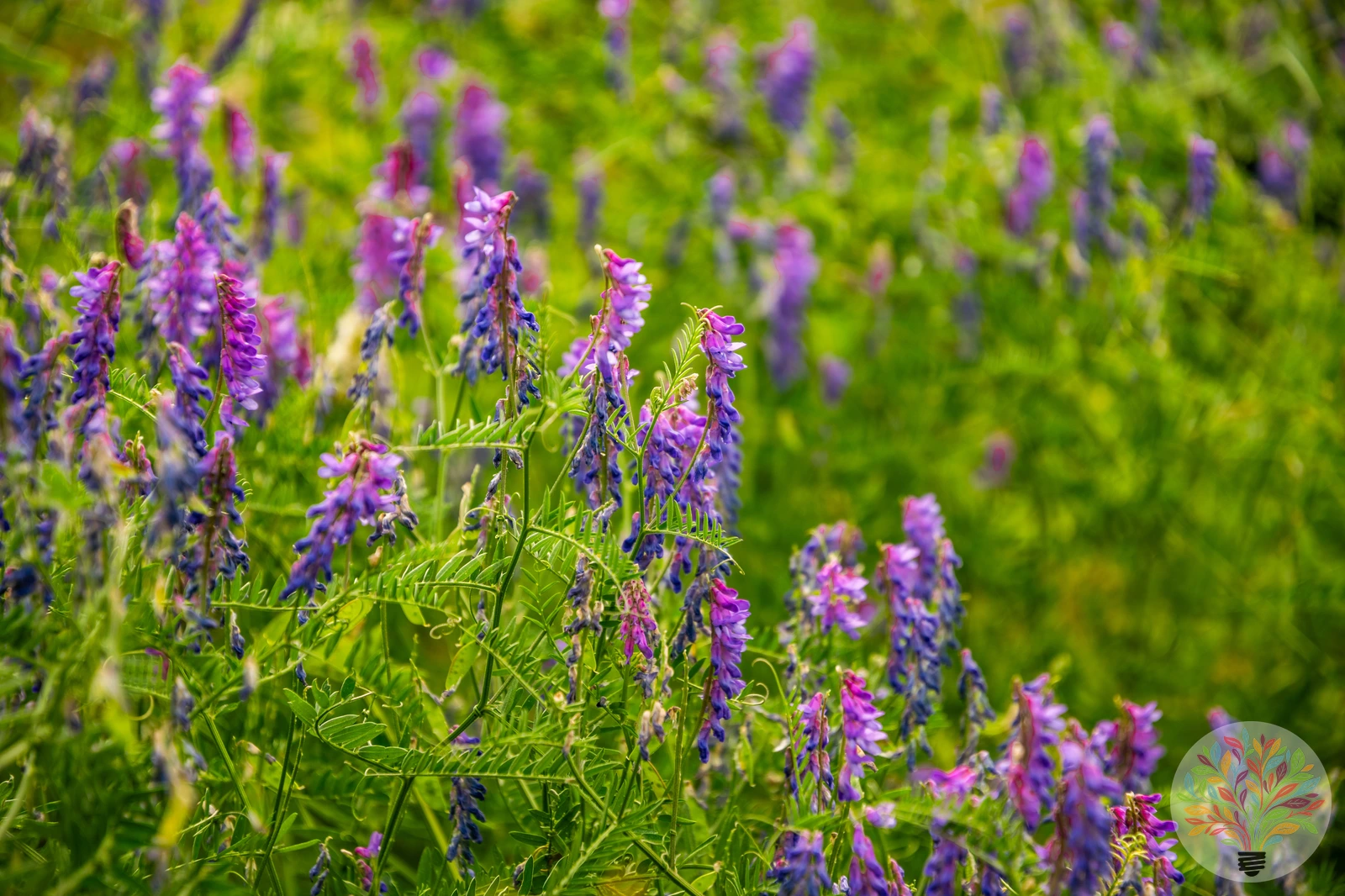
Vicia cracca is a native climbing plant of Great Britain, bearing dense one-sided racemes of blue-violet flowers from April to September. Its slender stems can reach up to 2 m, clambering through hedgerows and meadows, with leaves divided into many pairs of oblong leaflets. A member of the pea family, it produces small, flat pods containing a few seeds. It thrives in sunny sites on fresh, moderately moist, neutral to slightly acid soils.
Ecological network
Click to highlight connections · Click again to open species page
Netzwerk wird geladen...
PollinationLarval hostFlower visit
Ecological significance
Vicia cracca is a native constituent of British grassland, hedgerow and scrub communities. Its presence contributes to the natural diversity of these habitats without recorded detrimental effects.
Annual cycle
Flowering takes place from April to September. After seed pods mature in late summer and autumn, the aerial stems die back. The plant persists as a perennial rootstock and re-sprouts the following spring.
Safety note
No specific safety data is recorded in the available sources.
Standort & Merkmale
Light
Sonne
Moisture
Frisch (Mäßig feucht)
Soil
Mittelzehrer (Normaler Boden)
Bloom time
Apr – Sep
Soil reaction
Mäßig sauer bis neutral
Bioregion
Continental
Growth form
Kletterpflanze
Woodiness
Nicht verholzt
Leaf type
Breitblättrig
Plant height
0.626 m
Morphological traits: TRY ID3 (CC BY 3.0) & TRY ID81 (CC BY)
Pflege & Anbau
**Light:** Full sun. **Moisture:** Fresh, moderately moist soil. **Soil:** Normal fertility. **Habit:** A climbing plant that readily weaves through surrounding vegetation. If grown in a garden, allow it to twine among shrubs or provide a simple frame.
Scientific profile
This non-woody climber ascends by tendrils, with stems reaching 0.4–2 m. Its leaves have 5–22 pairs of narrow-oblong leaflets measuring 5–30(40) mm long and 1–6 mm wide. The flowers, 8–15 mm long, are blue-violet and are arranged in fairly compact one-sided racemes of 10–40 blooms. Flowering occurs from April to September. The fruit is a stipitate legume 10–35 mm long and 4–8 mm wide, containing 4–8 seeds. The plant prefers full sun, fresh to moderately moist soils, and neutral to weakly acid conditions. It is native in Great Britain and typically found in places with low disturbance, such as meadows and hedgerows.
Bestäuber & Besucher
104 Arten interagieren mit dieser Pflanze
Eucera nigrescensAndrena fulvataBombus pascuorum (Scopoli,1763)Apis mellifera (Linnaeus,1758)Bombus sylvarumBombus hortorumBombus subterraneusBombus veteranusBombus hypnorumBombus lapidariusBombus ruderariusBombus lucorumBombus terrestrisBombus soroeensisBombus sylavrumBombus schrenckiBombus pratorumBombus jonellusPsithyrus rupestrisBombus muscorumBombus humilisPsithyrus campestrisBombus distinguendusPsithyrus sylvestrisBombus confususBombus sschrenkiBombus schrenkiBombus gr. terrestrisAndrena wilkellaBombus vestalisLasioglossum subhirtumLasioglossum fulvicorneLasioglossum morioEpisyrphus balteatusApis meliferaBombus wurfleniiMelitta leporinaBombusBombus cryptarumSyrphus ribesiiEristalisAphantopus hyperantusRhingia campestrisBombus.hortorumBombus.spPieris rapaePlebejus argusPolyommatus icarusLasioglossum politumParagus tibialis
Host relationships
5 species use this plant as a host
Other flower visitors
11 other species visit the flowers
BOMMUSButterfly sp.2LeptideaParagusGymnosoma rotundatumParasyrphus relictusPlebejus amandaThricopsAdscitaPhaonia incanaEmpis livida
Sources & data origin
•Cook et al. (2025) UK Butterfly & Moth Traits (DOI: 10.5285/dbc7cc17-cbbd-49dd-bab4-8e8855768d66)
•pollinator_interactions
•FloraWeb / BfN
•EIVE 1.0 — Dengler et al. (2023), DOI: 10.3897/VCS.98324 (CC BY 4.0)
•GBIF Backbone Taxonomy — GBIF Secretariat (2024), DOI: 10.15468/39omei (CC BY 4.0)
•TRY Categorical Traits (ID3) — Kattge et al. (2012), DOI: 10.17871/TRY.3 (CC BY 3.0)
•TRY Global Spectrum (ID81) — Díaz et al. (2016/2021), DOI: 10.17871/TRY.81 (CC BY)
•Govaerts R et al. (2025) — World Checklist of Vascular Plants (WCVP) v14. Royal Botanic Gardens, Kew. DOI: 10.34885/xs7h-ze42 (CC BY 4.0)
•Foto: © Adobe Stock / AdobeStock_360295215
All data is licensed under CC BY 4.0, CC0, or compatible. Attribution according to license terms. Full source overview →