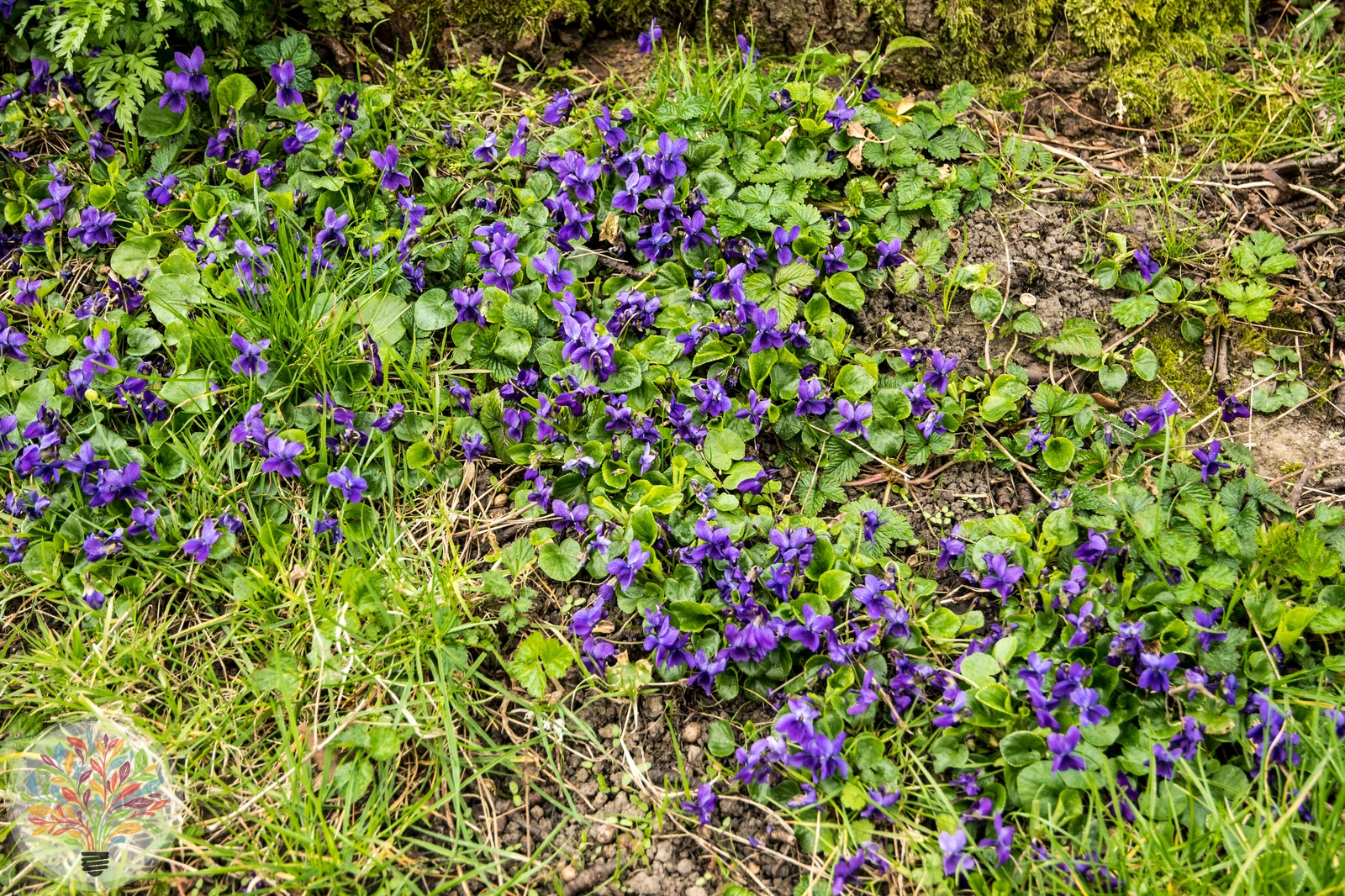
Viola odorata
Viola odorata
FamilyGenus: Violaheimisch in Deutschland
🌿
36
Species
interact
🔗
52
Interactions
documented
🐛
2
Host relationships
Species
About this species
Viola odorata is a low-growing, broad-leaved herbaceous plant that blooms from February to April. It thrives in semi-shade on moist, nutrient-rich, calcareous soils and is native in Great Britain.
Ecological network
Click to highlight connections · Click again to open species page
Netzwerk wird geladen...
PollinationLarval hostFlower visit
Ecological significance
This native ground-cover species is adapted to low-disturbance, calcareous sites and provides early-season interest in semi-shaded positions.
Annual cycle
Flowering takes place from February to April.
Safety note
Viola odorata is recorded as safe for children, indicating no toxic hazard.
Standort & Merkmale
Light
Halbschatten
Moisture
Frisch (Mäßig feucht)
Soil
Starkzehrer (Nährstoffreicher/Fetter Boden)
Bloom time
Feb – Apr
Soil reaction
Basisch / Kalkhold
Bioregion
Continental
Growth form
Krautige Pflanze
Woodiness
Nicht verholzt
Leaf type
Breitblättrig
Plant height
0.089 m
Morphological traits: TRY ID3 (CC BY 3.0) & TRY ID81 (CC BY)
Pflege & Anbau
For best results, plant Viola odorata in partial shade with a consistently moist but free-draining soil enriched with well-rotted organic matter. It favours alkaline to neutral pH, so a lime-rich substrate is beneficial. In a garden setting, it works well beneath deciduous shrubs or trees where it receives dappled sunlight. Keep the soil from drying out during the growing season, and top-dress with compost in autumn to maintain fertility. Once established, it requires little intervention beyond occasional watering in dry spells.
Scientific profile
Viola odorata is a non-woody, broad-leaved herbaceous plant that typically reaches about 9 cm in height. Its leaf blades average around 1826 mm² in area, helping the plant capture light in semi-shaded conditions. Native in Great Britain, it grows in moderately moist, nutrient-rich soils that are calcareous or basic, and it favours low-disturbance settings. Flowers appear early in the year, from February to April. The plant is safe for children and poses no known toxicity concerns.
Bestäuber & Besucher
33 Arten interagieren mit dieser Pflanze
Argynnis paphiaFabriciana adippePieris napiPolygonia c-albumOsmia aurulentaAglais urticaeAnthocharis cardaminesLasioglossum fulvicorneOsmia bicolorBombus terrestrisErynnis tagesGonepteryx rhamniBombus vestalisErebia aethiopsBoloria seleneCallophrys rubiBombus hortorumBombus lapidariusBombus lucorumAnthophora plumipesBombus pascuorumPieris rapaeClossiana euphrosyneAndrena bicolorBombus hypnorumPyrgus malvaePieris brassicaeBombus pratorumLasioglossum laevigatumBombus sylvestrisOsmia cornutaIssoria lathoniaApis mellifera
Other flower visitors
1 other species visit the flowers
Pyrrhula pyrrhula
Sources & data origin
•Cook et al. (2025) UK Butterfly & Moth Traits (DOI: 10.5285/dbc7cc17-cbbd-49dd-bab4-8e8855768d66)
•Interaktionsdaten via GloBI (CC-BY 4.0)
•pollinator_interactions
•FloraWeb / BfN
•EIVE 1.0 — Dengler et al. (2023), DOI: 10.3897/VCS.98324 (CC BY 4.0)
•GBIF Backbone Taxonomy — GBIF Secretariat (2024), DOI: 10.15468/39omei (CC BY 4.0)
•TRY Categorical Traits (ID3) — Kattge et al. (2012), DOI: 10.17871/TRY.3 (CC BY 3.0)
•TRY Global Spectrum (ID81) — Díaz et al. (2016/2021), DOI: 10.17871/TRY.81 (CC BY)
•Govaerts R et al. (2025) — World Checklist of Vascular Plants (WCVP) v14. Royal Botanic Gardens, Kew. DOI: 10.34885/xs7h-ze42 (CC BY 4.0)
•Foto: © Adobe Stock / AdobeStock_554848601
All data is licensed under CC BY 4.0, CC0, or compatible. Attribution according to license terms. Full source overview →