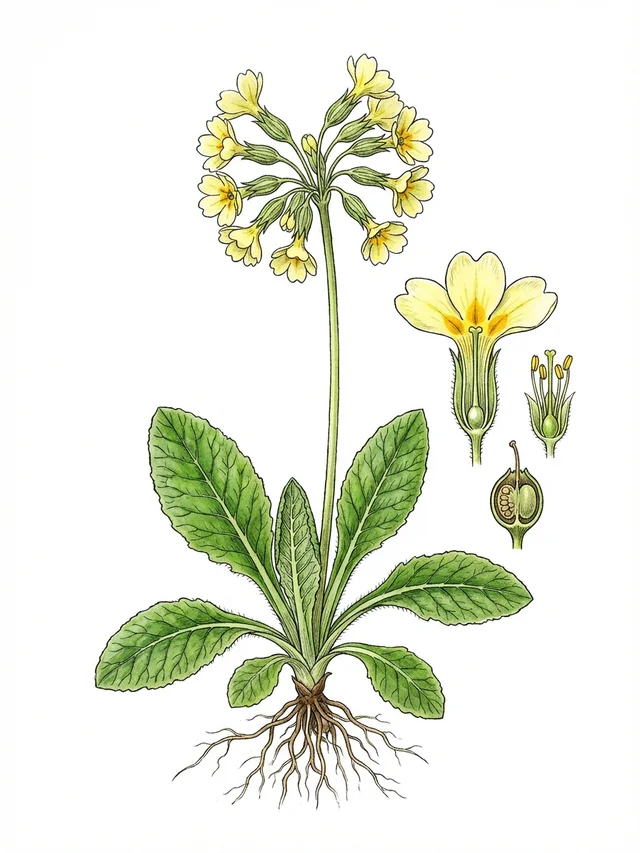
 Image to followAI-generated illustration
Pentaglottis sempervirens
Pentaglottis sempervirens
FamilyGenus: Pentaglottisnative in Germany
🌿
30
Species
interact
🔗
71
Interactions
documented
🐛
2
Host relationships
Species
About this species
Pentaglottis sempervirens is an introduced, established herbaceous plant from the borage family. It produces its characteristic blue flowers in May and thrives in semi-shaded, moist, nutrient-rich soils. In Great Britain it is a long-established garden escape.
Ecological network
Click to highlight connections · Click again to open the species page
Loading network...
PollinationLarval hostFlower visit
Ecological significance
Pentaglottis sempervirens is an introduced, established species in Great Britain. It was introduced as an ornamental garden plant and has become established. It may persist outside gardens in suitable conditions, but there is no evidence of significant ecological harm.
Annual cycle
Flowers appear in May.
Standort & Merkmale
Light
Halbschatten
Moisture
Frisch (Mäßig feucht)
Soil
Starkzehrer (Nährstoffreicher/Fetter Boden)
Flowering period
Mai – Mai
Soil reaction
Basisch / Kalkhold
Bioregion
Continental
Growth form
Krautige Pflanze
Woodiness
Nicht verholzt
Leaf type
Breitblättrig
Plant height
0.297 m
Morphological traits: TRY ID3 (CC BY 3.0) & TRY ID81 (CC BY)
Pflege & Anbau
Plant in semi-shade, in fresh, moist but well-drained, fertile soil. It does best on neutral to alkaline substrates. Avoid heavily disturbed or compacted ground. Once established it requires little attention beyond occasional watering during dry spells to maintain soil moisture.
Scientific profile
Pentaglottis sempervirens is a herbaceous, non-woody plant with broad leaves, reaching a height of around 0.3 m. The leaf area is large, approximately 23,740 mm², and the diaspores weigh about 4.95 mg. It forms arbuscular mycorrhizal associations. Ecologically, it is a warmth-loving species of semi-shade (light indicator 6) and fresh to moderately moist soils (moisture 6). It favours nutrient-rich, alkaline to basic conditions (nutrient indicator 6, reaction 7) and tolerates only slight disturbance (disturbance severity 0.65). Flowering is concentrated in May. The plant is introduced and established in Great Britain, also recorded across much of Europe, and persists in semi-wild habitats.
Pollinators & visitors
27 Arten interagieren mit dieser Pflanze
Callimorpha dominulaBombus sylvestrisOsmia bicolorLasioglossum morioBombus terrestrisAndrena wilkellaBombus pascuorumOsmia aurulentaBombus hortorumPieris rapaeBombus jonellusMelecta albifronsBombus lucorumBombus hypnorumBombus pratorumApis melliferaBombus lapidariusAndrena bicolorPararge aegeriaAglais urticaePieris napiNomada goodenianaAnthophora plumipesOsmia bicornisAndrena chrysoscelesNomada fabricianaAndrena angustior
Sources & data origin
•Cook et al. (2025) UK Butterfly & Moth Traits (DOI: 10.5285/dbc7cc17-cbbd-49dd-bab4-8e8855768d66)
•Interaktionsdaten via GloBI (CC-BY 4.0)
•pollinator_interactions
•FloraWeb / BfN
•EIVE 1.0 — Dengler et al. (2023), DOI: 10.3897/VCS.98324 (CC BY 4.0)
•GBIF Backbone Taxonomy — GBIF Secretariat (2024), DOI: 10.15468/39omei (CC BY 4.0)
•TRY Categorical Traits (ID3) — Kattge et al. (2012), DOI: 10.17871/TRY.3 (CC BY 3.0)
•TRY Global Spectrum (ID81) — Díaz et al. (2016/2021), DOI: 10.17871/TRY.81 (CC BY)
•Checklist Alien Plants Belgium — Verloove F (2023), Botanic Garden Meise (CC BY 4.0)
•Govaerts R et al. (2025) — World Checklist of Vascular Plants (WCVP) v14. Royal Botanic Gardens, Kew. DOI: 10.34885/xs7h-ze42 (CC BY 4.0)
All data is licensed under CC BY 4.0, CC0, or compatible terms. Attribution according to license conditions. Full source overview →