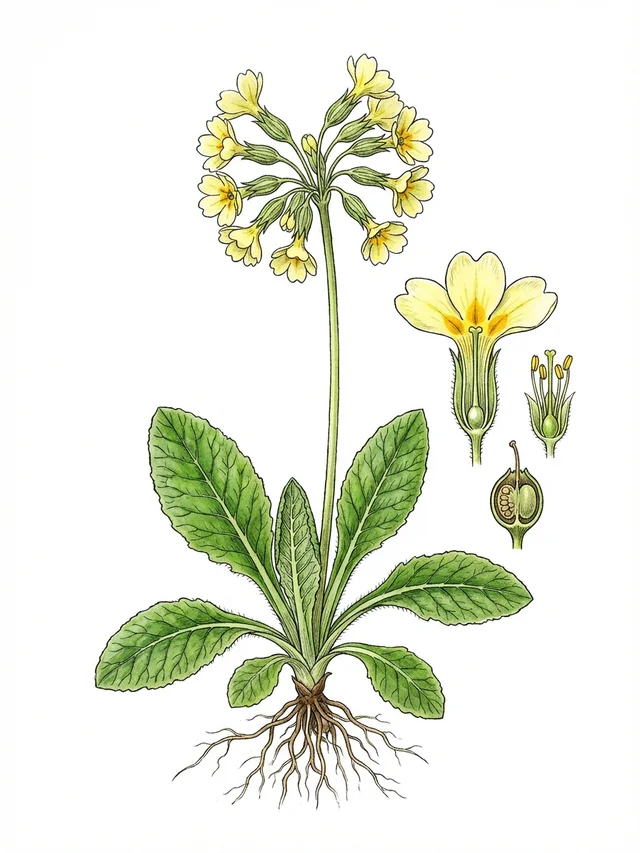
 Image to followAI-generated illustration
Pinus strobus
Pinus strobus
FamilyGenus: Pinusnative in Germany
🌿
13
Species
interact
🔗
15
Interactions
documented
🐛
5
Host relationships
Species
About this species
Pinus strobus is an introduced, established conifer in Great Britain. Originating from Northern America, it can reach heights of 32.68 m, bears evergreen needle-like leaves, and flowers from April to May. It thrives in partial shade on moist, low-nutrient, neutral to slightly acidic soils. It is a neophyte and has not been evaluated for the GB Red List.
Ecological network
Click to highlight connections · Click again to open the species page
Loading network...
PollinationLarval hostFlower visit
Ecological significance
Pinus strobus is an introduced species, established in Great Britain. Its natural range is Northern America. In Belgium it is recorded as a casual escape. The ecological impact in Great Britain is not known.
Annual cycle
An evergreen tree, Pinus strobus retains its foliage all year. Flowering occurs in April and May, with cones developing subsequently.
Standort & Merkmale
Light
Halbschatten
Moisture
Frisch (Mäßig feucht)
Soil
Schwachzehrer (Magerer Boden)
Flowering period
Apr – Mai
Soil reaction
Mäßig sauer bis neutral
Bioregion
Continental
Growth form
Baum
Woodiness
Verholzt
Leaf type
Nadelblättrig
Leaf phenology
Immergrün
Plant height
32.681 m
Morphological traits: TRY ID3 (CC BY 3.0) & TRY ID81 (CC BY)
Pflege & Anbau
•
Light : Grow in partial shade.
•
Soil : Prefers moist but well-drained, low-fertility soil with a neutral to slightly acidic pH.
•
Water : Maintain moderate soil moisture, avoiding waterlogging.
•
Spacing : Allow ample room; this tree can reach 32.68 m in height and develop a broad crown.
•
Maintenance : Little intervention required once established; may benefit from mulching to retain soil moisture.
Scientific profile
A large evergreen tree, Pinus strobus can reach 32.68 m in height. The needle-like leaves average 96.83 mm², and the woody trunk forms a tree growth habit. Seeds weigh around 16.05 mg. Its natural range is Northern America (Eastern Canada, Northeastern and Southeastern U.S.A.). It was first recorded in Europe in the 16th century and has spread from cultivation. In Great Britain it is an introduced, established species. It prefers partial shade, moderate moisture, neutral to slightly acidic pH, and low-nutrient soils. Disturbance tolerance is low. In Belgium it is recorded as a casual, while in Germany it is established; Austrian records are uncertain. The GB Red List status is 'not evaluated'.
Pollinators & visitors
2 Arten interagieren mit dieser Pflanze
Procyon lotorCrypturgus pusillus
Host relationships
5 species use this plant as a host
Other flower visitors
6 other species visit the flowers
Cervus elaphusLoxia curvirostraHarmonia quadripunctataSitta canadensisLoxia leucopteraTrypodendron lineatum
Sources & data origin
•Interaktionsdaten via GloBI (CC-BY 4.0)
•FloraWeb / BfN
•EIVE 1.0 — Dengler et al. (2023), DOI: 10.3897/VCS.98324 (CC BY 4.0)
•GBIF Backbone Taxonomy — GBIF Secretariat (2024), DOI: 10.15468/39omei (CC BY 4.0)
•TRY Categorical Traits (ID3) — Kattge et al. (2012), DOI: 10.17871/TRY.3 (CC BY 3.0)
•TRY Global Spectrum (ID81) — Díaz et al. (2016/2021), DOI: 10.17871/TRY.81 (CC BY)
•Checklist Alien Plants Belgium — Verloove F (2023), Botanic Garden Meise (CC BY 4.0)
•Govaerts R et al. (2025) — World Checklist of Vascular Plants (WCVP) v14. Royal Botanic Gardens, Kew. DOI: 10.34885/xs7h-ze42 (CC BY 4.0)
All data is licensed under CC BY 4.0, CC0, or compatible terms. Attribution according to license conditions. Full source overview →