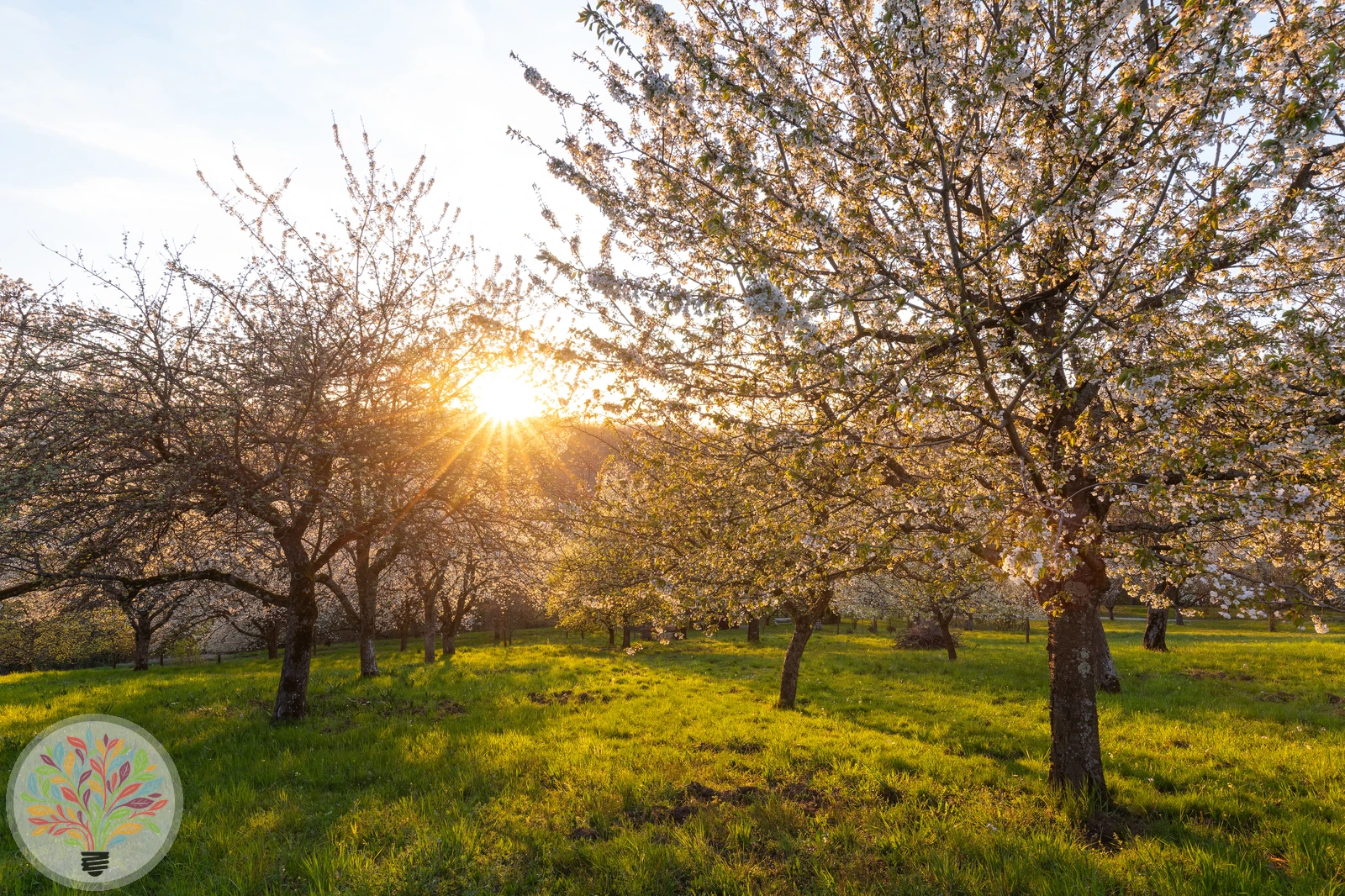
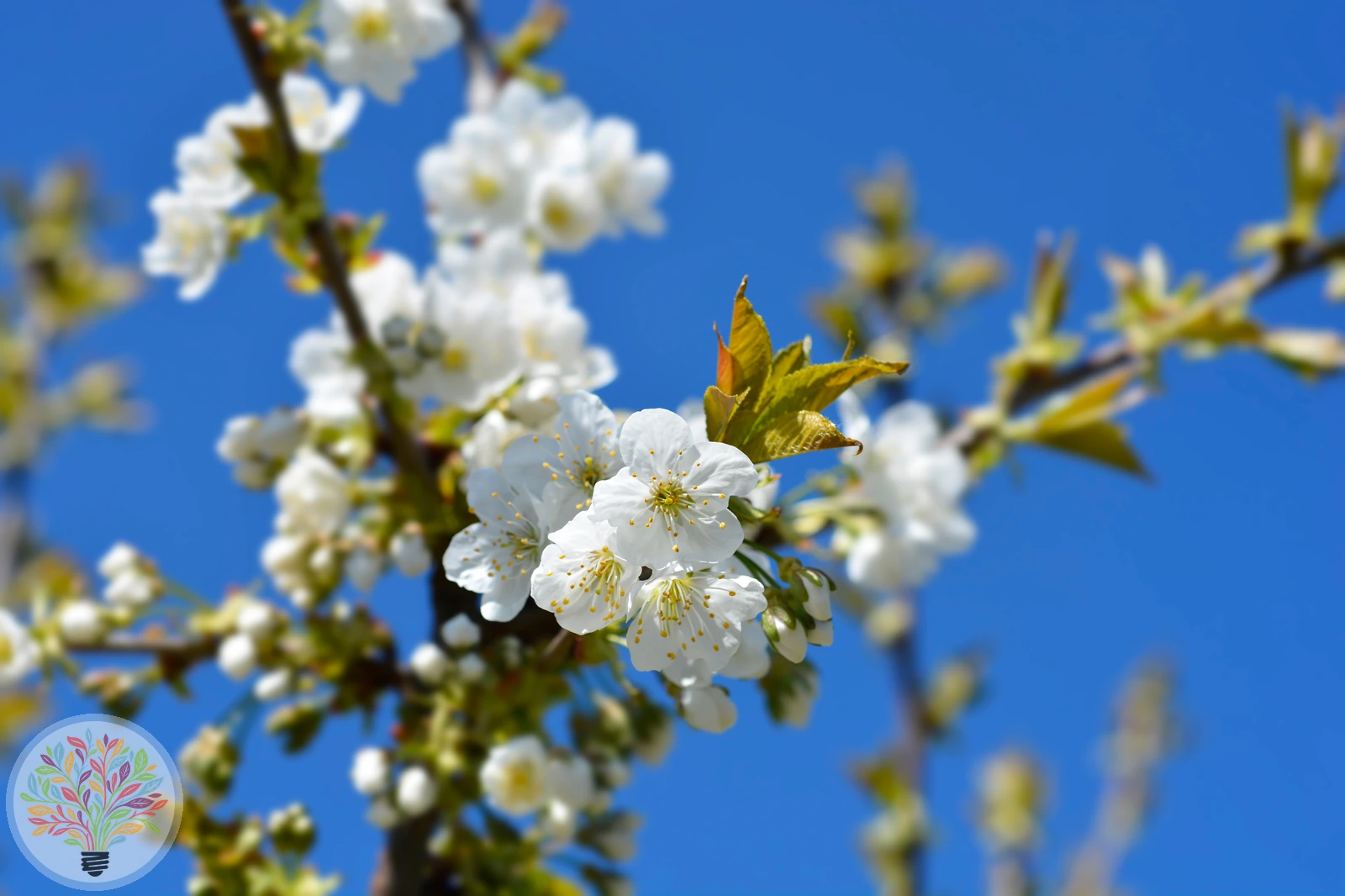
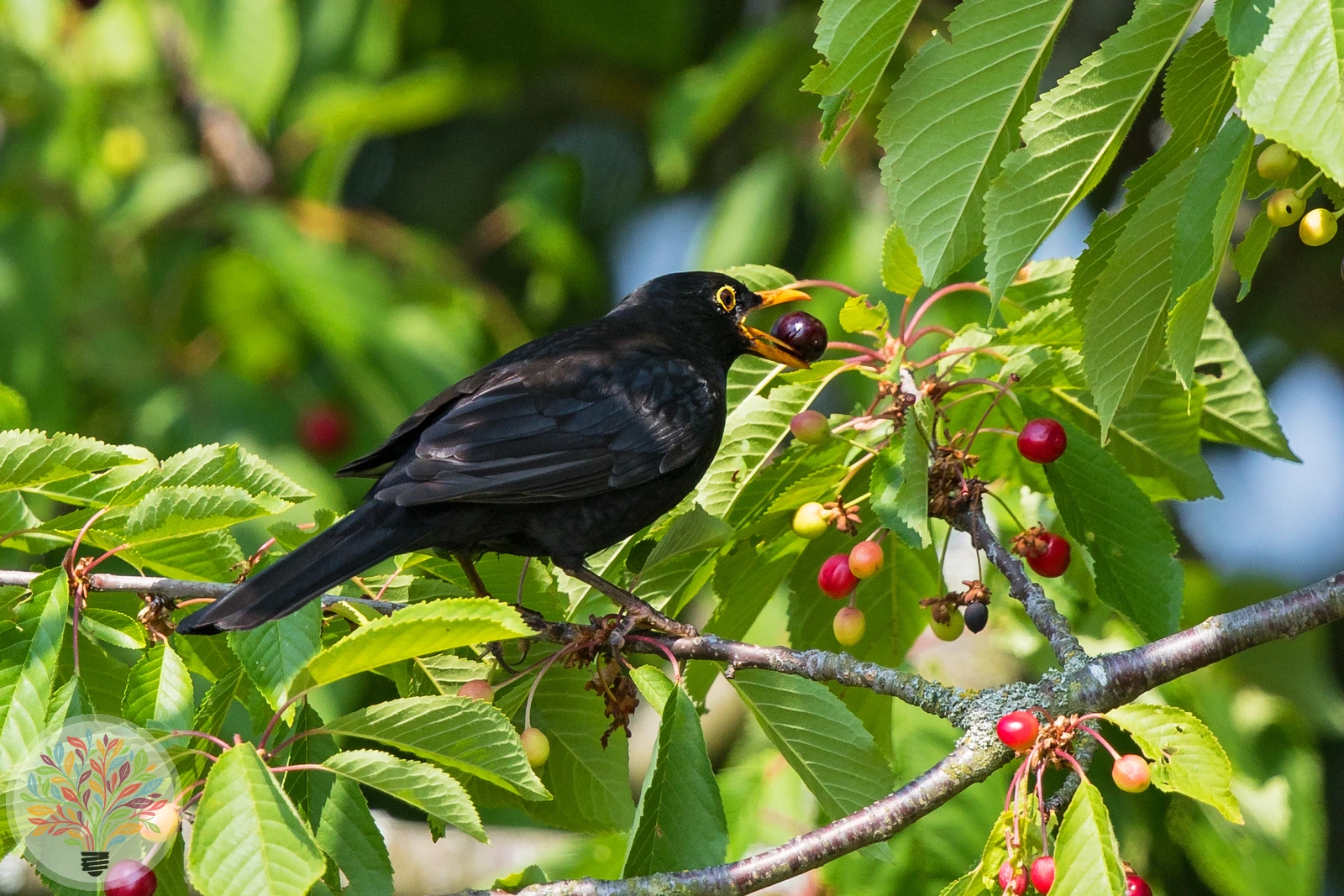
Prunus avium
Prunus avium
FamilyGenus: Prunusnative in Germany
🌿
122
Species
interact
🔗
222
Interactions
documented
🐛
17
Host relationships
Species
About this species
Prunus avium is a native deciduous tree in Great Britain, reaching around 16.5 metres in height. It bears broad leaves and produces nectar- and pollen-rich flowers in April and May, making it valuable for pollinators. It grows best in semi-shade on fresh, moderately fertile, alkaline to calcareous soils.
Ecological network
Click to highlight connections · Click again to open the species page
Loading network...
PollinationLarval hostFlower visit
Ecological significance
The early-spring flowers are a valuable source of nectar and pollen for bees and other pollinating insects. As a native tree, it integrates well into British woodland ecosystems, offering habitat and food resources for a range of wildlife.
Annual cycle
Flowering takes place in April and May. The tree is deciduous, leafing out in spring and shedding leaves in autumn. Over winter, it remains dormant, with fresh growth resuming the following spring.
Standort & Merkmale
Light
Halbschatten
Moisture
Frisch (Mäßig feucht)
Soil
Mittelzehrer (Normaler Boden)
Flowering period
Apr – Mai
Soil reaction
Basisch / Kalkhold
Bioregion
Continental
Nectar value
4
Pollen value
4
Growth form
Baum
Woodiness
Verholzt
Leaf type
Breitblättrig
Leaf phenology
Laubabwerfend
Plant height
16.56 m
Morphological traits: TRY ID3 (CC BY 3.0) & TRY ID81 (CC BY)
Pflege & Anbau
If cultivating Prunus avium, site it in semi-shade and provide a fresh, moderately moist, well-drained soil. A normal, loamy soil with an alkaline to calcareous reaction suits it best. No special fertility measures are required as it is a moderate feeder. Once established, it tolerates some disturbance but thrives in stable conditions.
Scientific profile
Prunus avium is a broad-leaved, deciduous tree native to Great Britain. Typically attaining a height of about 16.5 metres, it bears broad leaves with a mean area of 2141 mm². Flowering occurs from April to May, with each blossom offering both nectar and pollen (rated 4 on a standard scale), thus attracting pollinating insects. The tree is adapted to semi-shaded conditions and prefers fresh, moderately moist soils that are calcareous or alkaline (reaction value 7). Its nutrient requirements are modest, classed as normal soil (Mittelzehrer, nutrient value 5). It tolerates low disturbance (severity 0.69) and forms variable mycorrhizal associations. The diaspores have a mass of around 185.5 mg. As a woody, terrestrial plant, it contributes to broadleaved woodland communities.
Pollinators & visitors
51 Arten interagieren mit dieser Pflanze
Alsophila aesculariaNymphalis polychlorosBiston betulariaLomographa bimaculataSylvia atricapillaFringilla coelebsBombus lucorumPieris rapaeBombus terrestrisAndrena trimmeranaAndrena helvolaAndrena dorsataAndrena carantonicaAndrena flavipesAndrena haemorrhoaBombus hortorumAndrena nigroaeneaCelastrina argiolusBombus pascuorumVanessa atalantaBombus pratorumLasioglossum leucozoniumBombus vestalisAglais urticaeAporia crataegithecla betulaeElanus caeruleusPhilaeus chrysopsVespula germanicaVespa crabroVanessa carduiApis melliferamacroglossum stellatarumNymphalis antiopaVespa velutina nigrithoraxBombus soroeensisHalictus rubicundusOrthosia cerasiAndrena cinerariaOsmia bicornisBombus lapidariusBombus hypnorumAndrena fulvaOsmia cornutaAndrena bicolorBombus bohemicusBombus lucorum/terrestrisXylocopa sp.1Apis.melliferaOsmia rufa
Host relationships
17 species use this plant as a host
Selenia tetralunariaAcronicta psiPlagodis pulverariaLomographa temerataAcronicta alniAllophyes oxyacanthaeCaliroa cerasiPlodia interpunctellaIphiclides podaliriusEnoplognatha ovataCalvia quatuordecimguttataOenopia conglobataPhilodromus disparCosmia trapezinaOperophtera brumataYponomeuta padellaLymantria dispar
Other flower visitors
54 other species visit the flowers
Corvus coroneStreptopelia decaoctoCoccothraustes coccothraustesPoecile palustrisPica picaPasser montanusPhylloscopus collybitaParus majorPyrrhula pyrrhulaTurdus pilarisGarrulus glandariusSus scrofaMeles melesMartes martesCyanistes caeruleusCanis lupusTurdus viscivorusColumba palumbusSturnus vulgarisTurdus philomelosSylvia borinTurdus merulaDendrocopos syriacusUrsus arctosCallosciurus erythraeusOrsodacne cerasiXyleborus disparChilocorus renipustulatusHarmonia axyridisAdalia decempunctataGrammoptera ruficornisTropinota hirtaCamponotus fallaxPipistrellus pygmaeusPlecotus auritusParus montanusSylvia communisGallinula chloropusMuscicapa striataColumba oenasDendrocoptes mediusDendrocopos majorErithacus rubeculaChloris chlorisPhoenicurus ochrurosSylvia currucaPasser domesticusPhoenicurus phoenicurusFicedula hypoleucaCapreolus capreolus
Sources & data origin
•Interaktionsdaten via GloBI (CC-BY 4.0)
•Cook et al. (2025) UK Butterfly & Moth Traits (DOI: 10.5285/dbc7cc17-cbbd-49dd-bab4-8e8855768d66)
•pollinator_interactions
•FloraWeb / BfN
•EIVE 1.0 — Dengler et al. (2023), DOI: 10.3897/VCS.98324 (CC BY 4.0)
•EuPPollNet — Kuppler et al. (2025), DOI: 10.1111/geb.70000 (CC BY 4.0)
•Database of Pollinator Interactions (DoPI) — Pocock et al. (2022), DOI: 10.1002/ecy.3801 (CC BY)
•GBIF Backbone Taxonomy — GBIF Secretariat (2024), DOI: 10.15468/39omei (CC BY 4.0)
•TRY Categorical Traits (ID3) — Kattge et al. (2012), DOI: 10.17871/TRY.3 (CC BY 3.0)
•TRY Global Spectrum (ID81) — Díaz et al. (2016/2021), DOI: 10.17871/TRY.81 (CC BY)
•Govaerts R et al. (2025) — World Checklist of Vascular Plants (WCVP) v14. Royal Botanic Gardens, Kew. DOI: 10.34885/xs7h-ze42 (CC BY 4.0)
•Foto: © JIRI VIEHMANN / Adobe Stock / AdobeStock_1978800051
All data is licensed under CC BY 4.0, CC0, or compatible terms. Attribution according to license conditions. Full source overview →