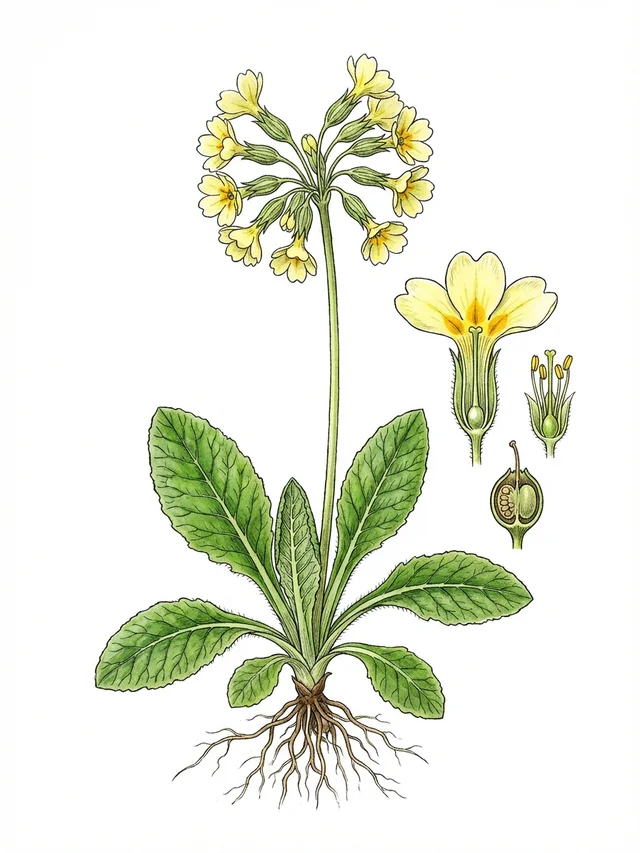
 Image to followAI-generated illustration
Prunus cerasus
Prunus cerasus
FamilyGenus: Prunusnative in Germany
🌿
51
Species
interact
🔗
66
Interactions
documented
🐛
13
Host relationships
Species
About this species
A deciduous woody shrub or small tree reaching about 7.5 m, archaeophyte in Great Britain, producing blossom in April and May. It grows in partial shade on fresh, moderately moist, neutral to slightly acid soils.
Ecological network
Click to highlight connections · Click again to open the species page
Loading network...
PollinationLarval hostFlower visit
Ecological significance
This archaeophyte has been present in Great Britain for centuries; no specific ecological impacts are documented.
Annual cycle
Deciduous, losing its leaves in autumn; flowers appear in April and May.
Standort & Merkmale
Light
Halbschatten
Moisture
Frisch (Mäßig feucht)
Soil
Mittelzehrer (Normaler Boden)
Flowering period
Apr – Mai
Soil reaction
Mäßig sauer bis neutral
Bioregion
Continental
Growth form
Strauch/Baum
Woodiness
Verholzt
Leaf type
Breitblättrig
Leaf phenology
Laubabwerfend
Plant height
7.48 m
Morphological traits: TRY ID3 (CC BY 3.0) & TRY ID81 (CC BY)
Pflege & Anbau
Plant in partial shade on a fresh, moderately moist, well-drained soil. A neutral to slightly acid, medium-fertility loam is ideal. Avoid sites with high disturbance.
Scientific profile
Prunus cerasus is a broad-leaved, woody shrub or small tree of the rose family (Rosaceae) that typically reaches a height of around 7.5 metres. It is deciduous, shedding its leaves in autumn, and bears flowers between April and May. In Great Britain it is an archaeophyte, having been introduced before 1500 and now long-established. The species occurs in partial shade on fresh, moderately moist soils that are neutral to slightly acid and of medium fertility. It tolerates low disturbance and favours moderately warm conditions.
Pollinators & visitors
30 Arten interagieren mit dieser Pflanze
Bombus lapidariusPlagodis pulverariaPieris rapaeBombus vestalisLasioglossum leucozoniumBombus hortorumBombus hypnorumAndrena trimmeranaAndrena haemorrhoaAndrena flavipesAndrena dorsataAndrena helvolaAndrena bicolorBombus pascuorumAndrena carantonicaBombus lucorumBombus ruderatusCelastrina argiolusAndrena nigroaeneaAndrena fulvaApis melliferaBombus rupestrisOsmia bicornisLasioglossum calceatumOperophtera brumataCaliroa cerasiNymphalis antiopaBombus terrestrisBombus pratorumVanessa atalanta
Host relationships
13 species use this plant as a host
Acronicta psiCosmia trapezinaEupsilia transversaLomographa temerataLomographa bimaculataIphiclides podaliriusPolygonia c-albumAllophyes oxyacanthaeNymphalis polychlorosthecla betulaeYponomeuta padellaYponomeuta evonymellaAcronicta rumicis
Other flower visitors
8 other species visit the flowers
Sources & data origin
•Interaktionsdaten via GloBI (CC-BY 4.0)
•Cook et al. (2025) UK Butterfly & Moth Traits (DOI: 10.5285/dbc7cc17-cbbd-49dd-bab4-8e8855768d66)
•pollinator_interactions
•FloraWeb / BfN
•EIVE 1.0 — Dengler et al. (2023), DOI: 10.3897/VCS.98324 (CC BY 4.0)
•GBIF Backbone Taxonomy — GBIF Secretariat (2024), DOI: 10.15468/39omei (CC BY 4.0)
•TRY Categorical Traits (ID3) — Kattge et al. (2012), DOI: 10.17871/TRY.3 (CC BY 3.0)
•TRY Global Spectrum (ID81) — Díaz et al. (2016/2021), DOI: 10.17871/TRY.81 (CC BY)
•Checklist Alien Plants Belgium — Verloove F (2023), Botanic Garden Meise (CC BY 4.0)
•Govaerts R et al. (2025) — World Checklist of Vascular Plants (WCVP) v14. Royal Botanic Gardens, Kew. DOI: 10.34885/xs7h-ze42 (CC BY 4.0)
All data is licensed under CC BY 4.0, CC0, or compatible terms. Attribution according to license conditions. Full source overview →