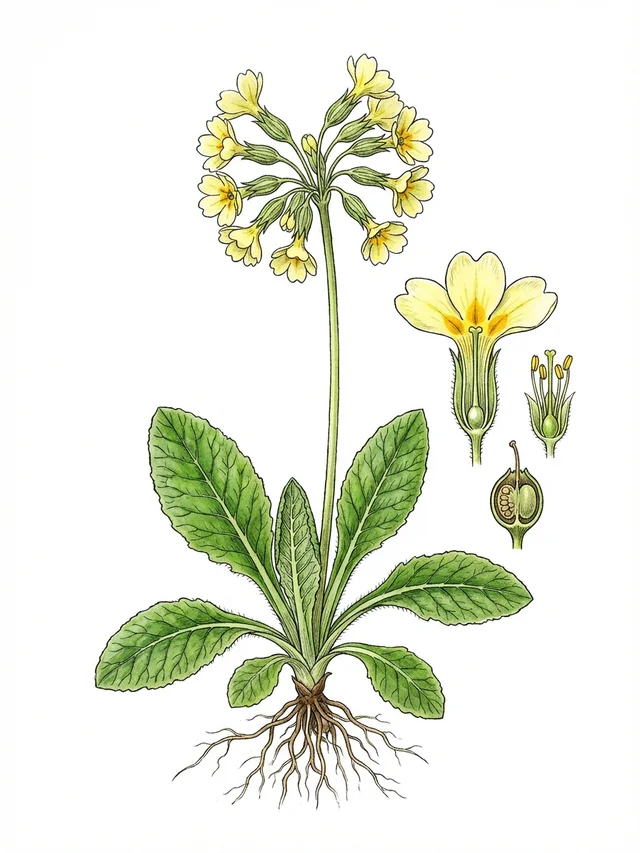
 Image to followAI-generated illustration
Robinia pseudoacacia
Robinia pseudoacacia
FamilyGenus: Robinianative in Germany⚠️ Invasive species
⚠️
Invasive alien species
This species is classified as an invasive neophyte. It can affect native ecosystems and should not be introduced into the wild. Please check regional regulations before planting.
🌿
30
Species
interact
🔗
51
Interactions
documented
🐛
8
Host relationships
Species
About this species
A deciduous, broad-leaved tree introduced into Great Britain, bearing fragrant white flowers in late spring and armed with sharp spines; it is considered invasive.
Ecological network
Click to highlight connections · Click again to open the species page
Loading network...
PollinationLarval hostFlower visit
Annual cycle
Bare branches through winter. Leaves emerge in spring, followed by profuse, fragrant white flower racemes in May and June. Pollinated flowers develop into hanging pods that persist into autumn. Leaves turn yellow before falling in autumn, leaving the spiny winter framework.
Safety note
The branches bear sharp stipular spines which can cause injury. Take care when handling or working near the tree.
Standort & Merkmale
Light
Halbschatten
Moisture
Frisch (Mäßig feucht)
Soil
Starkzehrer (Nährstoffreicher/Fetter Boden)
Flowering period
Mai – Jun
Soil reaction
Mäßig sauer bis neutral
Bioregion
Continental
Growth form
Baum
Woodiness
Verholzt
Leaf type
Breitblättrig
Leaf phenology
Laubabwerfend
Plant height
17.437 m
Morphological traits: TRY ID3 (CC BY 3.0) & TRY ID81 (CC BY)
Nectar
2.221 µl/Blüte
Scientific profile
Robinia pseudoacacia is a deciduous tree with thick, deeply fissured bark. It typically reaches about 17 m in height. The leaves are alternate, imparipinnate, with 3–10 pairs of elliptical to ovate leaflets that are entire, obtuse or slightly notched at the tip, and nearly glabrous. A pair of stout stipular spines marks the leaf base. The fragrant, white pea-like flowers, each 15–20 mm long and with a yellowish blotch on the standard petal, appear in pendulous axillary racemes 10–20 cm long in May and June. The fruit is a compressed, glabrous, pendulous legume 5–10 cm by about 1 cm. The tree is a neophyte in Britain, where it is introduced and established. It grows in partial shade on moderately moist, nutrient-rich, neutral to slightly acid soils and shows little tolerance of saline conditions. It is deciduous, shedding its leaves in winter.
Pollinators & visitors
15 Arten interagieren mit dieser Pflanze
Vespa velutina nigrithoraxApis melliferaCelastrina argiolusElkalyce argiadesBombus terrestrisCarduelis carduelisVanessa atalantaDendrocopos majorXylocopa irisMegachile manicataMegachile parietina nestoreaXylocopa violaceaEucera albofasciataLasioglossum marginatumLasioglossum laticeps
Host relationships
8 species use this plant as a host
Phalera bucephalaPyrrhia umbraLymantria disparEctropis crepusculariaBiston betulariaOrgyia antiquaCoccinella septempunctataAnorthoa munda
Other flower visitors
7 other species visit the flowers
Ptinomorphus imperialisPsittacula krameriColumba liviaCallosciurus erythraeusCharagmus gressoriusAnthrenus verbasciValgus hemipterus
Sources & data origin
•Interaktionsdaten via GloBI (CC-BY 4.0)
•Cook et al. (2025) UK Butterfly & Moth Traits (DOI: 10.5285/dbc7cc17-cbbd-49dd-bab4-8e8855768d66)
•pollinator_interactions
•Baden-Böhm F, App M, Thiele J (2022) — The FloRes Database: A floral resources trait database for pollinator habitat-assessment generated by a multistep workflow. Johann Heinrich von Thünen-Institut, Dryad, DOI: 10.5061/dryad.djh9w0w29 (CC0)
•FloraWeb / BfN
•EIVE 1.0 — Dengler et al. (2023), DOI: 10.3897/VCS.98324 (CC BY 4.0)
•GBIF Backbone Taxonomy — GBIF Secretariat (2024), DOI: 10.15468/39omei (CC BY 4.0)
•TRY Categorical Traits (ID3) — Kattge et al. (2012), DOI: 10.17871/TRY.3 (CC BY 3.0)
•TRY Global Spectrum (ID81) — Díaz et al. (2016/2021), DOI: 10.17871/TRY.81 (CC BY)
•Checklist Alien Plants Belgium — Verloove F (2023), Botanic Garden Meise (CC BY 4.0)
•DAISIE — Roy H et al. (2019), DOI: 10.15468/ybwd3x (CC BY 4.0)
•Govaerts R et al. (2025) — World Checklist of Vascular Plants (WCVP) v14. Royal Botanic Gardens, Kew. DOI: 10.34885/xs7h-ze42 (CC BY 4.0)
All data is licensed under CC BY 4.0, CC0, or compatible terms. Attribution according to license conditions. Full source overview →