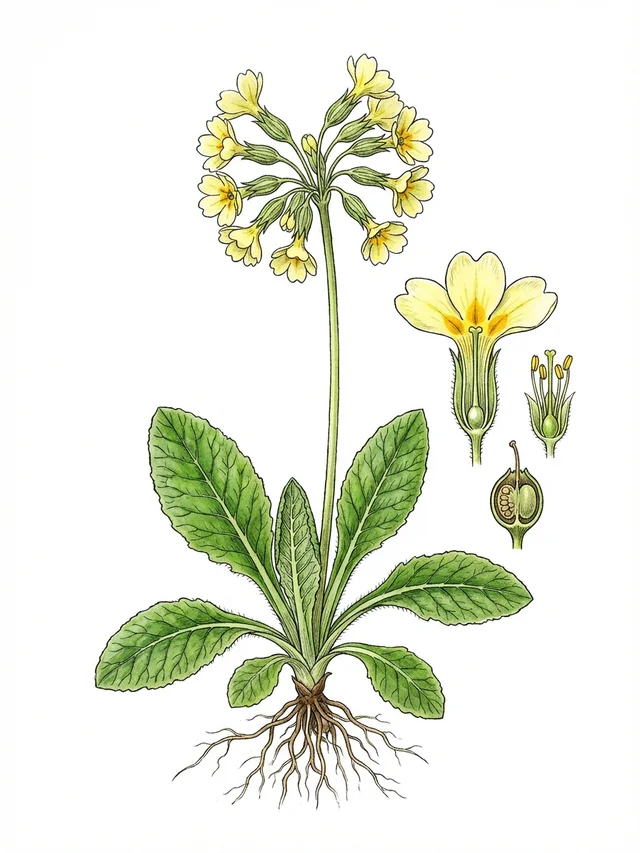
 Image to followAI-generated illustration
Salix fragilis
Salix fragilis
FamilyGenus: SalixIndigen / Archäophyt
🌿
66
Species
interact
🔗
72
Interactions
documented
🐛
7
Host relationships
Species
About this species
Salix fragilis is a deciduous broad-leaved tree, long established in Britain as an archaeophyte. It favours moist, semi-shaded sites on normal soils and forms ectomycorrhizal associations. Typically reaching around 15 metres in height, it is a component of wet woodlands and waterside margins.
Ecological network
Click to highlight connections · Click again to open the species page
Loading network...
PollinationLarval hostFlower visit
Ecological significance
As a deciduous tree with ectomycorrhizal associations, Salix fragilis contributes to nutrient cycling through annual leaf fall and supports mycorrhizal fungal communities in moist woodland soils.
Annual cycle
A deciduous tree; fresh leaves appear in spring, and the canopy is shed in autumn. Bare branches persist through the winter until new growth resumes.
Standort & Merkmale
Light
Halbschatten
Moisture
Feucht
Soil
Mittelzehrer (Normaler Boden)
Flowering period
—
Growth form
Baum
Woodiness
Verholzt
Leaf type
Breitblättrig
Leaf phenology
Laubabwerfend
Plant height
14.945 m
Morphological traits: TRY ID3 (CC BY 3.0) & TRY ID81 (CC BY)
Pflege & Anbau
•
Light: Semi-shade.
•
Moisture: Consistently moist soil.
•
Soil: Normal, moderately fertile soil; tolerates damp conditions.
•
Mycorrhiza: Ectomycorrhizal – benefits from the presence of appropriate fungal partners.
•
Space: Allow for its potential mature height when planting.
Scientific profile
Salix fragilis is a woody, deciduous tree in the willow family (Weidengewächse). It is an archaeophyte in Great Britain, introduced before AD 1500 and now naturalised. The broad, deciduous leaves are shed in autumn. The tree typically attains a height of roughly 15 metres, although published sources show variation. It is adapted to moist, semi-shaded conditions, preferring mesotrophic soils. Its root system forms ectomycorrhizal associations (EM). Ecological indicator values place it at light value 5 (semi-shade), moisture value 7 (moist), and nutrient value 6 (moderately fertile). The minute, wind-dispersed diaspores each weigh about 0.12 mg. In Britain it is not considered threatened, holding a Red List status of least concern (unclassified, denoted *).
Pollinators & visitors
53 Arten interagieren mit dieser Pflanze
Apis melliferaOrgyia antiquaLymantria disparBiston betulariaArctia cajaNymphalis antiopaMelanchra persicariaeCatocala nuptaAglais urticaeNomada fabricianaSphecodes ephippiusNomada ruficornisLasioglossum morioSphecodes pellucidusLasioglossum leucozoniumLasioglossum calceatumBombus sylvestrisAndrena praecoxBombus pascuorumAndrena haemorrhoaBombus jonellusAndrena clarkellaBombus hortorumAndrena helvolaAndrena carantonicaBombus pratorumBombus monticolaAndrena cinerariaAndrena chrysoscelesAndrena apicataBombus bohemicusAndrena nitidaBombus hypnorumBombus muscorumAndrena trimmeranaAndrena fulvaNomada flavaNomada goodenianaBombus lucorumAndrena nigroaeneaAndrena dorsataNomada marshamellaMelecta albifronsGonepteryx rhamniBombus terrestrisLasioglossum albipesAndrena tibialisColletes cuniculariusAndrena minutulaAndrena bicolor
Host relationships
7 species use this plant as a host
Laothoe populiScoliopteryx libatrixNotodonta ziczacAcronicta megacephala (Denis & Schiffermüller), 1775Cossus cossusClostera curtulaClostera pigra
Other flower visitors
6 other species visit the flowers
Malacosoma neustriaPontania proximaMyotis bechsteiniiPipistrellus pipistrellusMyotis daubentoniiPipistrellus pygmaeus
Sources & data origin
•Interaktionsdaten via GloBI (CC-BY 4.0)
•FloraWeb / BfN
•EIVE 1.0 — Dengler et al. (2023), DOI: 10.3897/VCS.98324 (CC BY 4.0)
•GBIF Backbone Taxonomy — GBIF Secretariat (2024), DOI: 10.15468/39omei (CC BY 4.0)
•TRY Categorical Traits (ID3) — Kattge et al. (2012), DOI: 10.17871/TRY.3 (CC BY 3.0)
•TRY Global Spectrum (ID81) — Díaz et al. (2016/2021), DOI: 10.17871/TRY.81 (CC BY)
•Govaerts R et al. (2025) — World Checklist of Vascular Plants (WCVP) v14. Royal Botanic Gardens, Kew. DOI: 10.34885/xs7h-ze42 (CC BY 4.0)
All data is licensed under CC BY 4.0, CC0, or compatible terms. Attribution according to license conditions. Full source overview →