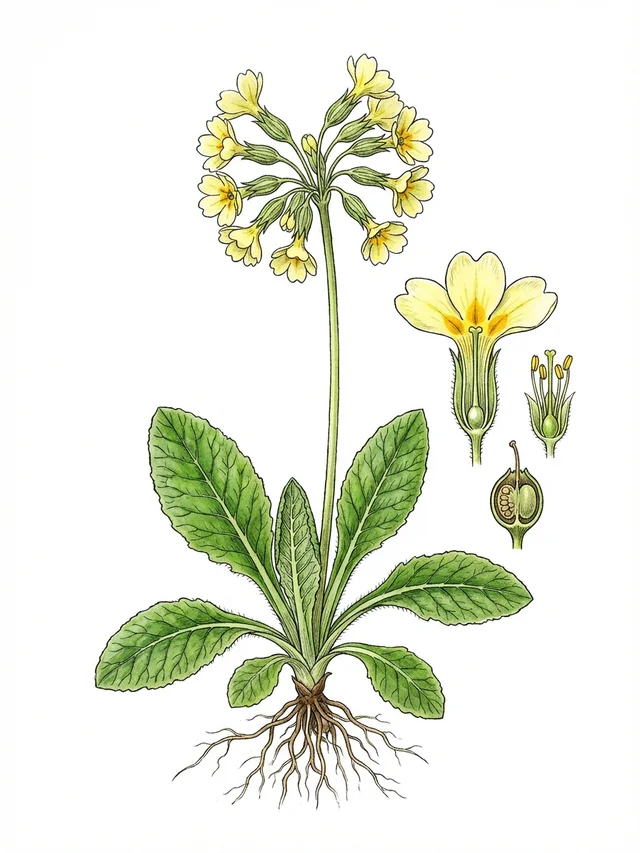
 Image to followAI-generated illustration
Salix pentandra
Salix pentandra
FamilyGenus: Salixnative in Germany
🌿
55
Species
interact
🔗
57
Interactions
documented
🐛
10
Host relationships
Species
About this species
A native deciduous tree with glossy broad leaves and late-spring catkins, reaching about 8 metres in height and favouring moist, sunny positions.
Ecological network
Click to highlight connections · Click again to open the species page
Loading network...
PollinationLarval host
Ecological significance
No negative ecological impacts are recorded for this native species.
Annual cycle
This deciduous tree comes into leaf during spring and its catkins open from May to June. Seeds are released in summer, and the foliage is shed in autumn.
Safety note
No toxic or harmful properties are recorded for this willow. Standard precautions against individual plant sensitivities apply.
Standort & Merkmale
Light
Sonne
Moisture
Frisch (Mäßig feucht)
Soil
Mittelzehrer (Normaler Boden)
Flowering period
Mai – Jun
Soil reaction
Mäßig sauer bis neutral
Bioregion
Continental
Growth form
Baum
Woodiness
Verholzt
Leaf type
Breitblättrig
Leaf phenology
Laubabwerfend
Plant height
7.897 m
Morphological traits: TRY ID3 (CC BY 3.0) & TRY ID81 (CC BY)
Pflege & Anbau
Plant Salix pentandra in a sunny spot with moisture-retentive, moderately fertile soil that is neutral to slightly acid. Given its ultimate height of about 8 m, allow ample room for the crown to develop. No special pruning is required beyond the removal of dead or crossing branches in late winter. Its catkin display in late spring is a seasonal highlight.
Scientific profile
Salix pentandra is a broad-leaved, woody tree native to Great Britain. It typically attains a height of around 8 metres and bears smooth, glossy leaves that are shed each autumn. The species is ectomycorrhizal and shows a preference for full sun and moist soils, with a moderate nutrient demand and a tolerance of slightly acid to neutral ground. The inflorescences are catkins, produced from May into June. The tiny seeds (diaspore mass about 0.1 mg) are wind-dispersed. The tree experiences low disturbance regimes in its natural habitats and grows under moderately warm conditions.
Pollinators & visitors
45 Arten interagieren mit dieser Pflanze
Nomada fabricianaNomada ruficornisLasioglossum albipesBombus terrestrisSphecodes ephippiusAglais urticaeMelecta albifronsNomada goodenianaColletes cuniculariusAndrena flavipesAndrena dorsataApis melliferaBombus hortorumAndrena carantonicaBombus bohemicusAndrena cinerariaAndrena nitidaBombus monticolaBombus muscorumBombus hypnorumBombus pascuorumAndrena praecoxBombus jonellusBombus pratorumBombus lucorumAndrena chrysoscelesAndrena clarkellaBombus vestalisLasioglossum calceatumAndrena minutulaAndrena nigroaeneaAndrena bicolorAndrena helvolaBombus lapidariusNomada marshamellaSphecodes pellucidusGonepteryx rhamniLasioglossum morioAndrena tibialisAndrena fulvaAndrena haemorrhoaAndrena trimmeranaBombus sylvestrisLasioglossum leucozoniumAndrena apicata
Host relationships
10 species use this plant as a host
Leucoma salicisNymphalis antiopaAcronicta leporinaClostera pigraScoliopteryx libatrixAcronicta rumicisAcronicta megacephala (Denis & Schiffermüller), 1775Zilla diodiaMangora acalyphaNotodonta ziczac
Sources & data origin
•Cook et al. (2025) UK Butterfly & Moth Traits (DOI: 10.5285/dbc7cc17-cbbd-49dd-bab4-8e8855768d66)
•Interaktionsdaten via GloBI (CC-BY 4.0)
•FloraWeb / BfN
•EIVE 1.0 — Dengler et al. (2023), DOI: 10.3897/VCS.98324 (CC BY 4.0)
•GBIF Backbone Taxonomy — GBIF Secretariat (2024), DOI: 10.15468/39omei (CC BY 4.0)
•TRY Categorical Traits (ID3) — Kattge et al. (2012), DOI: 10.17871/TRY.3 (CC BY 3.0)
•TRY Global Spectrum (ID81) — Díaz et al. (2016/2021), DOI: 10.17871/TRY.81 (CC BY)
•Checklist Alien Plants Belgium — Verloove F (2023), Botanic Garden Meise (CC BY 4.0)
•Govaerts R et al. (2025) — World Checklist of Vascular Plants (WCVP) v14. Royal Botanic Gardens, Kew. DOI: 10.34885/xs7h-ze42 (CC BY 4.0)
All data is licensed under CC BY 4.0, CC0, or compatible terms. Attribution according to license conditions. Full source overview →