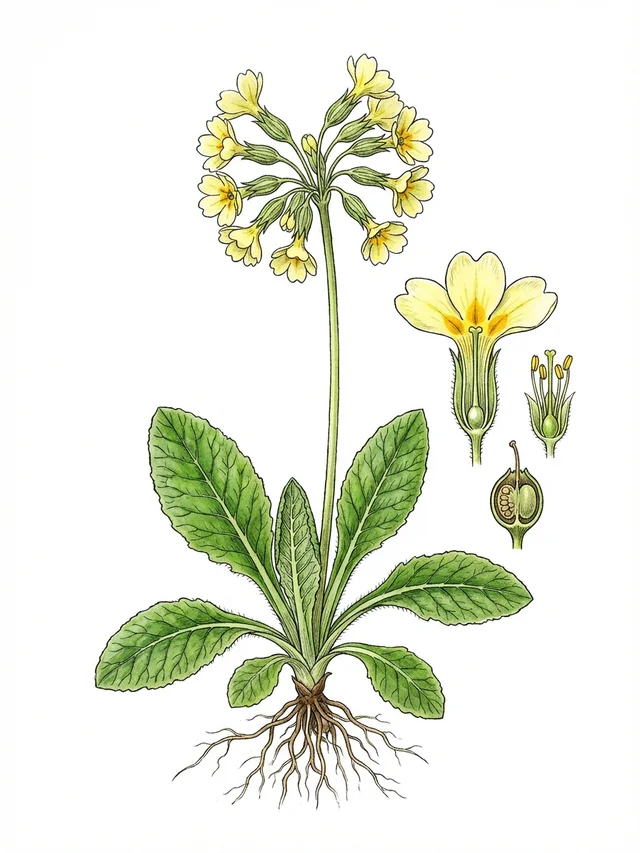
 Image to followAI-generated illustration
Salix repens
Salix repens subsp. argentea
FamilyGenus: Salixnon-native in Germany
🌿
66
Species
interact
🔗
83
Interactions
documented
🐛
8
Host relationships
Species
About this species
Salix repens is a low, woody, deciduous shrub native in Great Britain. It bears broad leaves and flowers in April and May. The roots form ectomycorrhizas and the plant produces very light, wind-dispersed seeds.
Ecological network
Click to highlight connections · Click again to open the species page
Loading network...
PollinationLarval hostFlower visit
Ecological significance
As a native shrub in Great Britain, Salix repens contributes to local biodiversity. Its ectomycorrhizal associations may influence soil communities. No additional ecological impact data are recorded.
Annual cycle
This deciduous shrub loses its leaves in autumn. It flowers in April and May. Beyond this, the seasonal cycle is not documented.
Standort & Merkmale
Light
—
Moisture
—
Soil
—
Flowering period
Apr – Mai
Growth form
Strauch
Woodiness
Verholzt
Leaf type
Breitblättrig
Leaf phenology
Laubabwerfend
Plant height
0.408 m
Morphological traits: TRY ID3 (CC BY 3.0) & TRY ID81 (CC BY)
Pflege & Anbau
The roots naturally associate with ectomycorrhizal fungi. No further specific cultivation details are documented.
Scientific profile
Salix repens is a terrestrial, woody shrub that typically reaches about 0.41 metres in height. It produces broad, deciduous leaves with an average area of roughly 162 mm². Flowering takes place in April and May. The diaspores are minute, weighing approximately 0.04 mg, and are likely dispersed by wind. The species forms ectomycorrhizal associations. It is native in Great Britain.
Pollinators & visitors
53 Arten interagieren mit dieser Pflanze
Nomada marshamellaSphecodes pellucidusLasioglossum calceatumBombus vestalisGonepteryx rhamniMelecta albifronsNomada goodenianaHalictus rubicundusNomada ruficornisSphecodes ephippiusNomada fabricianaAglais urticaeAndrena apicataBombus bohemicusBombus lapidariusAndrena helvolaAndrena dorsataAndrena chrysoscelesBombus monticolaAndrena carantonicaAndrena nigroaeneaAndrena praecoxBombus hortorumAndrena bicolorBombus pascuorumAndrena fulvaAndrena haemorrhoaBombus hypnorumBombus jonellusBombus muscorumAndrena cinerariaLasioglossum morioBombus terrestrisLasioglossum leucozoniumLasioglossum albipesBombus lucorumAndrena clarkellaBombus pratorumAndrena minutulaAndrena trimmeranaColletes cuniculariusAndrena nitidaAndrena flavipesApis melliferaAndrena tibialisBombus sylvestrisVespula vulgarisBruchidius villosusLasioglossum fratellumCallophrys rubi
Host relationships
8 species use this plant as a host
Notodonta ziczacPterostoma palpinaClostera pigraClostera curtulaScoliopteryx libatrixLymantria disparPhragmatobia fuliginosaMacrothylacia rubi
Other flower visitors
5 other species visit the flowers
Sources & data origin
•Interaktionsdaten via GloBI (CC-BY 4.0)
•GBIF Backbone Taxonomy — GBIF Secretariat (2024), DOI: 10.15468/39omei (CC BY 4.0)
•TRY Categorical Traits (ID3) — Kattge et al. (2012), DOI: 10.17871/TRY.3 (CC BY 3.0)
•TRY Global Spectrum (ID81) — Díaz et al. (2016/2021), DOI: 10.17871/TRY.81 (CC BY)
•Govaerts R et al. (2025) — World Checklist of Vascular Plants (WCVP) v14. Royal Botanic Gardens, Kew. DOI: 10.34885/xs7h-ze42 (CC BY 4.0)
All data is licensed under CC BY 4.0, CC0, or compatible terms. Attribution according to license conditions. Full source overview →