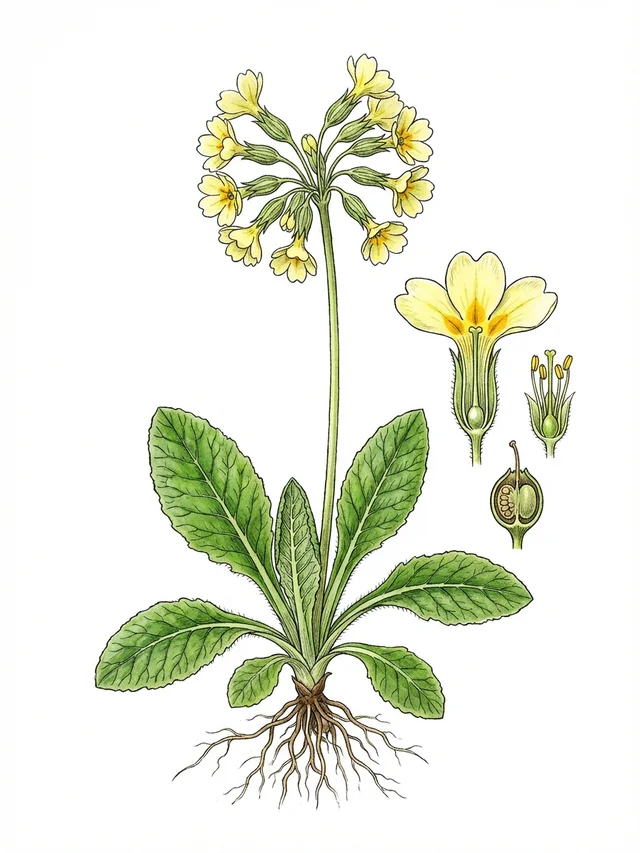
 Image to followAI-generated illustration
Senecio inaequidens
Senecio inaequidens
FamilyGenus: Senecionative in Germany⚠️ Invasive species
⚠️
Invasive alien species
This species is classified as an invasive neophyte. It can affect native ecosystems and should not be introduced into the wild. Please check regional regulations before planting.
🌿
83
Species
interact
🔗
328
Interactions
documented
About this species
An introduced, invasive shrub in Great Britain, Senecio inaequidens is a woody evergreen that blooms from July to December. It favours sunny, dry, alkaline soils and is considered a neophyte of African origin.
Ecological network
Click to highlight connections · Click again to open the species page
Loading network...
PollinationFlower visit
Annual cycle
This evergreen shrub retains its leaves throughout the year. Flowering begins in July and continues until December. The small, light seeds (0.2167 mg) are dispersed late in the season, aiding colonisation. Plants typically attain a height of 0.6 m.
Safety note
No specific safety information is recorded for this species.
Standort & Merkmale
Light
Sonne
Moisture
Trocken
Soil
Mittelzehrer (Normaler Boden)
Flowering period
Jul – Dez
Soil reaction
Basisch / Kalkhold
Bioregion
Continental
Growth form
Strauch
Woodiness
Verholzt
Leaf type
Breitblättrig
Leaf phenology
Immergrün
Plant height
0.602 m
Morphological traits: TRY ID3 (CC BY 3.0) & TRY ID81 (CC BY)
Scientific profile
Senecio inaequidens is a woody, broad-leaved shrub, typically reaching about 0.6 m in height. Its evergreen foliage persists through the year, and flowering occurs from July into December. The species prefers full sun and dry, warm conditions, thriving on alkaline soils of moderate fertility and tolerating only low levels of disturbance. It forms arbuscular mycorrhizal associations. The small seeds (diaspore mass 0.2167 mg) are produced late in the season, contributing to its spread. Ecologically, it behaves as a warmth-loving ruderal of open, nutrient-poor sites. The plant is a neophyte in Great Britain, where it is introduced and established across the country.
Pollinators & visitors
67 Arten interagieren mit dieser Pflanze
Polyommatus icarusApis melliferaLasiommata megeraColias croceusLasiommata maeraAglais ioHalictus subauratusBombus terrestrisPararge aegeriaHalictus scabiosaeAglais urticaeLycaena phlaeasVanessa atalantaCoenonympha iphis (Denis & Schiffermüller), 1776Carcharodus alceaeMelitaea didymaMelitaea phoebe (Denis & Schiffermüller), 1775Celastrina argiolusAnthophora bimaculataCoenonympha pamphilusGonepteryx rhamniAndrena flavipesPieris napiAnthophila fabricianaHeriades truncorumLasioglossum morioNomada fucataHalictus sexcinctusMegachile pilidensPieris rapaeEristalis tenaxEristalis arbustorumParagus tibialisNomada sp1Lasioglossum leucozoniumMelitaea athaliaMegachile melanopygaCupido minimusSphaerophoria scriptaCoelioxys conoideaHylaeus gibbusOsmia spinulosaLasioglossum nigripesLasioglossum calceatumSyritta pipiensHeriades crenulatusEristalinus aeneusStelis punctulatissimaLasioglossum villosulumMelanostoma mellinum
Other flower visitors
16 other species visit the flowers
Thomisus onustusMisumena vatiaOedemera femorataMangora acalyphaHippodamia variegataOedemera nobilisArgiope bruennichiNeoscona adiantaOxythyrea funestaCoccinella septempunctataSynema globosumGymnosoma rotundatumPhysocephala vittataMegalodontes sp1Zodion cinereumSiphona variata
Sources & data origin
•Interaktionsdaten via GloBI (CC-BY 4.0)
•pollinator_interactions
•FloraWeb / BfN
•EIVE 1.0 — Dengler et al. (2023), DOI: 10.3897/VCS.98324 (CC BY 4.0)
•GBIF Backbone Taxonomy — GBIF Secretariat (2024), DOI: 10.15468/39omei (CC BY 4.0)
•TRY Categorical Traits (ID3) — Kattge et al. (2012), DOI: 10.17871/TRY.3 (CC BY 3.0)
•TRY Global Spectrum (ID81) — Díaz et al. (2016/2021), DOI: 10.17871/TRY.81 (CC BY)
•Checklist Alien Plants Belgium — Verloove F (2023), Botanic Garden Meise (CC BY 4.0)
•DAISIE — Roy H et al. (2019), DOI: 10.15468/ybwd3x (CC BY 4.0)
•Govaerts R et al. (2025) — World Checklist of Vascular Plants (WCVP) v14. Royal Botanic Gardens, Kew. DOI: 10.34885/xs7h-ze42 (CC BY 4.0)
All data is licensed under CC BY 4.0, CC0, or compatible terms. Attribution according to license conditions. Full source overview →