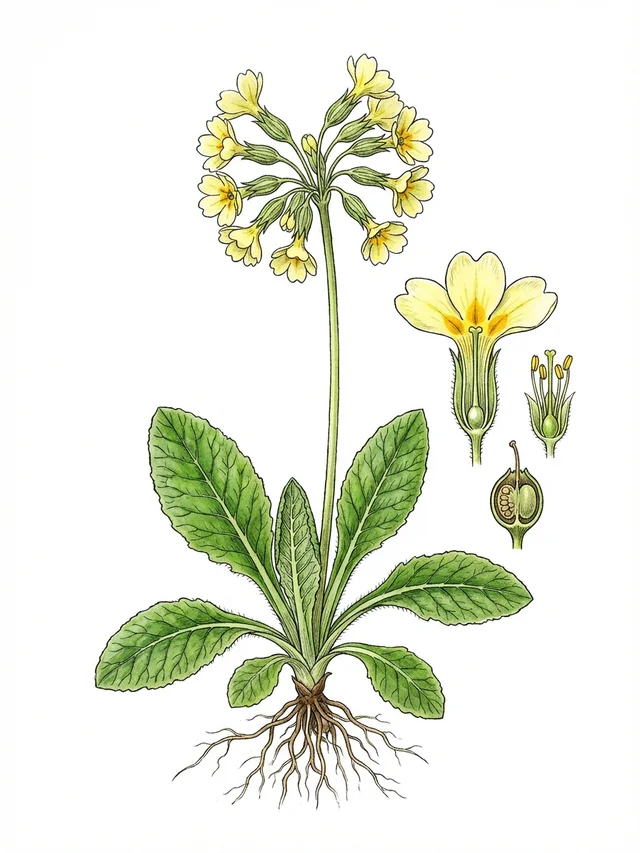
 Image to followAI-generated illustration
Helianthus annuus
Helianthus annuus
FamilyGenus: Sonnenblumennative in Germany
🌿
102
Species
interact
🔗
352305
Interactions
documented
🐛
10
Host relationships
Species
About this species
Helianthus annuus is a tall, sun-loving annual commonly known as the sunflower. Introduced and now established in Great Britain, it produces broad leaves and large flower heads from August to October, thriving in nutrient-rich, moderately moist soils in full sun. Its seeds are relatively heavy, and it forms arbuscular mycorrhizal associations with soil fungi.
Ecological network
Click to highlight connections · Click again to open the species page
Loading network...
PollinationLarval hostFlower visit
Ecological significance
Helianthus annuus is an introduced plant in Great Britain, where it is now established. It occasionally appears as a garden escape but is not recorded as invasive. Its arbuscular mycorrhizal associations can contribute to soil nutrient cycling.
Annual cycle
An annual species, Helianthus annuus completes its life cycle within a single growing season. Seedlings emerge in spring, rapid vegetative growth occurs through early summer, and flowering typically begins in August and can last until October. Seed is set in autumn, after which the parent plant dies.
Standort & Merkmale
Light
Sonne
Moisture
Frisch (Mäßig feucht)
Soil
—
Flowering period
Aug – Okt
Bioregion
Continental
Growth form
Krautige Pflanze
Woodiness
Nicht verholzt
Leaf type
Breitblättrig
Plant height
2.029 m
Morphological traits: TRY ID3 (CC BY 3.0) & TRY ID81 (CC BY)
Nectar
24.6837 µl/Blüte
Pollen
20.885 mg/Blüte
Pflege & Anbau
•
Light: Full sun is essential for robust growth and flowering.
•
Moisture: Keep the soil fresh and moderately moist; avoid waterlogging.
•
Nutrients: Thrives in nutrient-rich ground; incorporate organic matter before planting.
•
Sowing: Since it is an annual, sow seeds directly outdoors after the last frost in a sunny, sheltered spot.
Scientific profile
Helianthus annuus is an introduced, non-woody annual herbaceous plant that can reach just over two metres in height. Its leaves are broad, and the plant produces its characteristic large flower heads from late summer into autumn, typically between August and October. An obligate full-sun species (Ellenberg light value 8), it requires fresh, moderately moist soil conditions (moisture value 5) and is a heavy feeder, performing best in nutrient-rich substrates with a neutral to slightly acidic reaction (reaction value 6). The seeds, or diaspores, average around 38 mg in mass, and the plant forms arbuscular mycorrhizae (AM type) with soil fungi. Leaf area averages about 10,900 mm².
Pollinators & visitors
65 Arten interagieren mit dieser Pflanze
Bombus lucorumVanessa atalantaPolyommatus icarusPieris brassicaeLasioglossum malachurumLasioglossum pygmaeumLasioglossum fratellumBombus magnusHalictus confususHalictus sexcinctusBombus ruderatusHalictus rubicundusBombus campestrismacroglossum stellatarumBombus pratorumBombus pascuorumLasioglossum pauxillumLasioglossum calceatumAndrena flavipesOsmia spinulosaHalictus scabiosaeCeratina cucurbitinaLasioglossum leucozoniumLasioglossum laticepsPieris napiPolygonia c-albumBombus rupestrisBombus hypnorumBombus humilisBombus sylvestrisBombus muscorumAcronicta rumicisVanessa carduiChloris chlorisPolistes dominulaAncistrocerus gazellaOsmia leaianaBombus soroeensisApis melliferaAnthidium manicatumXylocopa violaceaSceliphron caementariumVespula vulgarisBombus terrestrisVespula germanicaAnthidium oblongatumAgrotis ipsilonNeoscona adiantaBombus sylvarumChrysis ignita
Host relationships
10 species use this plant as a host
Agrius convolvuliHelicoverpa armigeraAutographa gammaPieris rapaeMelitaea didymaMythimna unipunctaPhlogophora meticulosaMamestra brassicaeAgrotis segetumOstrinia nubilalis
Other flower visitors
27 other species visit the flowers
Passer domesticusperdix perdixUrsus arctosAcalymma vittatumVulpes vulpesMeleagris gallopavoLasius nigerPlodia interpunctellaCyanistes caeruleusCoccinella septempunctataHaemorhous mexicanusSciurus nigerSitta europaeaSciurus vulgarisMimus polyglottosHarmonia axyridisHippodamia variegataAdalia bipunctataCoccothraustes coccothraustesCarduelis carduelisPsittacula krameriSciurus carolinensisEmmelina monodactylaSitta canadensisFormica rufaOxythyrea funestaLeptinotarsa decemlineata
Sources & data origin
•Interaktionsdaten via GloBI (CC-BY 4.0)
•Middleton-Welling_2020
•pollinator_interactions
•Baden-Böhm F, App M, Thiele J (2022) — The FloRes Database: A floral resources trait database for pollinator habitat-assessment generated by a multistep workflow. Johann Heinrich von Thünen-Institut, Dryad, DOI: 10.5061/dryad.djh9w0w29 (CC0)
•EIVE 1.0 — Dengler et al. (2023), DOI: 10.3897/VCS.98324 (CC BY 4.0)
•GBIF Backbone Taxonomy — GBIF Secretariat (2024), DOI: 10.15468/39omei (CC BY 4.0)
•TRY Categorical Traits (ID3) — Kattge et al. (2012), DOI: 10.17871/TRY.3 (CC BY 3.0)
•TRY Global Spectrum (ID81) — Díaz et al. (2016/2021), DOI: 10.17871/TRY.81 (CC BY)
•Checklist Alien Plants Belgium — Verloove F (2023), Botanic Garden Meise (CC BY 4.0)
•Govaerts R et al. (2025) — World Checklist of Vascular Plants (WCVP) v14. Royal Botanic Gardens, Kew. DOI: 10.34885/xs7h-ze42 (CC BY 4.0)
All data is licensed under CC BY 4.0, CC0, or compatible terms. Attribution according to license conditions. Full source overview →