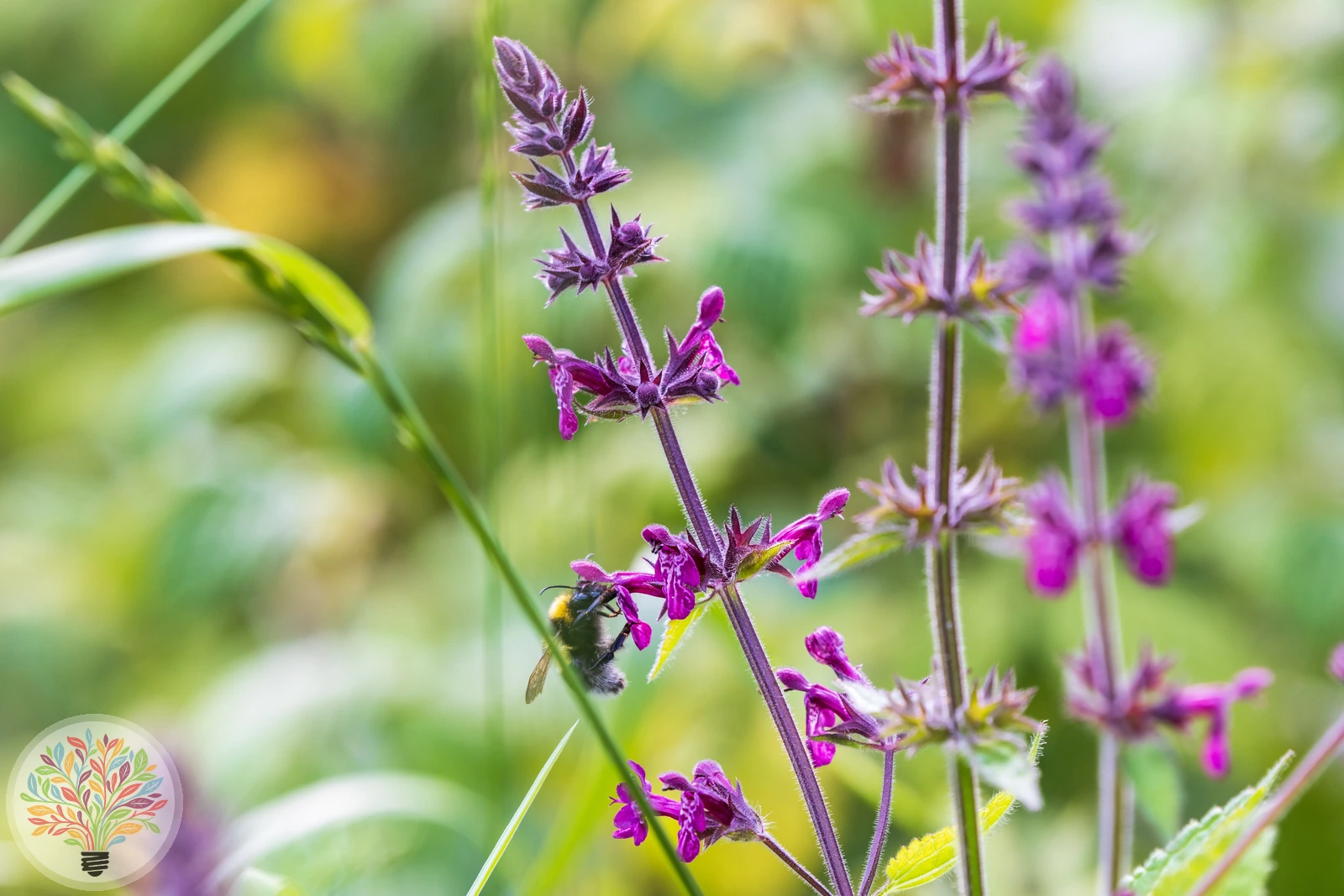
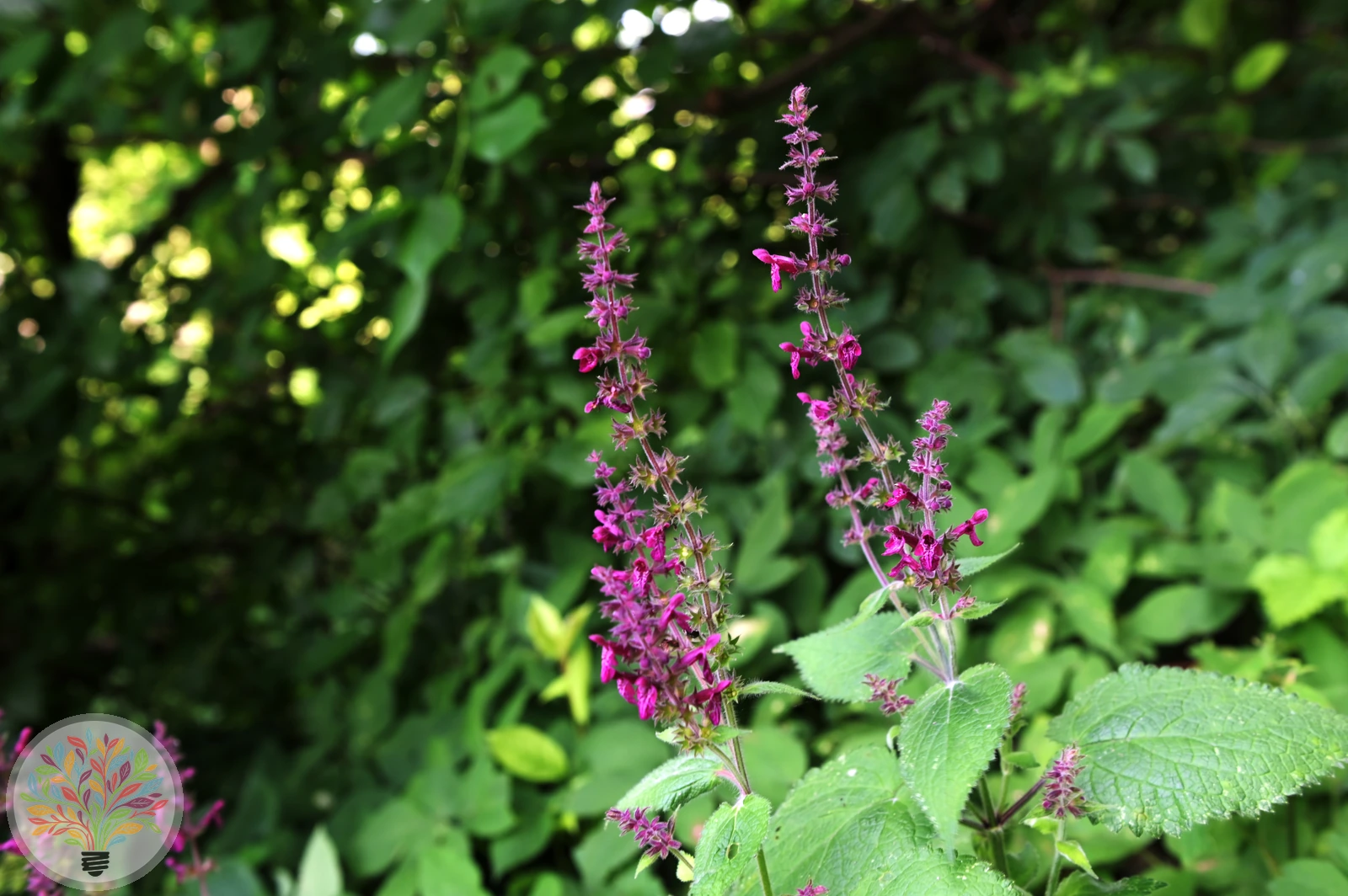
Stachys sylvatica
Stachys sylvatica
FamilyGenus: Stachysnative in Germany
🌿
74
Species
interact
🔗
206
Interactions
documented
🐛
5
Host relationships
Species
About this species
A native perennial herb of shady, moist, nutrient-rich, calcareous soils; bears broad leaves and reaches about 0.6 m in height, flowering from June to September.
Ecological network
Click to highlight connections · Click again to open the species page
Loading network...
PollinationLarval hostFlower visit
Ecological significance
As part of the ground flora of damp, base‑rich woods and hedgerows, this native species helps maintain habitat complexity. No detailed animal associations are recorded in the source material consulted.
Annual cycle
A winter‑dormant perennial; top growth dies back in late autumn. New shoots push through the soil in spring. Flowering occurs from June to September, followed by seed set. The plant overwinters as a rootstock.
Standort & Merkmale
Light
Schatten
Moisture
Frisch (Mäßig feucht)
Soil
Starkzehrer (Nährstoffreicher/Fetter Boden)
Flowering period
Jun – Sep
Soil reaction
Basisch / Kalkhold
Bioregion
Continental
Growth form
Krautige Pflanze
Woodiness
Nicht verholzt
Leaf type
Breitblättrig
Plant height
0.58 m
Morphological traits: TRY ID3 (CC BY 3.0) & TRY ID81 (CC BY)
Corolla tube
9 mm
Nectar
1.4646 µl/Blüte
Pollen
0.8 mg/Blüte
Pflege & Anbau
**Light:** Shade.
**Water:** Consistently moist soil.
**Soil:** Fertile, calcareous loam or clay.
**Site:** Plant in deep or partial shade in moisture‑retentive, lime‑rich soil that is high in organic matter. Keep the ground evenly moist; avoid dry sites.
Scientific profile
Stachys sylvatica is a terrestrial, non‑woody herbaceous plant with broad leaves. It typically grows to 0.58 m in height and each seed (diaspore) weighs approximately 1.4 mg. In Great Britain it is a native species of shaded places on fresh to moist, nutrient‑rich, calcareous ground. Flowering extends from June to September. The plant is tolerant of only low levels of disturbance. Ellenberg‑type indicator values from central European datasets assign it to moist (7), basic‑reaction (7) and nutrient‑rich (7) conditions.
Pollinators & visitors
51 Arten interagieren mit dieser Pflanze
Hypena proboscidalisAnthidium manicatumBombus pascuorumBombus lucorumBombus ruderatusBombus lapidariusXanthorhoe designataAllophyes oxyacanthaeBombus ruderariusBombus muscorumXanthorhoe montanataXestia c-nigrumOpisthograptis luteolataMythimna impuraNyea lurideolaAlcis repandataAphantopus hyperantusNoctua pronubaOsmia caerulescensAnthophora quadrimaculataBombus hortorumLasioglossum morioBombus sylvestrisAndrena nigroaeneaBombus pratorumBombus terrestrisBombus hypnorumBombus jonellusAporia crataegiApis melliferaNemophora degeerellaSphaerophoria scriptaMythimna pallensBombusRhingia campestrisEpisyrphus balteatusVolucella bombylansAporophyla nigraEilema lurideolaChrysotoxum festivumEupeodes corollaeEupeodes lunigerMelanostoma mellinumPlatycheirus albimanusPlatycheirus peltatusSyritta pipiensSyrphus ribesiiBaccha elongataPlatycheirus clypeatusBombus ss
Host relationships
5 species use this plant as a host
Other flower visitors
18 other species visit the flowers
Apodemus flavicollisMicromys minutusMyodes glareolusApodemus sylvaticusAlauda arvensisMyrmica rubraFringilla coelebsBrassicogethes aeneusTenthredo mesomelaAnania hortulataCassida viridisAnaspis frontalisPetrophora chlorosataChloromyia formosaMeligethes aeneusMeligethes nigrescensPegoplata aestivaPterophorus pentadactyla
Sources & data origin
•Interaktionsdaten via GloBI (CC-BY 4.0)
•Cook et al. (2025) UK Butterfly & Moth Traits (DOI: 10.5285/dbc7cc17-cbbd-49dd-bab4-8e8855768d66)
•pollinator_interactions
•Baden-Böhm F, App M, Thiele J (2022) — The FloRes Database: A floral resources trait database for pollinator habitat-assessment generated by a multistep workflow. Johann Heinrich von Thünen-Institut, Dryad, DOI: 10.5061/dryad.djh9w0w29 (CC0)
•FloraWeb / BfN
•EIVE 1.0 — Dengler et al. (2023), DOI: 10.3897/VCS.98324 (CC BY 4.0)
•GBIF Backbone Taxonomy — GBIF Secretariat (2024), DOI: 10.15468/39omei (CC BY 4.0)
•TRY Categorical Traits (ID3) — Kattge et al. (2012), DOI: 10.17871/TRY.3 (CC BY 3.0)
•TRY Global Spectrum (ID81) — Díaz et al. (2016/2021), DOI: 10.17871/TRY.81 (CC BY)
•Govaerts R et al. (2025) — World Checklist of Vascular Plants (WCVP) v14. Royal Botanic Gardens, Kew. DOI: 10.34885/xs7h-ze42 (CC BY 4.0)
•Foto: © ©Lars Johansson / Adobe Stock / AdobeStock_504932286
All data is licensed under CC BY 4.0, CC0, or compatible terms. Attribution according to license conditions. Full source overview →