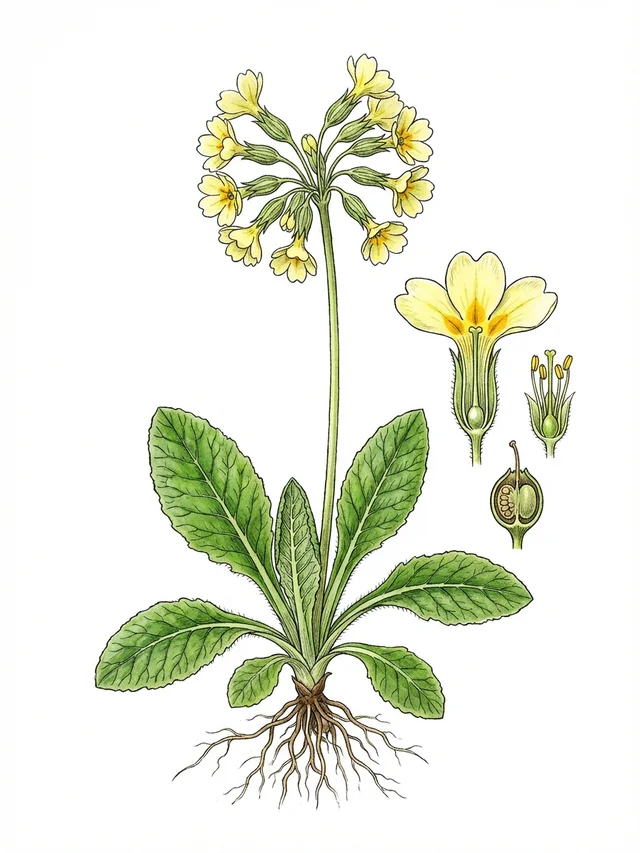
 Image to followAI-generated illustration
Stuckenia pectinata
Stuckenia pectinata
FamilyGenus: Stuckenianative in Germany
🌿
19
Species
interact
🔗
19
Interactions
documented
About this species
Stuckenia pectinata is a submerged aquatic plant native to Great Britain, with broad, strap-like leaves. It blooms from June to September, with small greenish flower spikes held just above the water surface. It grows in nutrient-rich, calcareous, still or slow-moving water and tolerates slightly saline conditions.
Ecological network
Click to highlight connections · Click again to open the species page
Loading network...
Flower visit
Ecological significance
As a native submerged plant, Stuckenia pectinata plays a role in aquatic ecosystems by providing underwater structure. It occurs in still or slow-moving, calcareous waterbodies and can cover large areas. Its dense growth may influence water flow and local oxygen levels.
Annual cycle
Flowers from June to September. Growth is largely submerged throughout the year, with new shoots emerging in spring.
Standort & Merkmale
Light
Halbschatten
Moisture
Feucht
Soil
Starkzehrer (Nährstoffreicher/Fetter Boden)
Flowering period
Jun – Sep
Soil reaction
Basisch / Kalkhold
Bioregion
Continental
Growth form
Krautige Pflanze
Woodiness
Nicht verholzt
Leaf type
Breitblättrig
Plant height
0.949 m
Morphological traits: TRY ID3 (CC BY 3.0) & TRY ID81 (CC BY)
Pflege & Anbau
Plant Stuckenia pectinata in a pond, lake margin, or slow-flowing water on heavy, nutrient-rich, alkaline soil. It can be grown in partial shade but adapts to full sun. Submerge the container or position the plant so that stems remain below water, with flowering shoots reaching the surface. It requires permanently wet to submerged conditions and benefits from nutrient supply. No specific pruning is needed; thin overcrowded stands in early spring if they become too dense.
Scientific profile
Stuckenia pectinata is a non-woody, herbaceous aquatic plant with broad leaves and a completely submerged growth form. Its stems can reach up to 0.95 metres in length, forming dense underwater beds. The leaf area averages 30 mm². The plant flowers from June to September, producing emergent spikes. Based on Ellenberg-type indicator values, it shows a strong preference for wet, waterlogged habitats, neutral to calcareous substrates, and high-nutrient conditions. It tolerates slight salinity and appears in low-disturbance environments. In Great Britain, it is considered a native species.
Other flower visitors
19 other species visit the flowers
Cygnus olorAnas platyrhynchosAythya collarisAlopochen aegyptiacaAythya ferinaMarmaronetta angustirostrisCygnus columbianusAythya affinisMareca penelopeSpatula hottentotaSpatula querquedulaAnas undulataDendrocygna viduataMareca americanaAnser canagicusFulica atraAythya fuligulaMareca streperaAnas capensis
Sources & data origin
•Interaktionsdaten via GloBI (CC-BY 4.0)
•EIVE 1.0 — Dengler et al. (2023), DOI: 10.3897/VCS.98324 (CC BY 4.0)
•GBIF Backbone Taxonomy — GBIF Secretariat (2024), DOI: 10.15468/39omei (CC BY 4.0)
•TRY Categorical Traits (ID3) — Kattge et al. (2012), DOI: 10.17871/TRY.3 (CC BY 3.0)
•TRY Global Spectrum (ID81) — Díaz et al. (2016/2021), DOI: 10.17871/TRY.81 (CC BY)
•Govaerts R et al. (2025) — World Checklist of Vascular Plants (WCVP) v14. Royal Botanic Gardens, Kew. DOI: 10.34885/xs7h-ze42 (CC BY 4.0)
All data is licensed under CC BY 4.0, CC0, or compatible terms. Attribution according to license conditions. Full source overview →