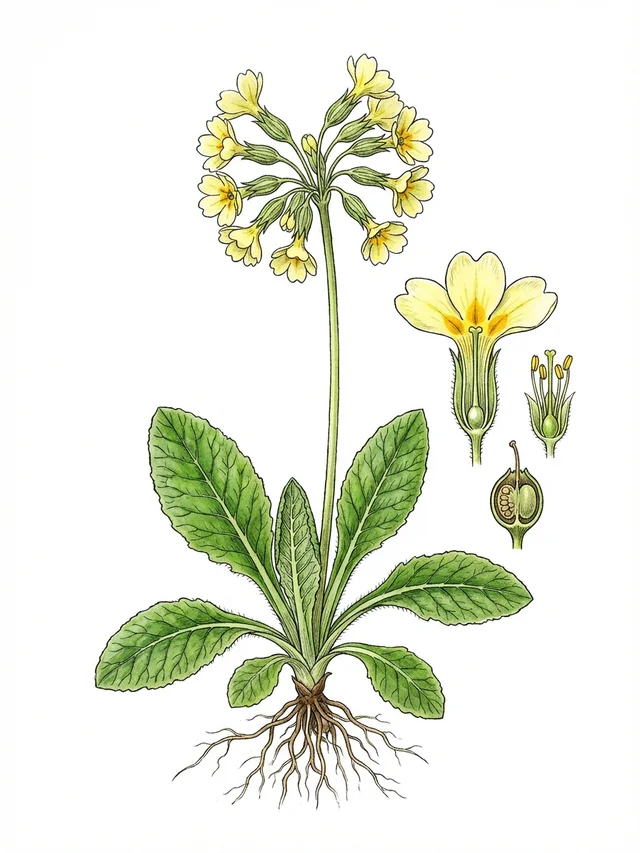
 Image to followAI-generated illustration
Thymus pulegioides
Thymus pulegioides × serpyllum
FamilyGenus: Thymusnative in Germany
🌿
55
Species
interact
🔗
64
Interactions
documented
About this species
Thymus pulegioides is a small, sun-loving herbaceous plant native to Great Britain. It thrives in well-drained, nutrient-poor soils and is a member of the mint family.
Ecological network
Click to highlight connections · Click again to open the species page
Loading network...
PollinationFlower visit
Ecological significance
This species is native to Great Britain and forms part of the natural flora of open, sunny habitats. No negative ecological impacts are recorded in the available evidence.
Safety note
No specific safety or toxicity data are recorded in the source material.
Standort & Merkmale
Light
Sonne
Moisture
Frisch (Mäßig feucht)
Soil
Schwachzehrer (Magerer Boden)
Flowering period
—
Soil reaction
Mäßig sauer bis neutral
Bioregion
Continental
Growth form
Krautige Pflanze
Woodiness
Nicht verholzt
Leaf type
Breitblättrig
Plant height
0.176 m
Morphological traits: TRY ID3 (CC BY 3.0) & TRY ID81 (CC BY)
Pflege & Anbau
Grow in full sun in a freely draining, low-nutrient soil. Water moderately, keeping the soil fresh but not waterlogged. It is suited to neutral to slightly acidic conditions.
Scientific profile
Thymus pulegioides is a herbaceous, non-woody perennial with broad leaves, native in Great Britain. It belongs to the family Lamiaceae. The plant typically occurs in full sun and prefers fresh to moderately moist, low-nutrient soils that are neutral or slightly acidic. It reaches a height of around 18 centimetres and is adapted to moderately warm conditions.
Pollinators & visitors
53 Arten interagieren mit dieser Pflanze
Megachile lignisecaBombus ruderariusPolyommatus icarusCelastrina argiolusNomada panzeriMegachile willughbiellaMegachile versicolorEuphydryas auriniaNomada fabricianaCoenonympha pamphilusNomada goodenianaAndrena nigroaeneaAndrena bicolorBombus lapidariusBombus hortorumAndrena haemorrhoaAnthophora furcataAndrena flavipesBombus monticolaAndrena dorsataBombus pratorumBombus campestrisOsmia bicornisBombus terrestrisBombus lucorumBombus hypnorumHylaeus communisBombus muscorumBombus sylvestrisLasioglossum laevigatumPieris brassicaeLasioglossum morioLasioglossum pauxillumBombus soroeensisBombus sylvarumBombus pascuorumTrachusa byssinaBombus humilisLasioglossum calceatumApis melliferaHalictus tumulorumLasioglossum fulvicorneAphantopus hyperantusManiola jurtinaThymelicus sylvestrispyrausta purpuralisLycaena phlaeasLycaena virgaureaeIssoria lathoniaHalictus rubicundus
Sources & data origin
•Interaktionsdaten via GloBI (CC-BY 4.0)
•EIVE 1.0 — Dengler et al. (2023), DOI: 10.3897/VCS.98324 (CC BY 4.0)
•GBIF Backbone Taxonomy — GBIF Secretariat (2024), DOI: 10.15468/39omei (CC BY 4.0)
•TRY Categorical Traits (ID3) — Kattge et al. (2012), DOI: 10.17871/TRY.3 (CC BY 3.0)
•TRY Global Spectrum (ID81) — Díaz et al. (2016/2021), DOI: 10.17871/TRY.81 (CC BY)
•Govaerts R et al. (2025) — World Checklist of Vascular Plants (WCVP) v14. Royal Botanic Gardens, Kew. DOI: 10.34885/xs7h-ze42 (CC BY 4.0)
All data is licensed under CC BY 4.0, CC0, or compatible terms. Attribution according to license conditions. Full source overview →